Yin Mountains Expedition – Inner Mongolia
A Journey Through Ancient Frontiers and Remote Wilderness
Discover the untouched wilderness of western Inner Mongolia
An exclusive four-day self-drive expedition through the remote landscapes of the Yin Mountains, where ancient frontier passes, dramatic canyons, sacred monasteries and hidden desert lakes reveal one of China’s last great overland frontiers.
China’s Last Great Overland Adventure
Hidden between rugged landscapes and vast grasslands, the Yin Mountains have shaped the history of northern Asia for more than two thousand years, forming the natural frontier between imperial China and the nomadic civilizations of the steppe.
This exclusive expedition follows forgotten military passes, sacred Buddhist monasteries, remote desert lakes and spectacular geological formations while venturing deep into landscapes that remain untouched by mass tourism.
Whether behind the wheel of your own 4×4 or travelling with one of our experienced expedition drivers, you’ll cross dramatic canyons, conquer towering sand dunes, explore the volcanic Gobi wilderness and venture deep into some of western Inner Mongolia’s most extraordinary landscapes.
More than an off-road adventure, this is an expedition through history, culture and one of China’s last truly unexplored frontiers.
Expedition at a Glance
Drive one of Inner Mongolia’s most remote desert routes, explore forgotten Han Dynasty frontier passes, and camp beneath some of northern China’s clearest desert skies. From dramatic canyons to hidden lakes and sweeping wilderness, every day reveals landscapes few travellers ever experience.
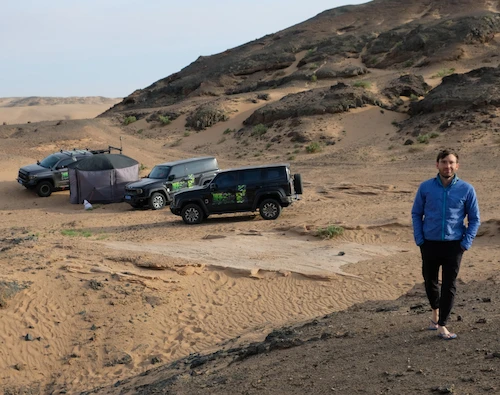
DURATION & DESTINATION
Four days. One extraordinary frontier.
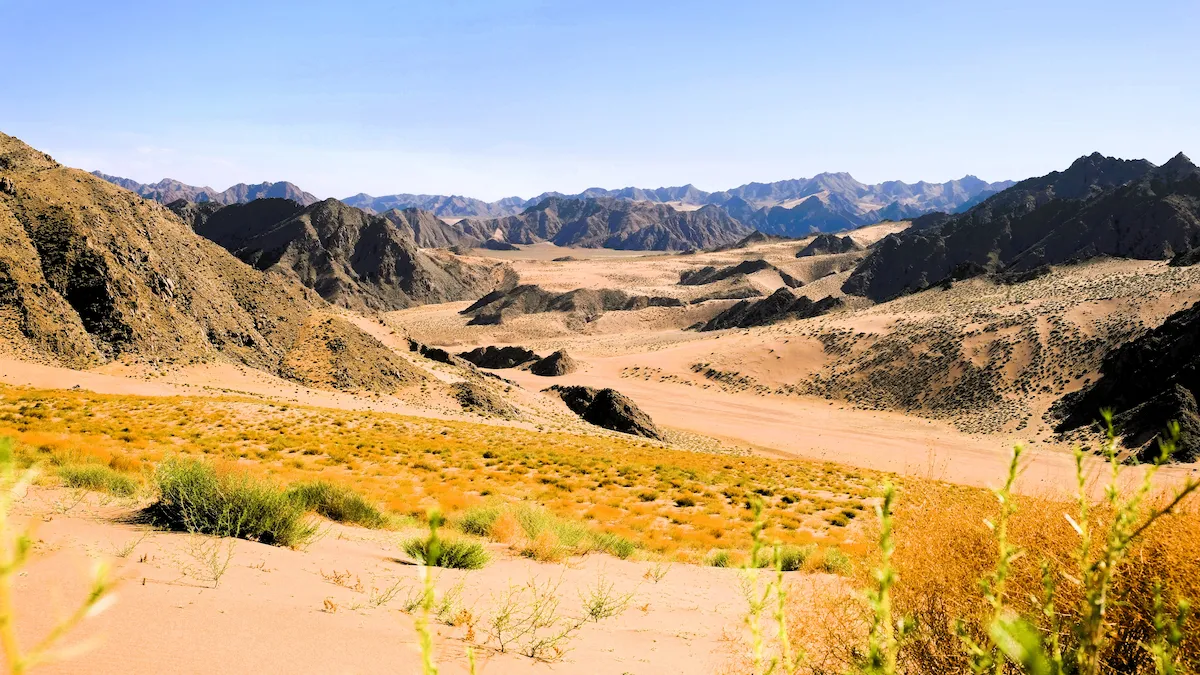
Explore the hidden landscapes of western Inner Mongolia, where the Yin Mountains, the Black Gobi and the Kubuqi Desert come together in an unforgettable expedition through remote wilderness.
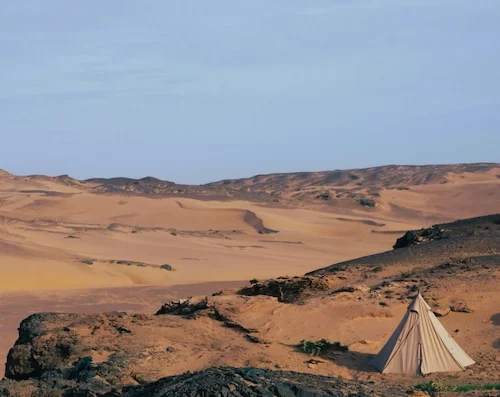
DRIVING STYLE & ACCOMODATION
Drive further. Stay closer to nature.
Take the wheel of a capable 4×4 and follow expertly designed routes beyond the beaten path. Evenings alternate between wilderness camps beneath vast desert skies and carefully selected hotels.
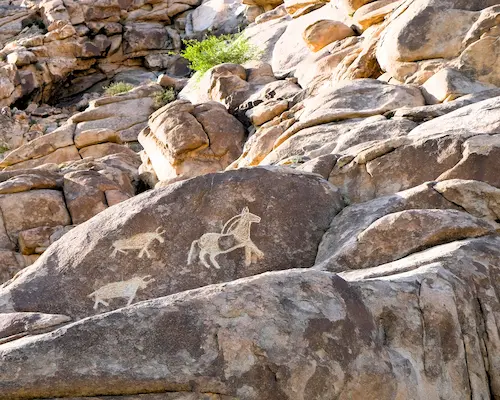
What You’ll Discover
History. Culture. Wilderness.
Walk ancient frontier passes, discover hidden desert lakes, encounter millennia-old rock carvings, explore remarkable geological landscapes, and experience the enduring traditions of Inner Mongolia.
Travel with Peace of Mind
Your safety and comfort are at the heart of every Ink Voyages expedition. Experienced leaders, carefully maintained vehicles, comprehensive insurance and dedicated support ensure a seamless, worry-free adventure through one of China’s most remote regions.
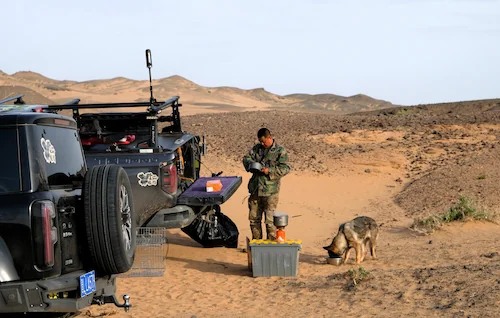
Expert Expedition Guide
Travel with an experienced off-road expedition leader who knows the Yin Mountains inside out. Following a dedicated lead vehicle, the convoy travels at a carefully planned pace, with continuous route assessment and local knowledge ensuring a safe and rewarding journey.
Safety & Emergency Support
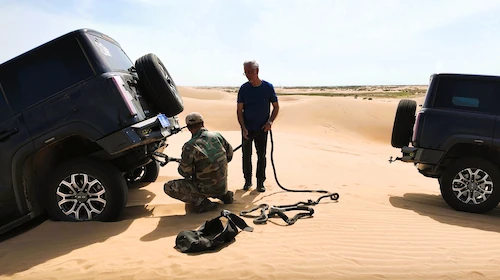
Every expedition vehicle is carefully inspected before departure, while a dedicated lead vehicle carries professional recovery equipment to support the convoy when needed. Two-way radios and onboard first-aid kits provide additional reassurance throughout the expedition.
Insurance & ORGANIZATION
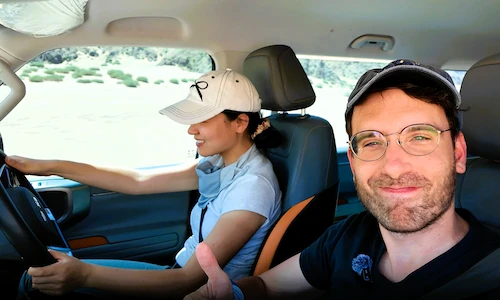
Comprehensive self-drive and personal accident insurance is included for every participant. Accommodation, meals and expedition logistics are carefully coordinated from start to finish, allowing you to focus entirely on the journey while our team takes care of every detail.
Watch the Expedition
Curious what driving across the Yinshan Mountains really feels like? Watch our full expedition vlog, filmed during our own journey through Inner Mongolia. It offers a genuine look at the landscapes, campsites, roads and remote scenery you’ll experience on this itinerary.
DAY ONE | Along the Ancient Frontier
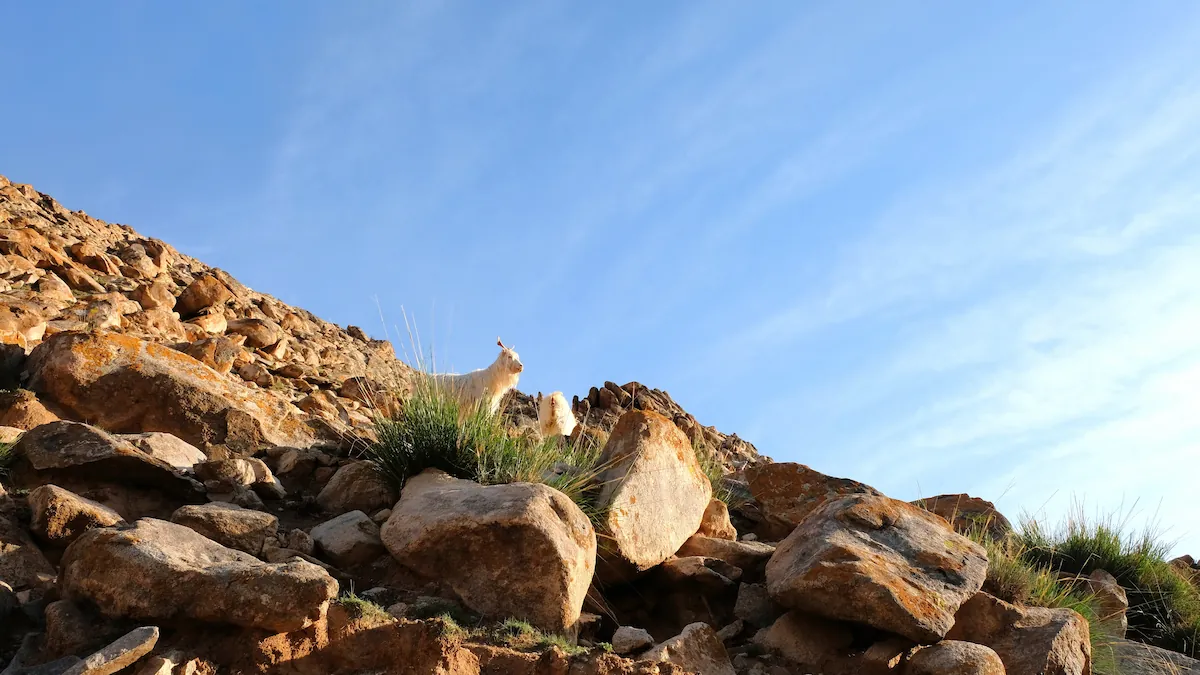
For centuries, the Yin Mountains marked the northern frontier of imperial China, where military outposts gave way to endless grasslands and the nomadic world beyond. Today, the expedition follows this remarkable frontier through dramatic canyons, sacred monasteries, ancient mountain passes and remote off-road landscapes. It is a day where history, breathtaking scenery and adventure blend seamlessly, followed by an unforgettable night beneath the vast desert sky.
Jilu Pass
“The journey begins where empires once ended”
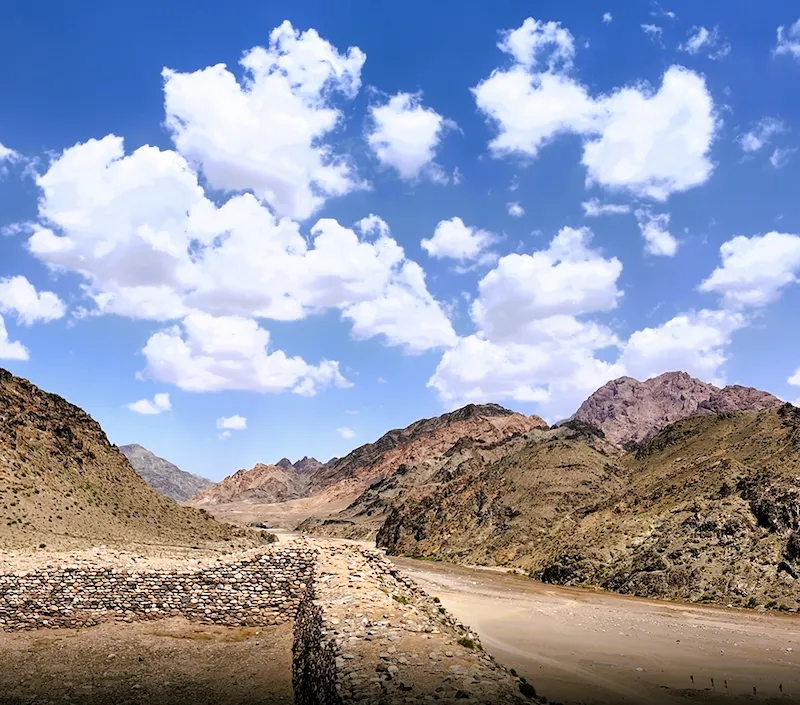
The journey begins at one of the most historically significant gateways of the Han Dynasty. More than two thousand years ago, Jilu Pass guarded the northern frontier of the Chinese empire and witnessed diplomatic events that helped shape relations between China and the Xiongnu Confederation.
In 51 BC, Huhanye Chanyu returned through this strategic pass after paying tribute to the Han court. Just eighteen years later, Wang Zhaojun—celebrated as one of China’s Four Great Beauties—crossed the same frontier on her legendary journey north, where her marriage forged one of history’s most enduring symbols of peace between two civilizations.
Standing here today, surrounded by the rugged landscapes of the Yin Mountains, it is easy to imagine caravans, cavalry and diplomats travelling this ancient gateway between two worlds.
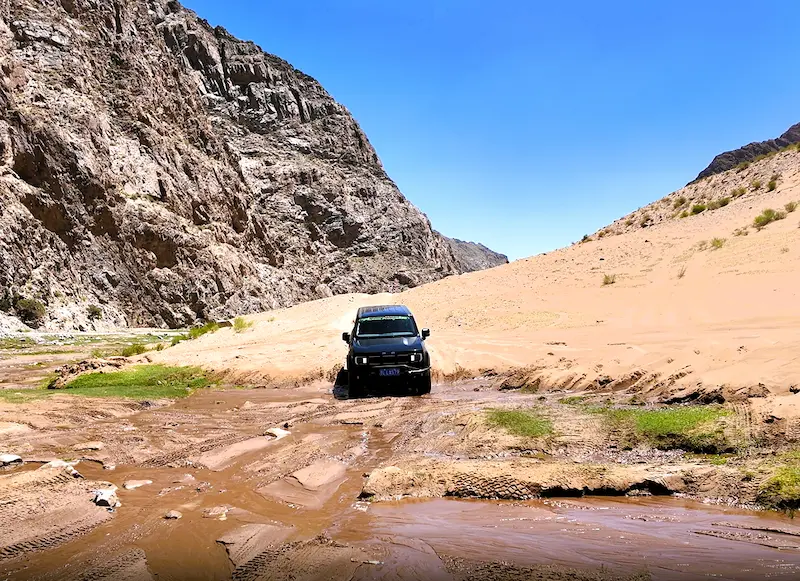
Harongon Gorge
“Here, wind and time have sculpted the mountains into a masterpiece”
Leaving the historic frontier behind, the expedition enters one of the most dramatic natural landscapes of the Yin Mountains.
Towering sandstone cliffs rise hundreds of metres above the canyon floor, their weathered grey walls sculpted over millions of years by wind, seasonal rivers and the relentless forces of nature. As powerful desert winds rush through the narrow gorge, they create an ever-changing chorus that echoes between the cliffs.
Every turn reveals another spectacular rock formation, making Harongon Gorge not only one of the geological highlights of the expedition, but also a place where the immense scale of Inner Mongolia’s wilderness becomes truly tangible.
Zhaojun Spring
“A single spring. A timeless legend of peace and sacrifice.”
Hidden within the desert landscape lies a spring deeply rooted in one of China’s most beloved legends.
According to tradition, Wang Zhaojun paused here before leaving her homeland forever. Looking back towards the Central Plains, she was overcome with emotion as she prepared to begin a life far beyond the frontier. Her tears are said to have given birth to this spring, whose waters continue to flow through the surrounding desert today.
Whether viewed as history or legend, Zhaojun Spring remains a powerful symbol of sacrifice, diplomacy and the enduring hope for peace between cultures.
Heroes’ Hill
“Every great expedition deserves its defining climb”
History now gives way to adventure.
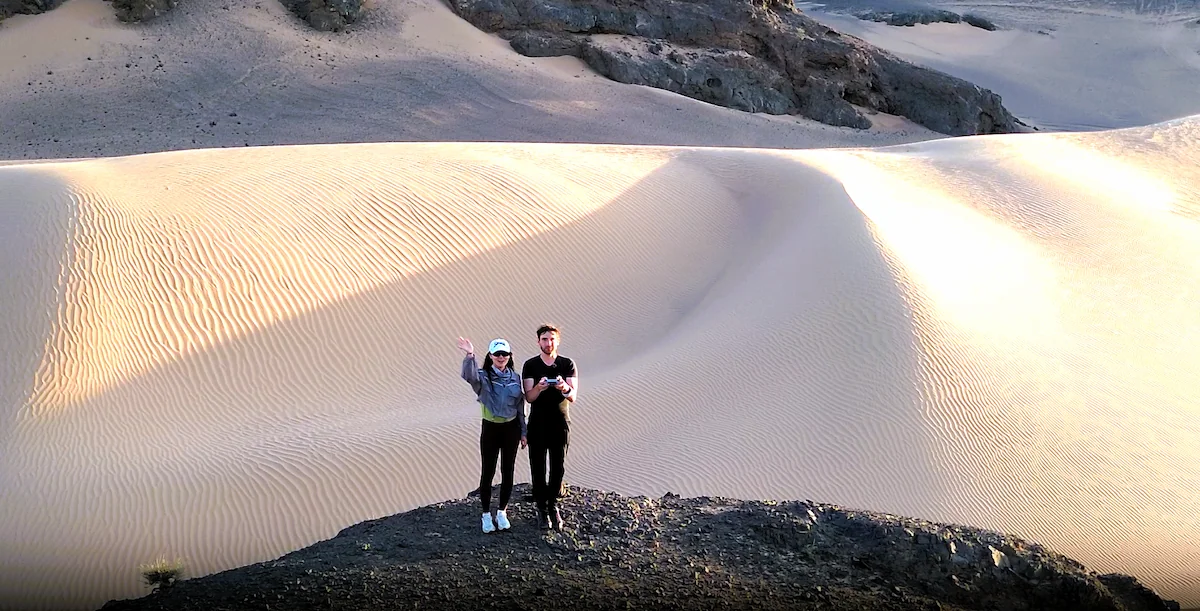
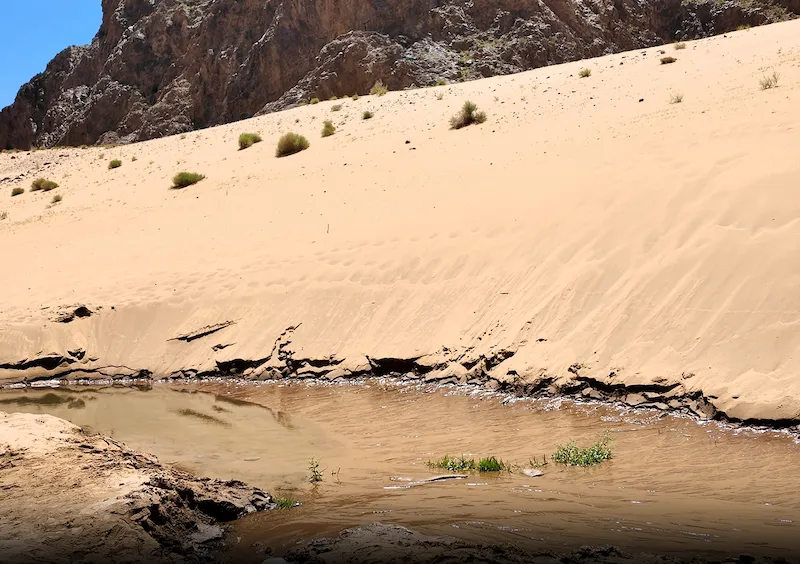
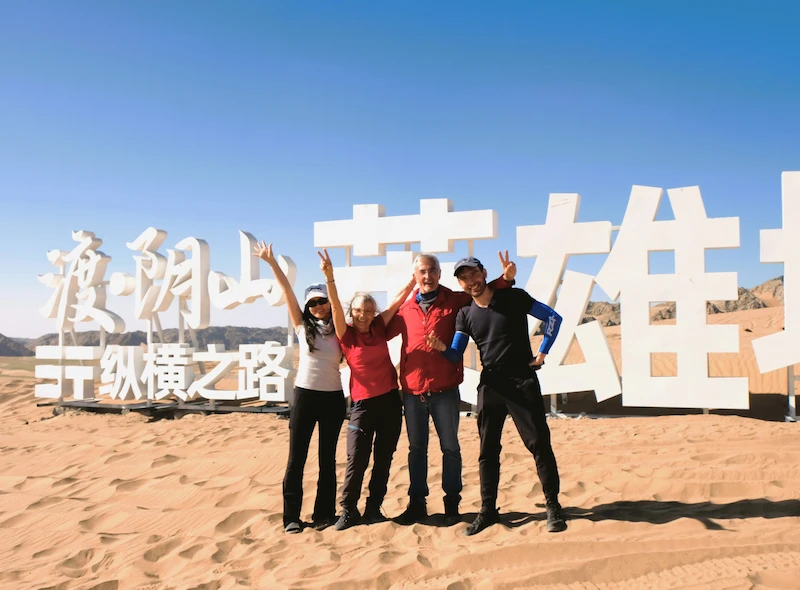
Heroes’ Hill is one of the expedition’s most exciting driving challenges—a towering sand slope rising from the heart of the Yinshan Canyon. Its steep gradient and constantly shifting sand demand careful technique, precise vehicle control and teamwork.
The reward comes at the summit, where sweeping views extend across endless dunes, rocky valleys and distant mountain ranges. It is a moment that perfectly captures the spirit of this expedition: exploration, achievement and complete immersion in one of China’s wildest landscapes.
Bayan Shandai Temple
“Where centuries of prayer still echo through the mountains”
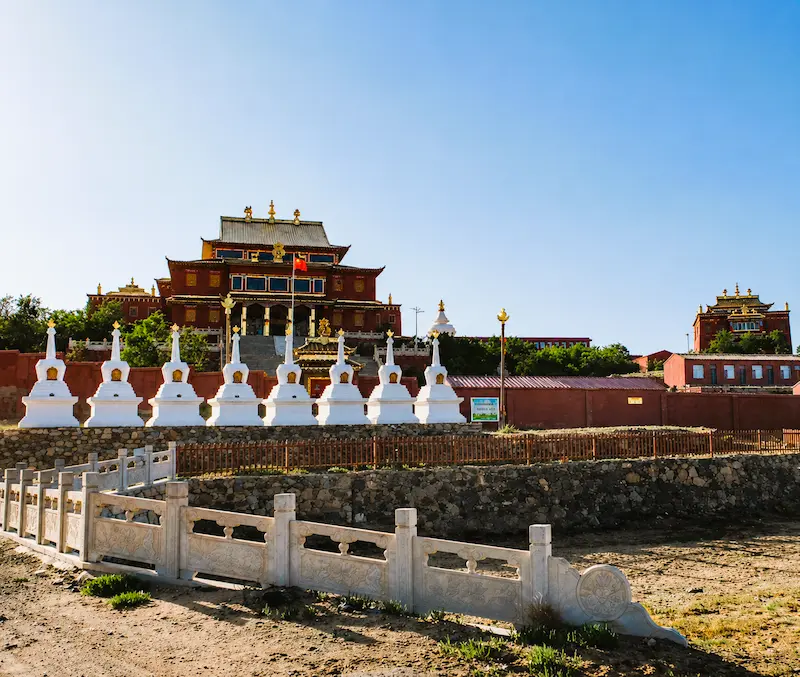
Founded in 1778 during the Qing Dynasty, Bayan Shandai Temple became one of the most important Gelug Buddhist monasteries in western Inner Mongolia.
Established by the distinguished monk Roha Badogemide after years of study in Lhasa, the monastery flourished as a spiritual and cultural centre for the Urad grasslands, attracting hundreds of monks and pilgrims from across the region.
Today, its tranquil surroundings offer a fascinating contrast to the rugged landscapes explored throughout the day, providing insight into the deep spiritual traditions that continue to shape Inner Mongolia’s cultural identity.
Red Canyon
“When the desert reveals its most vibrant colours”
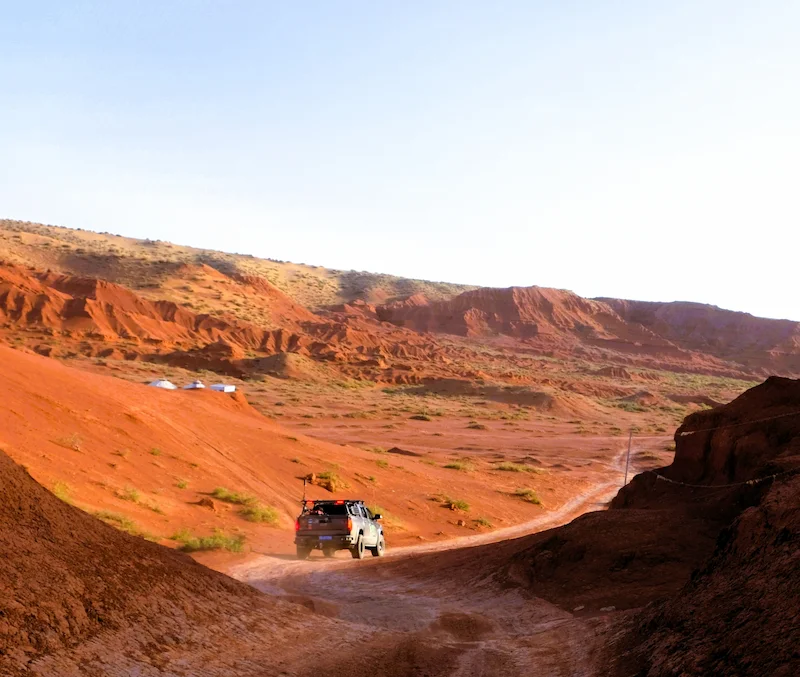
As afternoon light sweeps across the landscape, the Red Canyon reveals one of the expedition’s most spectacular panoramas.
Millions of years of erosion have sculpted an extraordinary labyrinth of crimson cliffs, layered rock formations and dramatic ridgelines that seem to ripple across the horizon like waves of solidified fire.
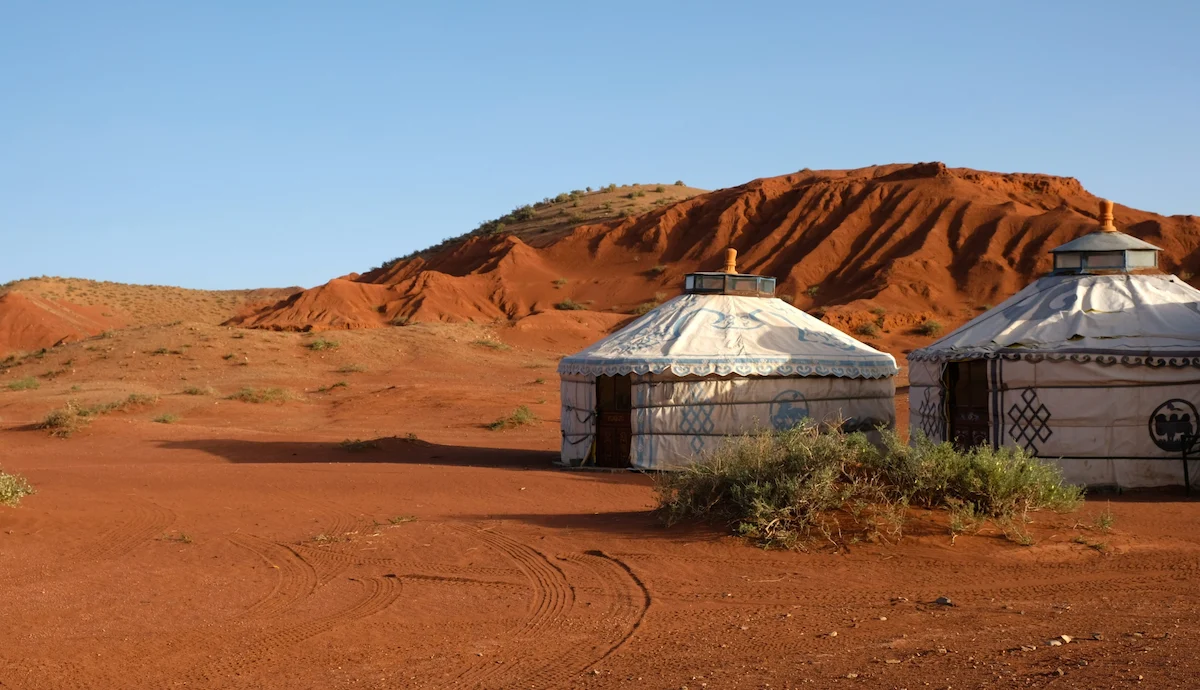
From the highest viewpoints, the canyon’s vivid red cliffs contrast beautifully with the deep blue sky and the white Mongolian yurts scattered across the grasslands below, creating an unforgettable panorama for photographers and nature lovers alike.
Malan Lake
“The day’s final surprise appears where water meets the dunes”
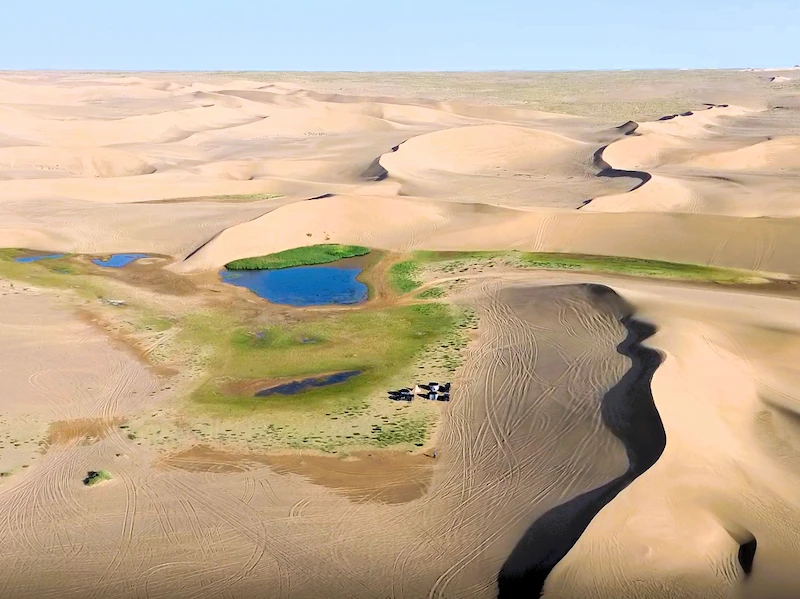
Hidden deep within the remote landscapes of the Yin Mountains, Malan Lake appears unexpectedly—its tranquil waters providing a striking contrast to the vast wilderness that surrounds them.
Named after the wild blue-purple Malan iris that blooms here each spring, the lake forms a striking contrast with its arid surroundings. Its calm waters attract migratory birds and reflect the changing colours of the desert sky, creating one of the expedition’s most peaceful settings.
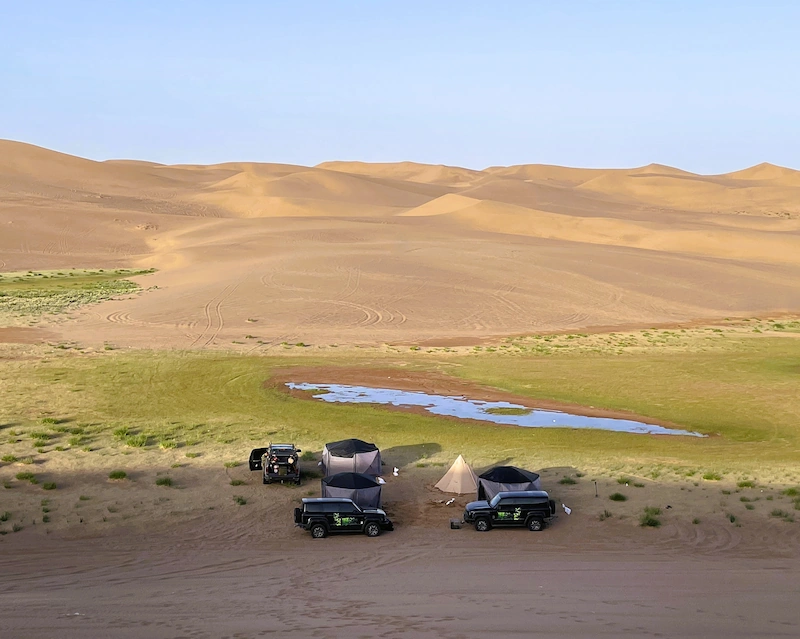
As evening falls, camp is established beside the lake, where a carefully prepared dinner and one of northern China’s clearest night skies provide the perfect ending to an unforgettable first day.
DAY TWO | Crossing the Black Gobi
Leaving the ancient frontier behind, the expedition ventures deep into one of Inner Mongolia’s most remote and least explored wilderness regions. Today’s journey crosses immense volcanic plains, colourful agate fields and extraordinary wind-sculpted landscapes before establishing a secluded desert camp far from roads, settlements and modern civilization. It is a day defined by silence, vast horizons and the raw beauty of nature.
Agate Lake
“Beneath your feet lies a geological story millions of years in the making“
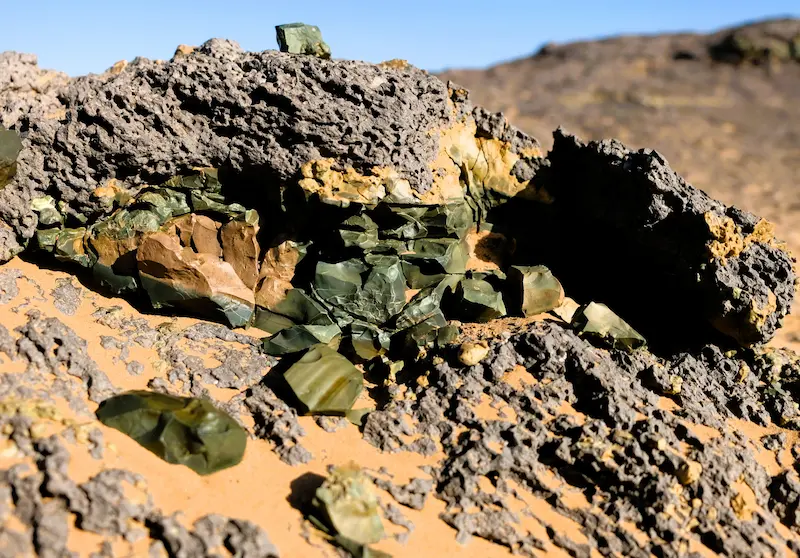
Millions of years ago, intense volcanic activity shaped this region before erosion by wind and sand gradually exposed countless agates scattered across the ancient lakebed.
Today, the desert floor glitters with stones displaying an extraordinary palette of colours, from deep reds and amber gold to translucent whites and soft blues, each one bearing the marks of nature’s patient craftsmanship.
Among collectors, the area is particularly renowned as the birthplace of the celebrated “Little Chick Hatching from the Egg” agate, one of China’s most iconic naturally formed ornamental stones.
Black Gobi
“Where the horizon becomes your only destination”
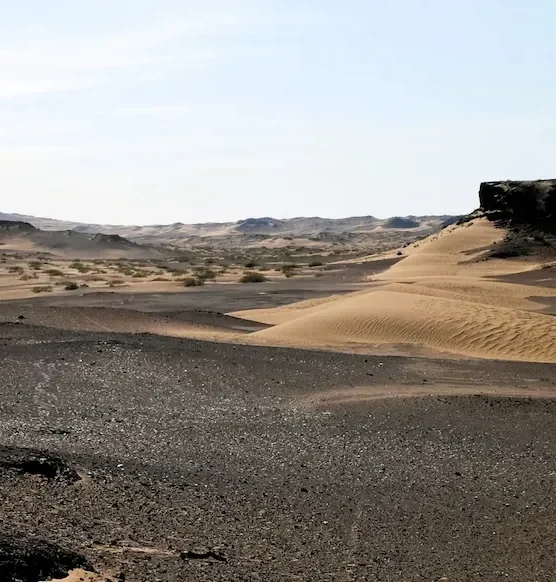
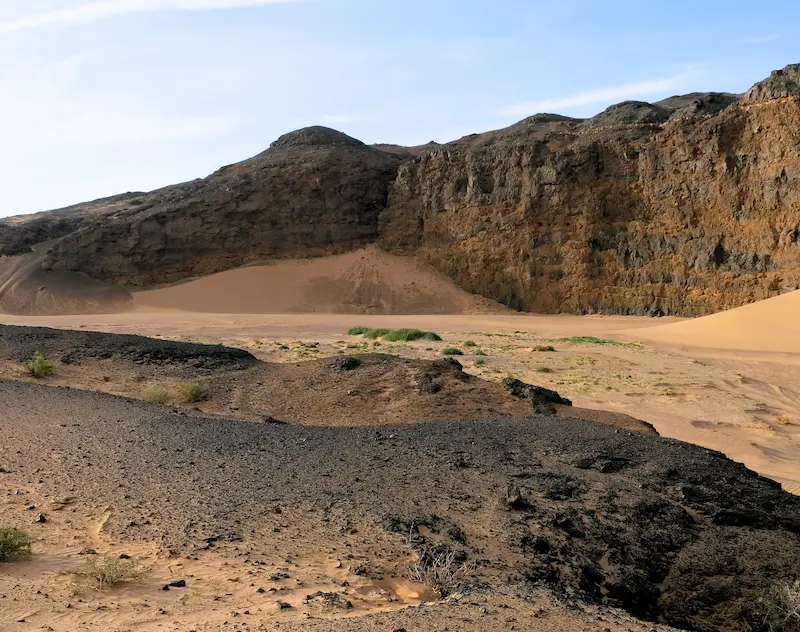
As the convoy leaves Agate Lake behind, the desert gradually give way to an immense expanse of dark volcanic gravel stretching uninterrupted towards the horizon.
Known as the Black Gobi, this extraordinary terrain was shaped by ancient volcanic activity and countless millennia of wind erosion, creating one of the most remote and visually striking environments in northern China.
Driving across this vast wilderness is unlike any conventional off-road experience. There are no villages, no fences and no visible roads—only endless horizons, distant mountain silhouettes and an overwhelming sense of space.
Yardang Landforms
“”Shaped by the wind. Perfected by time”
Beyond the volcanic plains, the scenery transforms once again.
Over millions of years, relentless desert winds, seasonal floods and dramatic temperature fluctuations have carved the soft sedimentary rocks into an astonishing labyrinth of ridges, towers and natural corridors known as Yardang landforms.
These extraordinary rock formations bear the unmistakable signature of the wind, their elongated shapes carved over millions of years by the forces of nature. Walking among these silent stone monuments feels less like exploring Earth and more like stepping onto another planet.
Camel Canyon
“As darkness falls, the desert reveals its greatest spectacle”
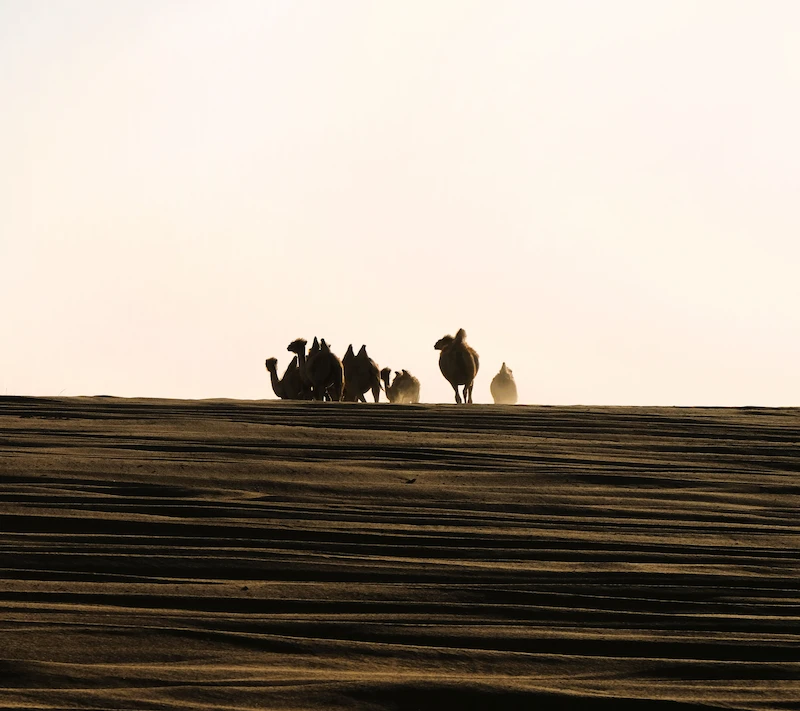
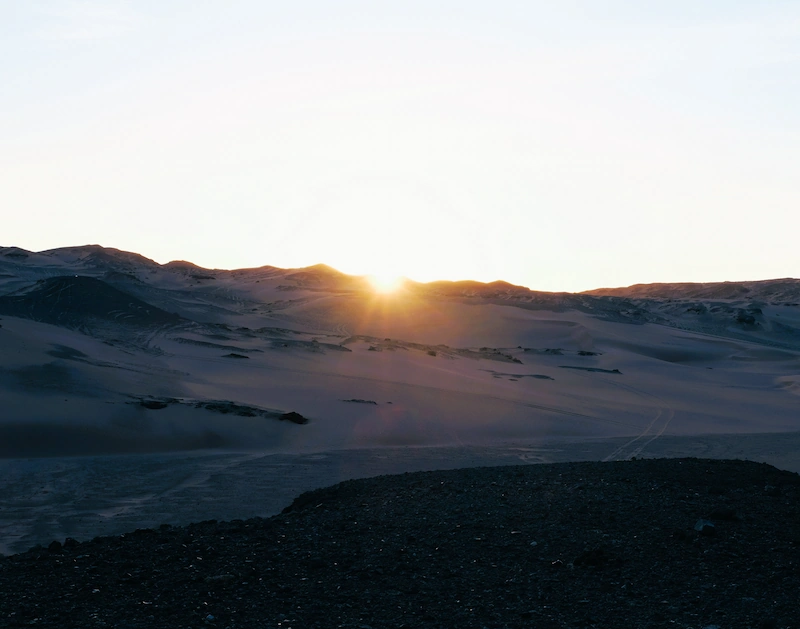
As evening approaches, the expedition reaches one of its most atmospheric campsites, nestled among the dramatic formations of what local explorers often refer to as Camel Canyon.
Surrounded by sculpted sandstone and grey rock formations rising from the desert floor, the camp offers a rare chance to disconnect completely from the outside world. As daylight fades, the canyon softens into muted tones of sand, stone, and shadow, before giving way to an immense canopy of stars.
In the quiet of the evening, guests gather to share stories of the day’s journey beneath a sky that has changed little since ancient caravans crossed these same remote landscapes.
DAY THREE | The Spirit of the Steppe
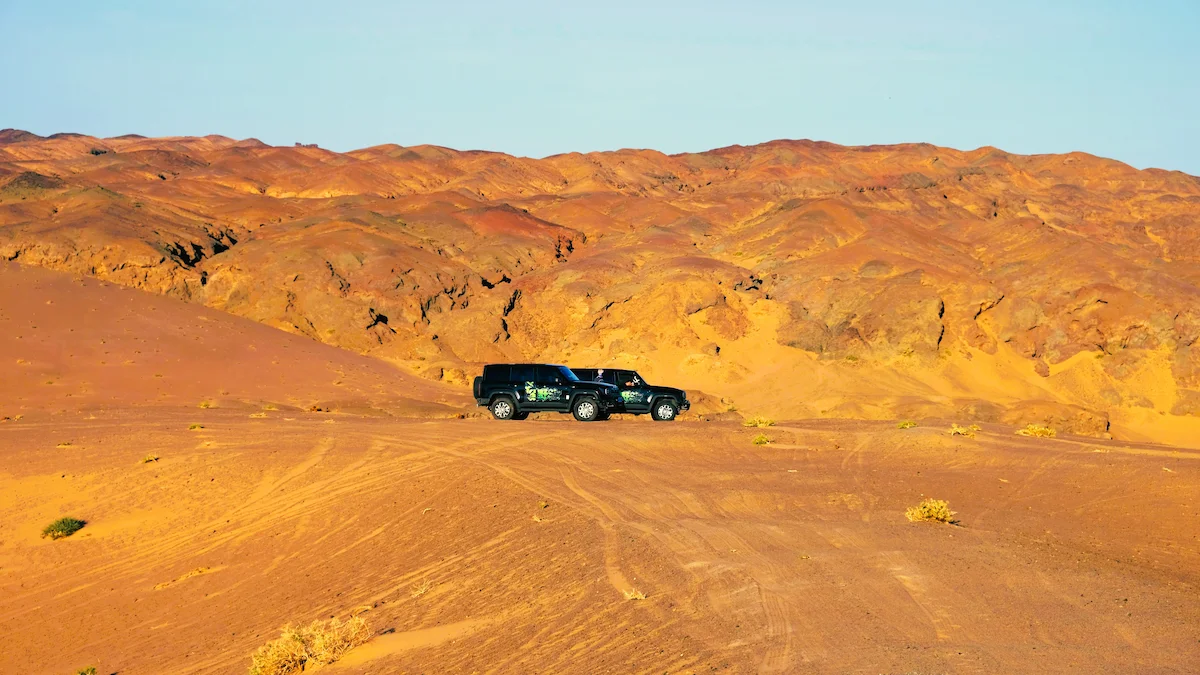
After two unforgettable days deep in the wilderness, today’s journey offers a deeper connection with the people and traditions that have shaped western Inner Mongolia for centuries. From sacred Aobao monuments that continue to unite Mongolian communities to one of China’s most remote frontier roads, the expedition reveals stories of faith, resilience and devotion before returning to the comforts of Bayannur for a well-deserved evening of rest.
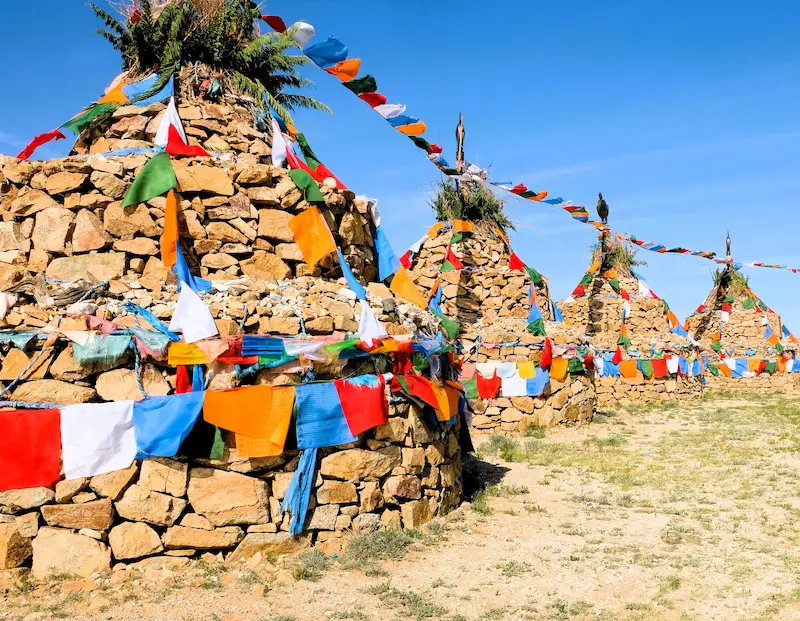
Aobao Park
“Every stone tells a story of faith, gratitude and the endless steppe”
For centuries, Aobao (or Ovoo) have stood as sacred landmarks across the Mongolian steppe. Originally built as simple route markers and territorial boundaries, these carefully constructed stone cairns gradually became places of worship where travellers and local communities offered prayers to the heavens, the mountains and their ancestors.
At the International Aobao Park, visitors can experience this living tradition through symbolic rituals such as walking clockwise around the cairns, tying colourful khadag prayer scarves and offering grains as a gesture of gratitude and good fortune.
During the annual Aobao Festival, the site also comes alive with traditional music, dance, wrestling, horse racing and camel polo, celebrating the enduring spirit of Mongolia’s nomadic heritage.
Hero’s Road
“Some roads become legendary because of the people who travelled them”
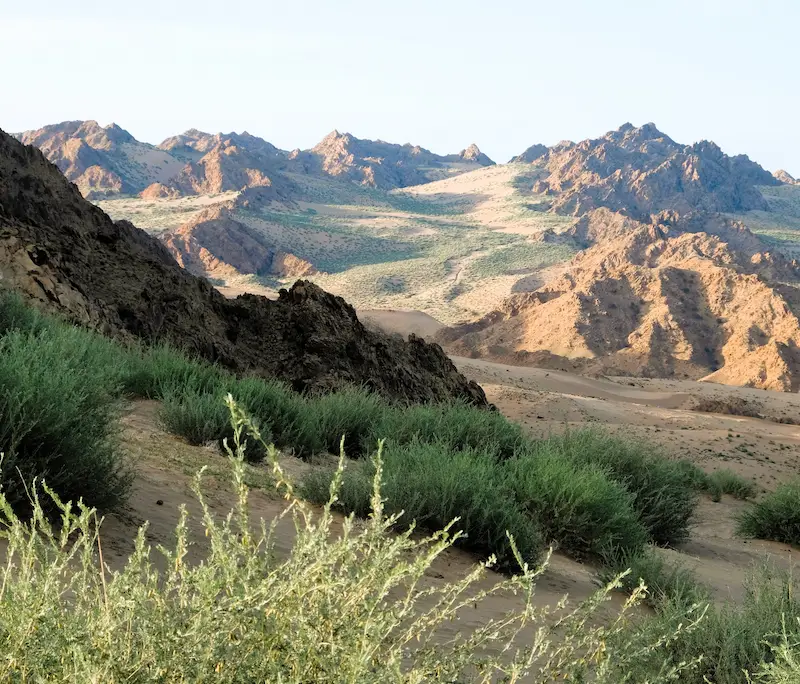
Deep within the Yin Mountains lies one of the expedition’s most memorable drives. Stretching for approximately 88 kilometres, Hero’s Road winds through rugged mountains where signs of human presence become increasingly rare.
The road owes its name to Baoyin Deliger, a respected frontier police officer who devoted more than two decades to protecting the isolated communities scattered across this vast border region. For twenty-four years, he travelled these mountains in all seasons, assisting herders and rescuing stranded travellers.
Every bend in the road reflects not only the dramatic beauty of the surrounding landscape but also the extraordinary commitment of a man whose quiet dedication transformed this remote route into a symbol of courage, service and perseverance.

Return to Bayannur
“Every expedition deserves a moment to pause before the final chapter”
Leaving the remote wilderness behind, the expedition returns to Bayannur, the gateway between the vast wilderness of the Yin Mountains and the fertile plains nourished by the Yellow River.
After two nights immersed in the silence of the desert, the city offers a welcome opportunity to relax, enjoy a comfortable hotel and reflect on the extraordinary experiences of the past three days.
A refreshing shower, a leisurely dinner and a restful night’s sleep provide the perfect balance before setting out on the expedition’s final adventure.
DAY FOUR | Where Sand Meets Water
The expedition’s final day culminates in one of Inner Mongolia’s most extraordinary natural spectacles. At the edge of the Kubuqi Desert, the mighty Yellow River transforms the landscape in an unexpected display of colour and life, creating a breathtaking panorama where shimmering blue waters weave through golden dunes. It is a fitting conclusion to an expedition defined by remarkable contrasts, hidden landscapes and unforgettable discoveries.
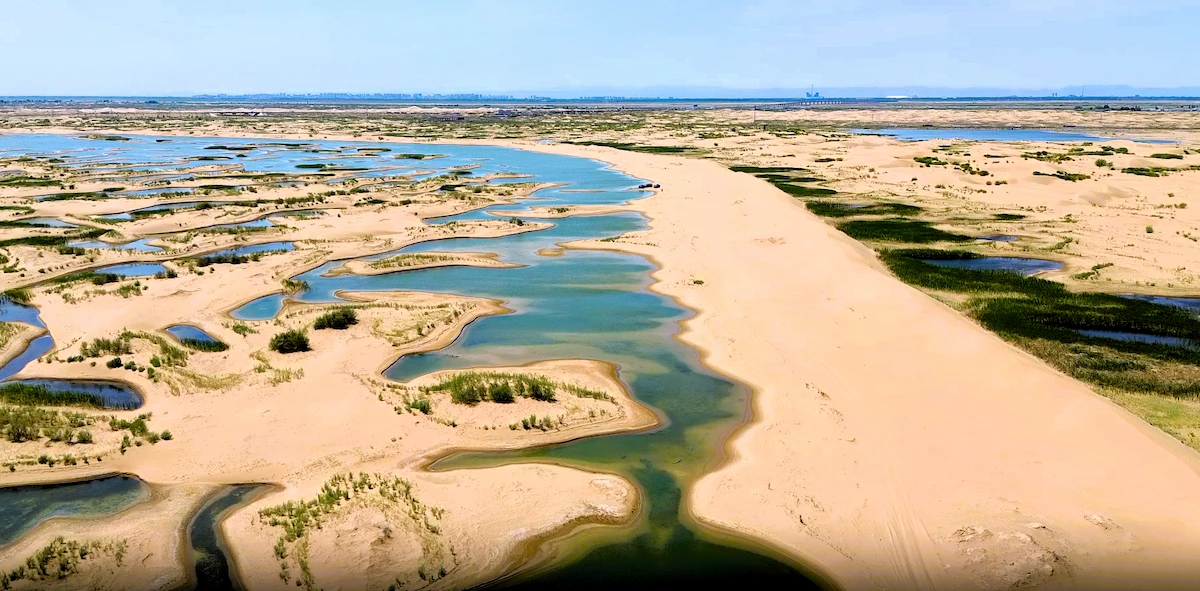
Thousand-Island Lake
“Where the desert meets the Yellow River, nature creates its greatest masterpiece”
Few places illustrate the remarkable diversity of Inner Mongolia quite like Thousand-Island Lake. Formed where the Yellow River gently embraces the vast Kubuqi Desert, this extraordinary landscape is the result of a unique natural process that has unfolded over centuries.
As the river slows across the desert, fine sediments gradually settle, allowing the water to become remarkably clear. The result is a dazzling mosaic of countless blue lagoons and winding channels that appear to float effortlessly among the golden sand dunes.
From above, the scene resembles a necklace of sapphire jewels scattered across the desert—a breathtaking contrast between crystal-clear water, rolling dunes and endless blue skies. It is this extraordinary interplay of land and water that has earned the area its evocative name: Thousand-Island Lake.
A Journey to Remember
“Some places leave footprints. Others leave memories that last a lifetime”
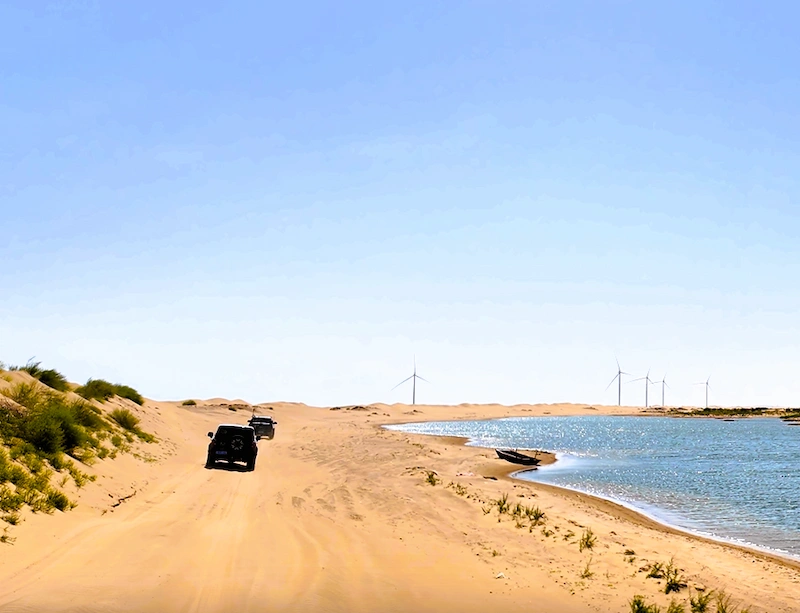
As the expedition draws to a close, the landscapes of the Yin Mountains leave behind far more than photographs.
Over four unforgettable days, the journey has crossed ancient Han Dynasty frontiers, ventured deep into the Black Gobi, followed the traditions of Mongolia’s nomadic peoples and reached one of the most extraordinary desert landscapes in China. Each day has revealed a different chapter of western Inner Mongolia—a region where history, culture and wilderness coexist in remarkable harmony.
Although the expedition ends here, the memories of vast horizons, silent deserts and hidden discoveries will remain long after the journey home begins.
Expedition Overview
What’s Included & Pricing
Yin Mountains Private Expedition
The Yin Mountains Expedition has been designed as a private expedition where the journey is as rewarding as the destination. Guests are invited to experience the thrill of self-driving across one of China’s most remote frontiers.
Don’t feel like driving? No problem. Guests may choose to enjoy the entire journey as passengers while one of our experienced expedition drivers takes the wheel, allowing everyone to fully appreciate the spectacular scenery without driving.
Private Departure Pricing
| Participants | Price per Person* |
|---|---|
| 2 Guests | €2,690 |
| 3 Guests | €2,490 |
| 4 Guests | €2,290 |
*Pricing is based on one shared 4×4 expedition vehicle (maximum four guests per vehicle).
Additional vehicles can be arranged upon request for guests wishing to share the driving experience (supplement applies).
Solo departures and larger private groups are available upon request.
Your Expedition Includes
1. Accommodation (Double Occupancy)
- Pre-Expedition: Selected hotel accommodation in Bayannur
- Day 1 – Wilderness camping at Malan Lake (all camping equipment provided)
- Day 2 – Wilderness camping at Camel Canyon (all camping equipment provided)
- Day 3 – Selected hotel accommodation in Bayannur
- Day 4 – Selected hotel accommodation in Bayannur
2. Meals
- Day 1: Breakfast • Lunch • Dinner
- Day 2: Breakfast • Lunch • Dinner
- Day 3: Breakfast • Lunch
- Day 4: Breakfast • Lunch
3. Self-Drive Experience
A fully equipped 4×4 expedition vehicle is included throughout the journey (maximum four people per vehicle), with vehicle rental, fuel, highway tolls and standard vehicle insurance all included.
Guests are welcome to share the driving experience, taking turns behind the wheel throughout the expedition. Alternatively, those who prefer not to drive may simply relax and travel as passengers while one of our experienced expedition drivers takes care of the journey.
For groups wishing to maximise the driving experience, additional expedition vehicles can be arranged upon request (supplement applies). For example, a group of four guests may choose to travel with two 4×4 vehicles, allowing more participants to enjoy driving during the expedition.
Vehicle insurance is included throughout the expedition. However, any fines, traffic violations, penalties, reckless or negligent driving, misuse of the vehicle, or damage excluded under the insurance policy remain the responsibility of the driver.
4. Temporary Chinese Driving Licence
Guests wishing to self-drive will receive assistance obtaining a temporary Chinese driving licence, which is mandatory for driving in Mainland China, as international driving permits are not recognised.
The application requires approximately half a day and the driver’s personal attendance. We recommend completing the procedure in Shanghai, Beijing or Xi’an before the expedition begins.
5. Expedition Team
Throughout the expedition, you will be accompanied by:
- Experienced expedition leader
- One or two support staff members
- Basic English-speaking assistance
A fluent English, Italian or French-speaking expedition escort can be arranged upon request (supplement applies).
6. Expedition Photography & Videography
Throughout the expedition, our team captures memorable moments using both ground photography and drone imagery at selected locations. The best photographs and aerial footage are shared with you after the journey, allowing you to relive one of China’s most extraordinary self-drive adventures.
7. Insurance & Protection
Comprehensive self-drive and outdoor accident insurance covering the entire duration of the expedition is included for every participant.
What’s Not Included
- International and domestic flights
- Chinese visa (if required)
- Personal expenses
- Optional activities not mentioned in the itinerary
- Gratuities
- Additional expedition vehicles (available upon request)
- Private language escort (available upon request, Italian, French, English)
- Dinner on Days 3 and 4, allowing guests the flexibility to explore Bayannur’s local restaurants at their own pace
- Any items or services not specifically listed under “Your Expedition Includes”