A Silk Road Tour: Through the Pamirs
Table of Contents
I’m Luca, and together with my wife Elena, we’ve spent our retirement years traveling with cameras in hand. Photography has been our shared passion for decades and spring 2025 took us to South Xinjiang. Organizing independent travel to this remote corner of China felt daunting: permits, logistics, language barriers—it all seemed beyond our abilities. We eventually worked with Ink Voyages, who offers a rich catalogue of exclusive China adventures and handled the bureaucratic maze and local arrangements, leaving us free to fully enjoy our exploration.
Shanghai: The Gateway
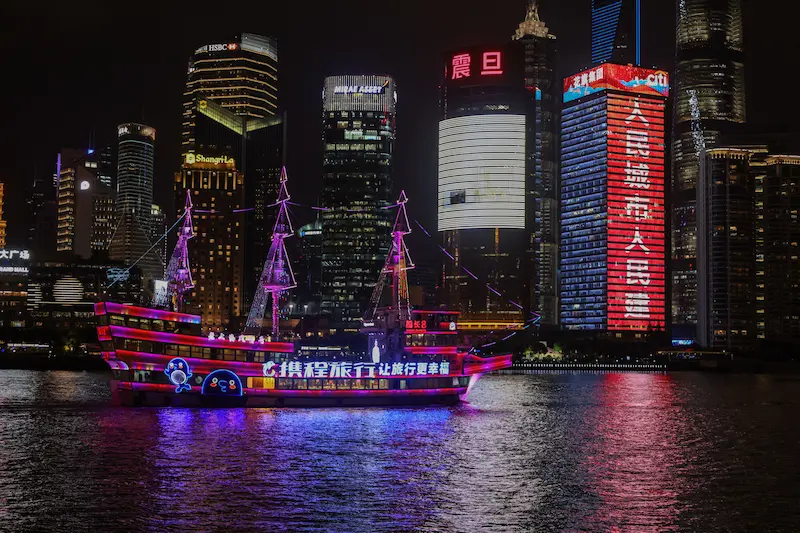
We landed in Shanghai on a crisp April morning, jet-lagged but ready. The city’s futuristic skyline pierced the dawn haze as our coordinator, Martina Li, met us at the airport. First task after check-in: securing Xinjiang entry permits at the local police station. What could have been a nightmare of forms and translations proved surprisingly smooth with professional help navigating the process.
The rest of the day blurred into recovery—unpacking, organizing camera gear, and a long nap. As evening settled, we treated ourselves to a Huangpu River cruise. The colonial architecture of the Bund glowed against Pudong’s neon skyline, reflections dancing on dark water. We wish we had more time to visit the Golden Triangle area, including Suzhou and Hangzhou – one of the recommended china tours by Ink Voyages – but we were short of time on this occasion. In any case, this still turned out to be a gentle introduction, a palate cleanser before the real adventure!
Into Another World
Getting to South Xinjiang requires commitment: multiple flights, frequent security checks, and a journey west that feels like crossing into another century. We flew first to Urumqi, then onward to Kashgar, arriving by late afternoon on our second day. Stepping off the plane, the air felt different—crisp, dry, laced with distant spices.
Our local guide Shawn, a Uyghur native with encyclopedic knowledge of the region, met us at the airport and drove us to a guesthouse in the old town. That evening, over fragrant lamb skewers, naan bread, and pilaf, we celebrated Uyghur food and attended a performance of traditional Uyghur dance. The twirling skirts, rhythmic drums, and haunting melodies under string lights—it was our first glimpse of what makes this region so distinctive. This wasn’t the China we expected. Here, Central Asian influences dominate, making you feel like you’ve crossed invisible borders into another world entirely.
Kashgar: Where Asia Converges
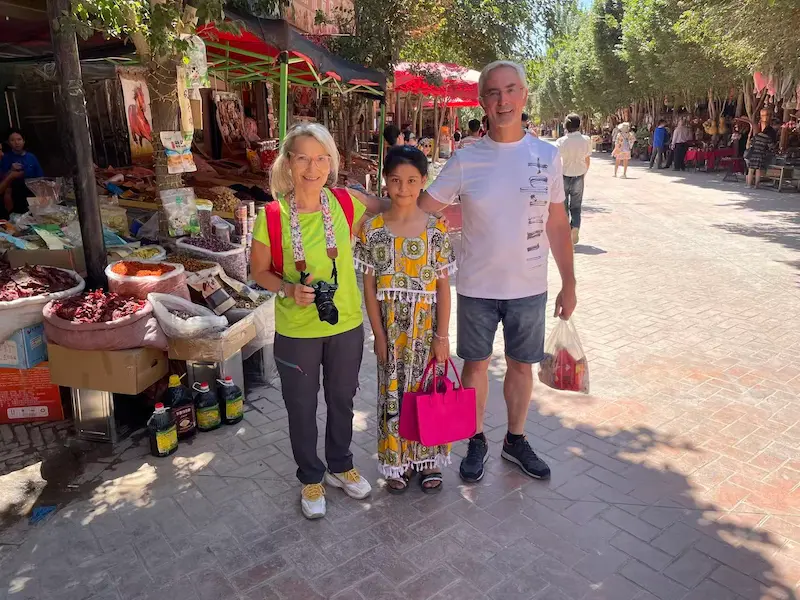
Day three brought full immersion in Kashgar’s labyrinthine bazaars: it felt like a Silk Road time capsule. The air hummed with haggling vendors, spice scents, and the clatter of donkey carts. Silk scarves in vibrant hues, intricate carpets, and pyramids of dried fruits tempted at every turn.
We photographed artisans at work—a blacksmith hammering copper, a weaver threading patterns passed down through generations. The architecture captivated: mud-brick walls, arched doorways adorned with turquoise tiles, minarets piercing the sky. It’s surreal being in China yet surrounded by this Central Asian atmosphere—mosques instead of temples, kebabs over dumplings, faces that could hail from Tashkent or Istanbul.
We wandered through Id Kah Mosque, its yellow bricks glowing in spring sun, then climbed to viewpoints for panoramic shots of the sprawling oasis town against distant mountains. Lunch was polo—a Uyghur rice dish—at a teahouse where Shawn shared stories of the region’s history. By evening, our memory cards were full and our legs tired, but our spirits soared.
The Karakoram Highway Tour
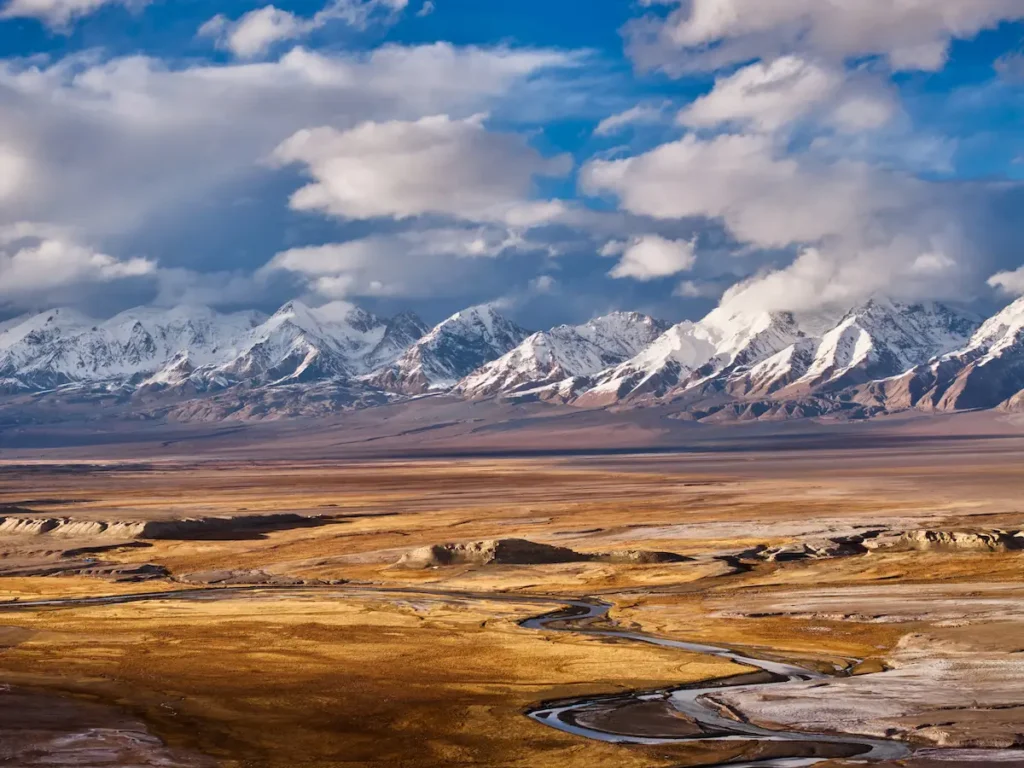
Pamir Plateau Gems: Karakul Lake, Baisha Lake, Muztagh Ata
The drive to Tashkorgan along the Karakoram Highway became one of the trip’s defining experiences. The road winds through stark valleys, past snow-capped peaks, and alongside shimmering lakes. Baisha Lake’s white-sand shores mirrored the blue sky. At Karakul Lake, ringed by the Muztagh Ata massif, we spotted wild camels grazing on sparse grass, their long shadows stretching across the landscape in morning light.
The highway itself is a marvel—engineered through impossible terrain with hairpin turns and vistas that demanded we stop every few miles. Shawn pointed out ancient petroglyphs and shared tales of traders who once traversed this route. But let’s be honest—not everything was picturesque. The roadside facilities tested our resolve. This was off-the-beaten-track travel, not luxury touring, and certain realities came with the adventure.
The Pamir Plateau
Arriving in Tashkorgan by late afternoon, we checked into a comfortable hotel with views of the Pamirs. After a steaming hot pot dinner, we rested well, knowing the next day would push us deeper into the mountains.
Shawn had been driving his loyal and rugged Tank 300 SUV, which was ready for the explorations ahead. We started with the Panlong Ancient Road, a serpentine path carved into the mountains like a coiling dragon. The views stunned: vast plateaus dotted with yurts, herds of yaks, wildflowers blooming in the spring thaw. Shawn took us off main paths to hidden corners, where we enjoyed gentle hiking—nothing strenuous, but enough to challenge us at over 4,000 meters altitude.
We had to pace ourselves, sipping water and taking frequent breaks, but the rewards were immense. The light at this altitude is otherworldly—sharp and golden, turning every scene into a potential masterpiece.
Tar Township: The Hidden Valley
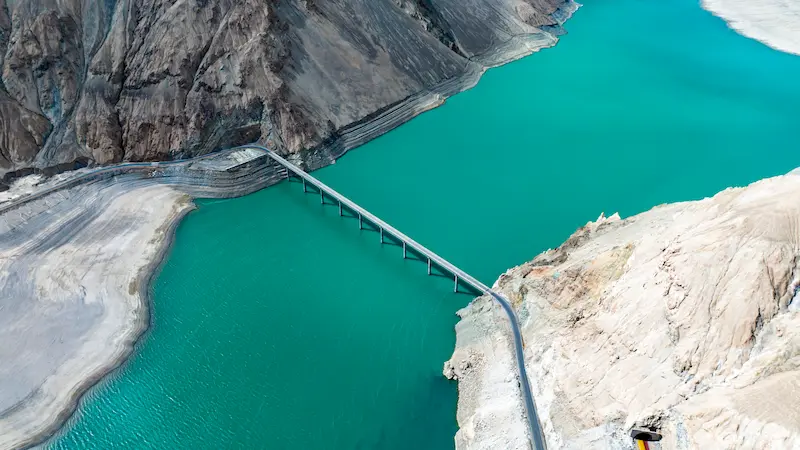
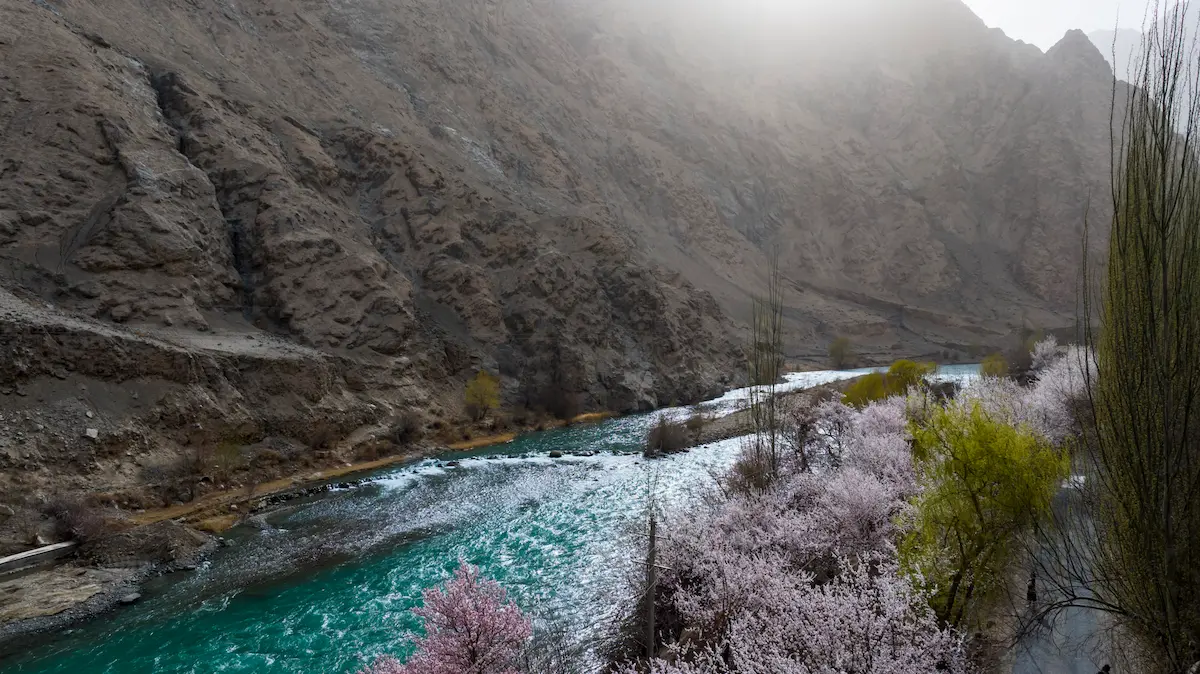
The real revelation came the following day, as we ventured toward Tar Township, a place few tourists reach. Shawn navigated a precarious road—narrow, bumpy, hugging sheer cliffs with a crystal-clear river roaring below. The rugged peaks loomed like guardians. We held our breaths at times, but the scenery distracted: turquoise pools, wild goats on impossible ledges, the ever-changing play of light on rock faces.
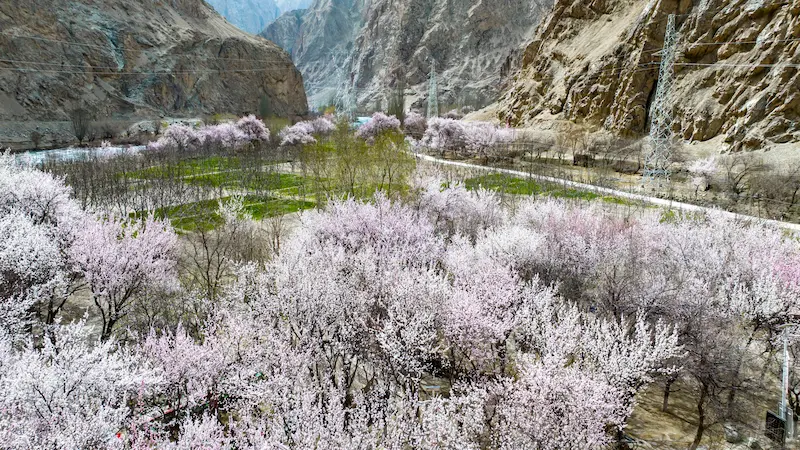
Arriving in Tar felt like discovering a secret… And this discovery feeling spreading throughout our itinerary is probably what we enjoyed the most of our private China tour: the feeling of a true exploration! This small community nestled in the valley might be the most spectacular place we’ve ever seen. Surrounded by apricot orchards just beginning to blossom, the valley exploded with pink against jagged mountains. Our basic but welcoming guesthouse was run by a local family who greeted us with fresh yogurt and bread.
The next day was dedicated to exploring. Spring had transformed the area—apricot trees in full bloom, petals drifting like snow in the breeze. We hiked gentle trails, discovering hidden viewpoints and hearing folklore about the valley’s Tajik inhabitants. Portraits of villagers in traditional embroidered caps captured the warmth and curiosity in their eyes. We set up for time-lapses of blossoms swaying against the dramatic mountain backdrop.
We picnicked by the river, its roar a constant soundtrack, and spotted eagles soaring overhead. Here we felt truly off the grid—no crowds, no distractions, just nature’s raw presence. The altitude slowed our pace, but it heightened awareness—every breath felt earned, every photograph a small triumph.
The Return
Reluctantly, we headed back to Tashkorgan the following day. The precarious road was so beautiful that retracing it offered no hardship. In Tashkorgan, we rested again over another hot pot dinner, reflecting on Tar’s magic.
Our final day brought us back to Kashgar airport, then flights to Urumqi and Shanghai, arriving just in time for our night flight home. The transitions felt seamless after all we’d experienced.
Reflections
This trip wasn’t easy—long flights, high altitudes, bumpy roads tested our limits. But it delivered something rare: a genuine sense of discovery in a world that often feels thoroughly mapped. A Silk Road tour offers a blend of culture, adventure, and visual drama that redefines what’s possible. For this and other exclusive China travels, you can have a look into Ink Voyages’ rich catalogue!
We returned with thousands of photographs, but more importantly, with memories that resist easy summary. This is travel that demands something of you—patience, flexibility, a willingness to be uncomfortable. In return, it offers landscapes and encounters that feel like secrets, places where the modern world hasn’t quite reached, where the light falls differently and every turn reveals something unexpected.
For those tempted by remote places and by cultures that remain distinctly themselves—South Xinjiang Silk Road tour with Ink Voyages is the right choice. It requires planning, help with logistics, and a tolerance for uncertainty. But it rewards in ways that easy destinations never can.