Bingzhongluo: Where Gods and Mortals Coexist
Table of Contents
An In-depth Exploration of Bingzhongluo
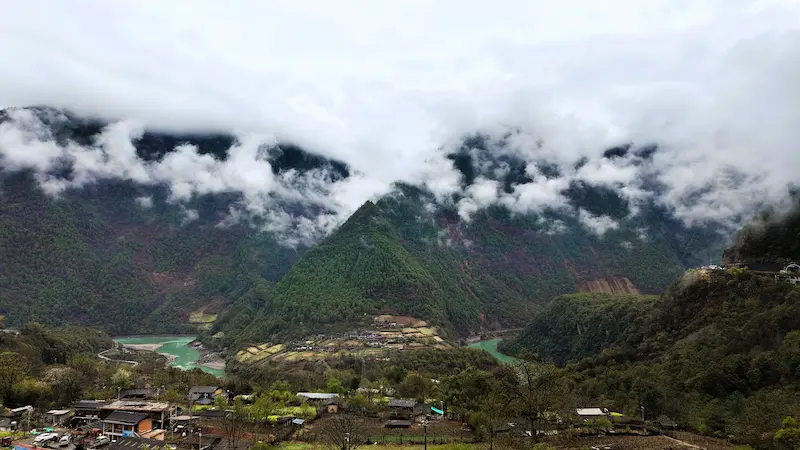
We found ourselves lingering in Bingzhongluo longer than expected, held back by an unseasonable snowfall that blocked the Peacock Mountain Pass to the northeast.
Our Tibetan guesthouse owner, barely suppressing a chuckle, told us they hadn’t seen a drop of rain for three months… until we arrived!
Indeed, being the height of the dry season, rain and snow were the last things we expected during our journey through Yunnan.
Yet, as they say, the weather in the mountains is always a gamble. But before deciding we’d lost the bet, the Ink Voyages team took this slowdown as an opportunity to truly immerse ourselves in the area.
After all, the town’s very epithet is an invitation to pause and discover its magic: Bingzhongluo, “where gods and mortals coexist.” To get a more immediate feel for this area, you can watch our short video here.
This small town, which has seen significant development recently due to growing tourism, is nestled at the northern tip of the Nujiang Lisu Autonomous Prefecture. It is here that the Nu River carves one of the deepest and most spectacular gorges in the world, just a stone’s throw from the Tibetan border.
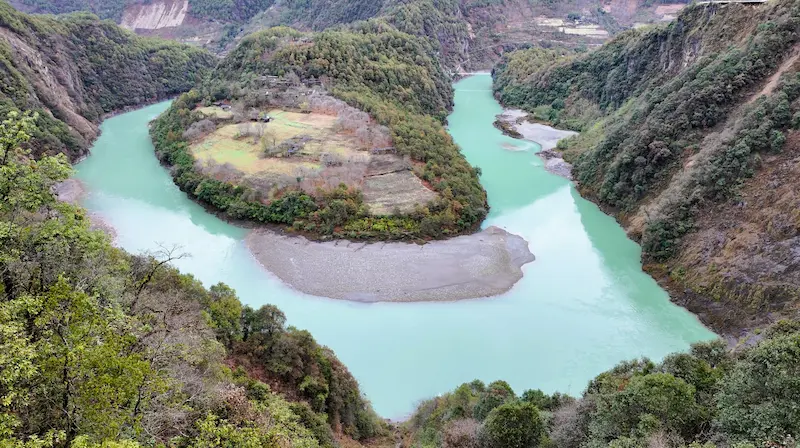
As you head north through the Nujiang Gorge along the G219 highway, we recommend stopping to admire the winding “First Bend of the Nu River” before reaching Bingzhongluo. During the dry season, when the waters are clear of rain-driven debris, you will be struck by its vibrant jade hue.
From the viewpoint, you’ll see Peach Blossom Island—the stretch of land home to Zhalatong village, one of the gems we’ll dive into later.
Not far from here, if you’re looking for a photo in true local style—keeping in mind that Chinese tourists love posing with official landmarks—you’ll find the stone engraved with the characters for “Bingzhongluo.”
If you are interested in discovering more about Yunnan, you can also read our travel guide to this kaleidoscopic province.
The Divinities of Bingzhongluo
Once you pass that stone, you have officially entered the realm where heaven and earth meet.
In our view, the true beauty of this region lies beyond the town of Bingzhongluo itself, scattered throughout the surrounding landscape. It is the traditional villages that will truly enchant you. Here, quite literally, traces of the divine peek out from among the locals—and it might be a divinity more familiar to you than expected.
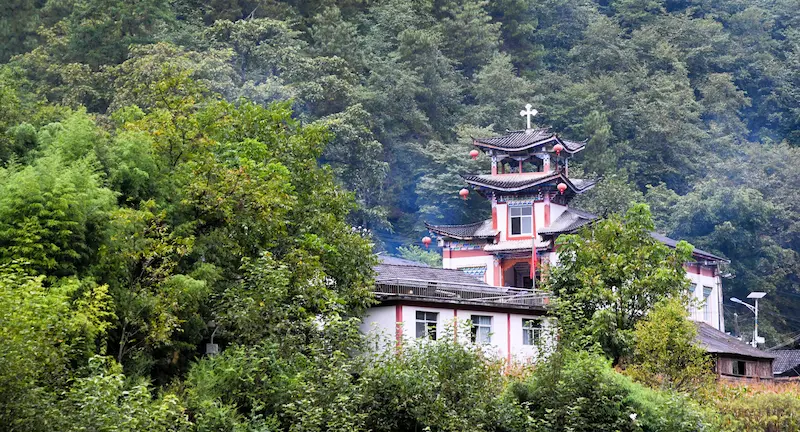
Starting from Zhiziluo, located a few hours south of Bingzhongluo, you will be surprised to see Christian crosses appearing on rooftops. After rubbing your eyes in disbelief, you’ll realize these are indeed churches.
Unless you visit on a Sunday—the day the community gathers for service—you’ll likely find them closed. If you’re lucky, a local caretaker might let you steal a quick glance inside, though their most fascinating aspect is often the exterior.
What is most striking is the architectural syncretism: these buildings blend Christian elements with the traditional styles of the Nu and Lisu people, the primary ethnic minorities in the area.
The history behind these unexpected sightings dates back to the late 19th century, when French missionaries braved the rugged geography of the region to evangelize. The faith took deep root, eventually merging seamlessly with local traditions.
Less surprising, but equally captivating, is the growing influence of Tibetan culture. As you explore, it becomes perfectly natural to transition from a church to a stupa or a Buddhist temple, catching sight of Tibetan prayer flags fluttering in the wind.
The border of Tibet is only 25–30 km away, and the area has a strong Tibetan presence. Incidentally, the stretch of the G219 connecting Yunnan to Tibet has recently been renovated, making this scenic route much more accessible.
If you are interested in journeys to China that delve deep into the cultural fabric of the land, you can browse our catalog of private tours here.
What We Love Most About Bingzhongluo
Beyond the town itself, this region is essentially a living gallery of mountain villages, wrapped in breathtaking views and traditional charm. Here is what captured our hearts:
The Enchantment of the Villages
Whether you are “trapped” by a snowfall or not, we recommend spending at least two days in Bingzhongluo. Taking the time to linger in the villages is the only way to absorb their unique atmosphere.
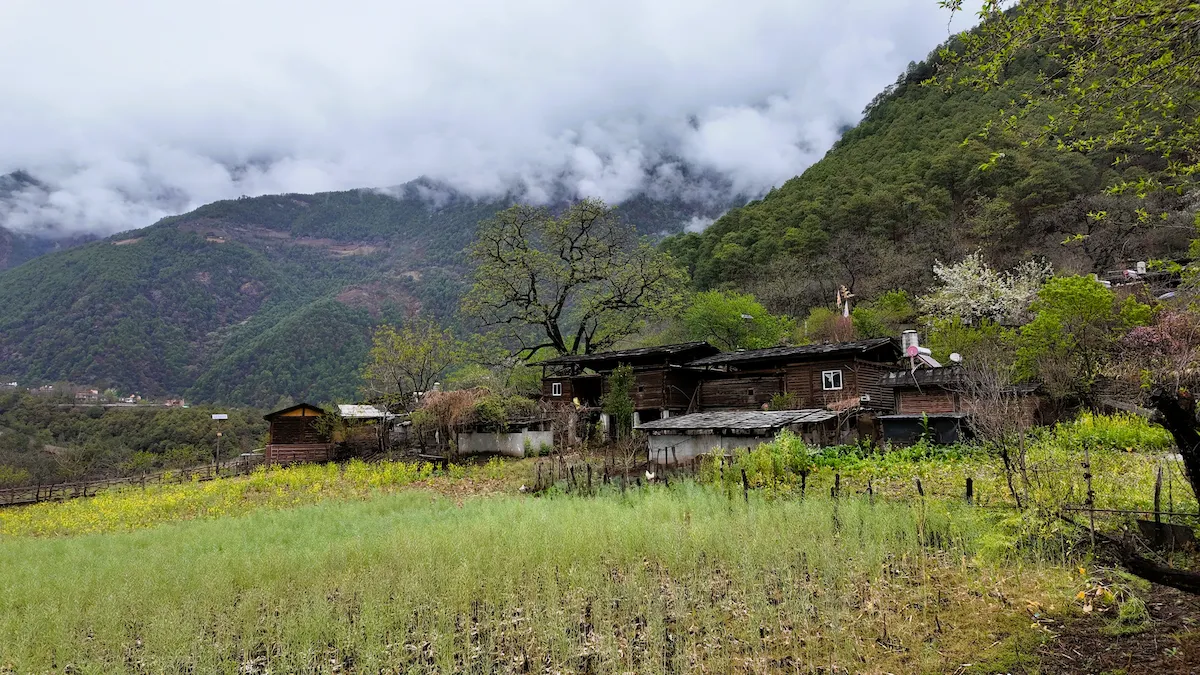
Start with Zhalatong, which we mentioned earlier. It is famous for its peach trees, which paint the landscape in vivid pink during the spring bloom. Even without the blossoms, Zhalatong is well worth the visit. The wooden houses maintain an authentic feel, and the stone alleys wind through a setting where daily life still follows the rhythms of nature. You’ll notice these “little mountain cabins” are a signature of the area, reinforcing the traditional alpine feel.
If you wish to discover another village beautifully frozen in time, you can find here our dedicated article on Nuodeng, the thousand-year-old village on the Tiger Slope.
The Coexistence of Churches and Temples
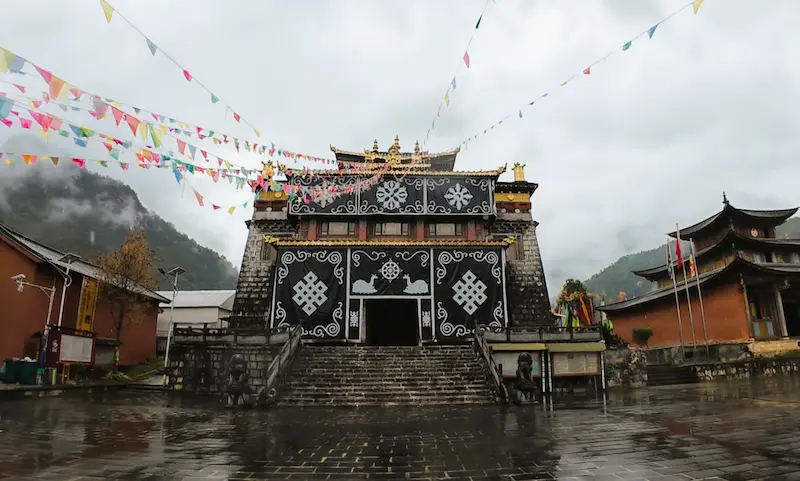
The religious syncretism here is unpretentious and entirely spontaneous. Just as trees grow, streams flow, and livestock graze, churches and Buddhist temples exist side-by-side, creating a profound and unexpected spiritual energy.
In this territory, different deities live together. It’s not uncommon to see the Chinese flag flying in a church courtyard—a juxtaposition of elements that is both unexpected and culturally intriguing.
One of our favorite spots is the church in Dimaluo, a village about forty minutes southeast of Bingzhongluo. Its façade features a beautifully harmonized blend of diverse cultural and stylistic elements.
On the Buddhist side, don’t miss the Puhua Temple in Kantong village, where you’ll find murals, stupas, and Buddha statues. While it is the only active Buddhist complex remaining in the immediate area, the cultural presence of Buddhism is felt everywhere, echoing a respectful coexistence of different faiths.
A side note: Outside places of worship, you’ll often see signs stating that religious services are reserved for those over eighteen—a reflection of a state culture that respects diversity while remaining structurally secular.
The Gentle Hike to Wuli Village
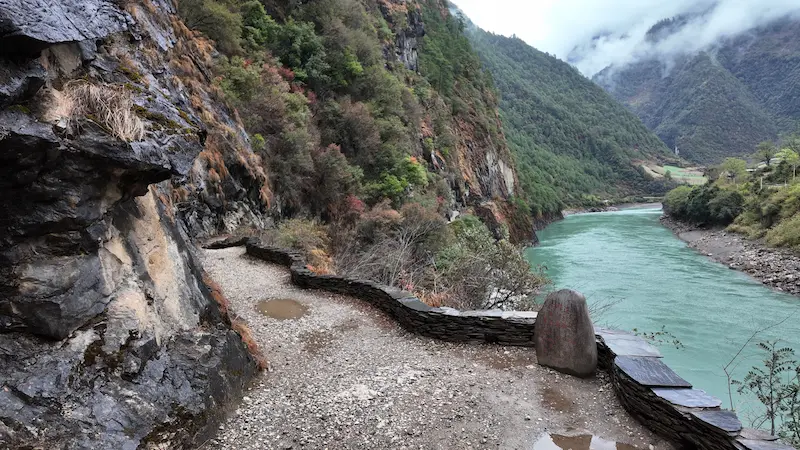
Finally, we highly recommend visiting Wuli, also known as the “Village of the Mist.” This accessible hike allows you to step back in time onto the Ancient Tea Horse Road, which once branched through this very territory.
To reach Wuli, you’ll need to park and continue on foot along a panoramic trail for about thirty minutes. A practical tip: there are two access points to the village, both requiring you to cross the Nu River.
At the time of writing, the first bridge is closed for safety reasons. You must continue to the second bridge, located about ten minutes further down the road. From there, the trail follows the jade-colored waters all the way to Wuli. For the best photos, the parking area is actually the prime spot; the village appears right in front of you, emerging from the mist like a dream.
Ink Voyages wishes you a wonderful journey! Whether you choose to explore Yunnan or another corner of China, we are here to help you write your next adventure.