Destinations for Your Trip to China: 2 Classic Itineraries
Table of Contents:
Beijing, Shanghai, and Surroundings
If you’re planning a trip to China but aren’t sure where to start, this guide will help you better understand how to organize your journey across this vast country’s territory. We hope to clarify things and guide you through the possible destinations, based on your preferences and travel style.
We’ll provide an overview of destinations you might consider, covering both the most famous places and those you may not have heard of yet—the ones that hold China’s most hidden charm. For a quick look at these spots, start exploring our catalogue of organized tours here.
In this article, we begin with two of China’s most iconic and world-famous destinations: we’ll talk about Beijing, Shanghai, and their surroundings, always sharing what makes them truly special to us at Ink Voyages.
If you’re interested in our practical tips for traveling in China, check out our dedicated guide here—it will help you have a smooth experience and prepare your trip perfectly.
Beijing
Introduction to Beijing
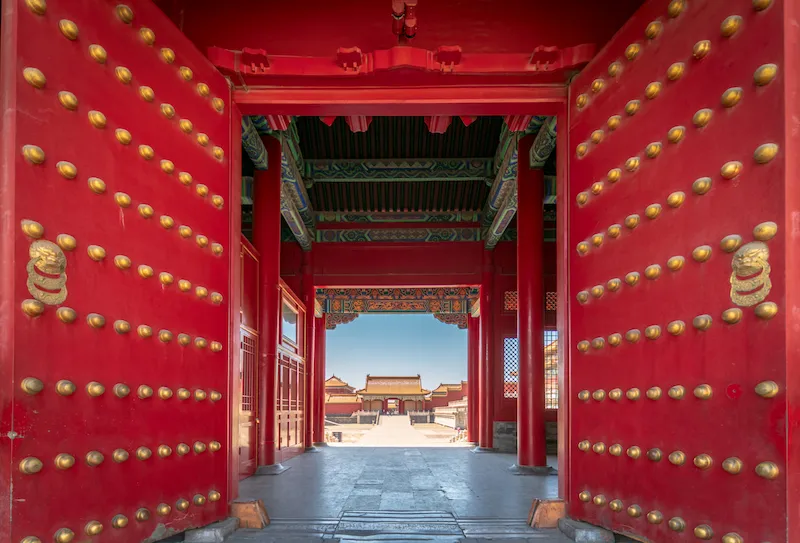
Beijing is the beating heart of China—a capital of 22 million people where centuries of history coexist with a vibrant, innovation-driven present. From this perspective, Beijing truly winks at the future and ranked fourth in 2025 on the World’s 100 Innovation Clusters.
Things that seemed like science fiction just ten years ago are now part of everyday life in Beijing: driverless taxis operate in areas like Haidian and Shunyi, drone food deliveries, robot waiters and bartenders making appearances, shops where you can virtually try on clothes via a “magic” mirror… All this coexists with the charm of imperial Beijing, which feels like it’s stepped straight out of a history book!
If you want to have an overview, you can have a look here at our introductory video about Beijing.
Our Favorite Places in Beijing and Surroundings
The Forbidden City
This magnificent complex has over 9,000 rooms and surrounds you with elaborate symbolism and depictions of dragons and lions, symbols of imperial power. It hosted 24 emperors from the Ming and Qing dynasties, who ruled China for nearly 500 years. Visiting the Forbidden City means exploring the world’s largest palace complex, so plan for several hours!
Recently, in September 2025, to mark the 100th anniversary of the Forbidden City, the first two pavilions of the Qianlong Garden—an exquisite imperial garden built for Emperor Qianlong’s serene retirement—opened to the public for the first time in over a century.
The Summer Palace
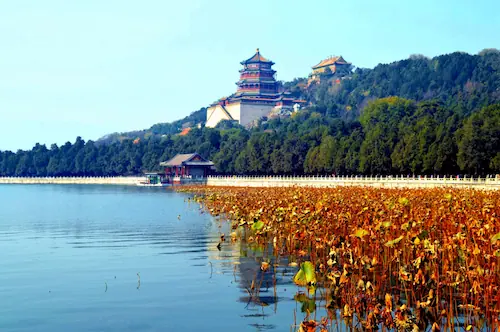
The Empress Dowager Cixi committed to rebuilding this enchanting palace, destroyed by Anglo-French invasions in 1860. This effort lets you now stroll through gardens and residences that served as royal retreats, admire the famous marble boat, the Long Corridor, and panoramic views over Kunming Lake from Longevity Hill.
A secret? If your budget allows… the magnificent Aman at Summer Palace hotel offers guests private access to the Summer Palace and is part of the original structure itself, giving you a true emperor-like experience!
The Hutongs
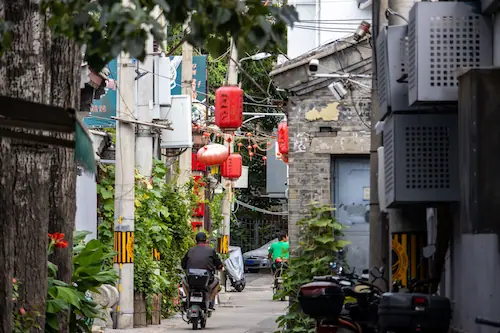
We strongly recommend not missing the hutongs—Beijing’s historic narrow alleys dating back over 700 years, where traditional courtyard houses (siheyuan) offer a glimpse into authentic local life. Rent a bike or walk the winding streets. Grab a jianbing (Chinese crepe) from a vendor who’s been making them for decades, listen to grandmas chatting and feeding street cats…
In summer, you’ll see locals playing cards outside bars, with shirts rolled up to expose their bellies: the “Beijing shirt“—a local way to beat the intense heat.
Since there are many hutongs, if time is short and you want to optimize logistics, explore those southwest of Tiananmen Square—they’re easily reachable right after the Forbidden City and preserve the authentic local atmosphere.
The Great Wall
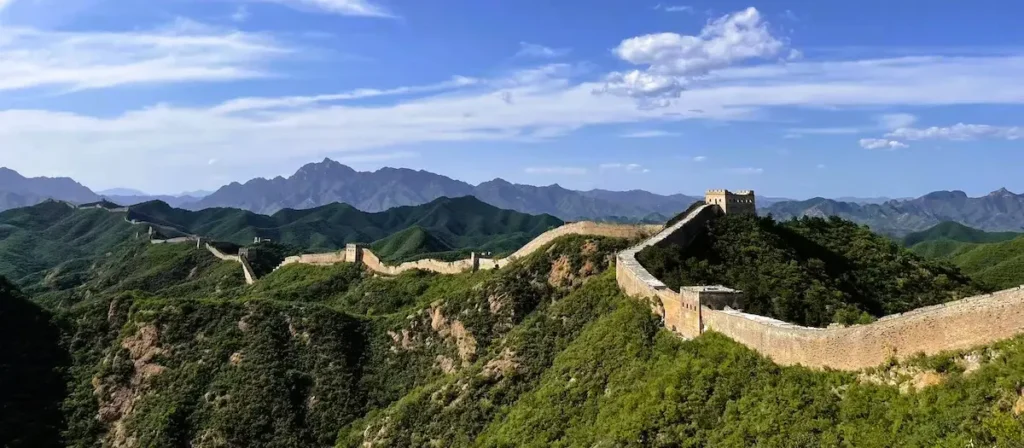
The Great Wall rightfully ranks among the Seven Wonders of the Modern World: estimates put its total length, including all branches, at over 21,000 km. Construction spanned centuries, starting around 214 BC, to protect China from nomadic invasions, including the fearsome Huns.
You’ll notice sections near Beijing stubbornly winding through mountains. At Ink Voyages, this immediately highlights the danger of ancient invaders… after hiking a bit, you’ll wonder how they crossed with limited means—these walls are challenging enough on their own! It fills us with awe, almost as much as the Wall itself.
For your visit, note the Great Wall divides into restored (more touristy) and “wild” (unrestored) sections for true hiking adventures, sometimes in total solitude. Tip: for the wild ones, don’t go alone for safety—the wall doesn’t go straight, and terrain can be precarious and dangerous.
Here are our favorite sections:
Gubeikou to Jinshanling
About two hours’ drive from Beijing, Gubeikou welcomes you with ruined charm—you feel like you’re staring history in the face. The 4-6 hour hike covers ~13 km to beautifully restored Jinshanling (entry ticket required there).
Jiankou to Mutianyu
This is one of the most spectacular treks on the Great Wall, combining wild Jiankou (breathtaking views, ruined towers, steep paths) with restored Mutianyu. Update (as of late 2025): Jiankou remains officially closed for safety and conservation. Access to Xizhazi village (classic starting point) is blocked by gates, guards, and signs. The reverse trek (Mutianyu to Jiankou) is also prohibited. Mutianyu alone is still a great option, offering grandeur—and an adrenaline-pumping toboggan slide down!
Cuandixia
90 km west of Beijing, this well-preserved Ming-Qing village features over 500 stone courtyard houses carved into the mountainside. A cultural gem for a day trip from Beijing, with trails, wood carvings, and traditional architecture offering rural Chinese heritage—far from urban frenzy. Note: recent years brought more tourists (mostly domestic), so don’t expect untouched commercial-free vibes. If you are interested in remote villages, you can also have a look at our private tours in Yunnan, Sichuan and Xinjiang.
Shanghai
Introduction to Shanghai
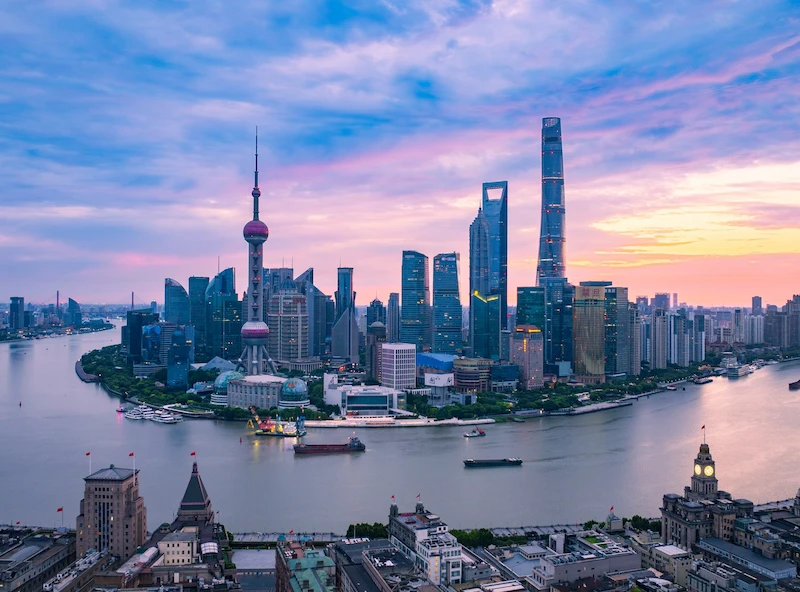
Imagining Shanghai—now a 24-million megalopolis—as a humble fishing village takes real effort (one we’re honestly incapable of). Maybe because most of the Ink Voyages team lives here, we struggle to detach from its current image. If visiting, prepare to be swept up in its contagious dynamism and urban charm—a place that wows more through overall effect than individual attractions.
Two things not in guidebooks but, in our view, key to its beauty:
- Plane trees lining streets, forming leafy galleries in summer—relaxing, especially on evening bike rides.
- Echoes of the past (not ancient fishing village, but still “past”) suddenly appearing amid skyscrapers: overloaded carts like from black-and-white films next to cars, street vendors roasting sweet potatoes and corn, urban fishermen casting lines in canals and parks… These fading yet romantically persisting images amid modernity.
If you want to have an overview, you can have a look here at our introductory video about Shanghai and surroundings.
Our Favorite Places in Shanghai and Surroundings
The Bund
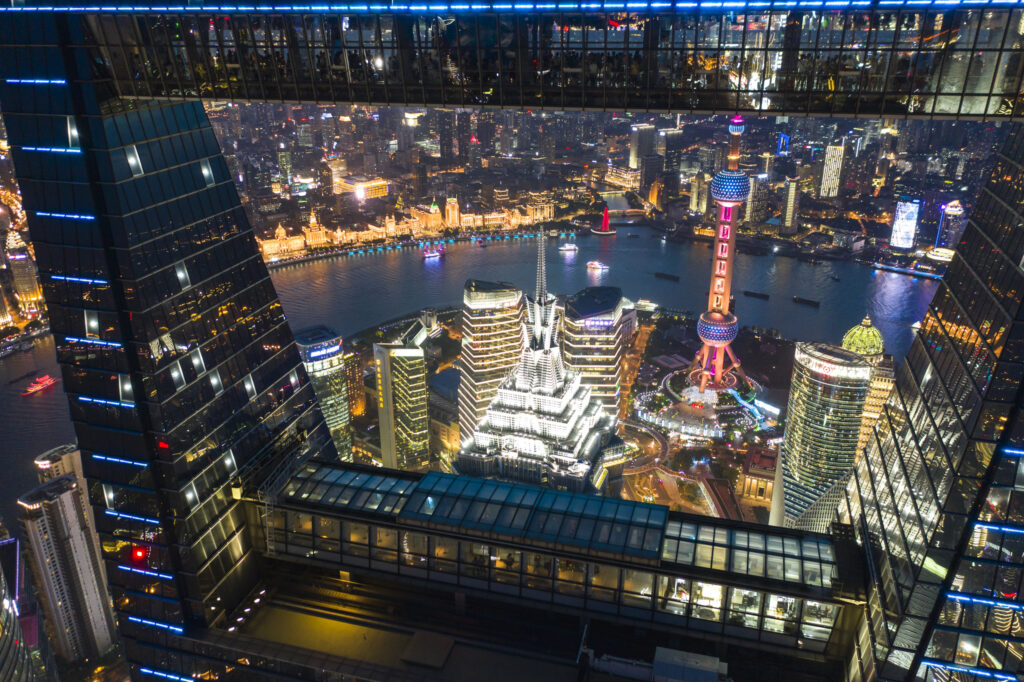
Shanghai’s top attraction—for good reason! A riverside promenade on the left bank of the Huangpu River, lined with European colonial buildings from 19th-20th century foreign occupations. Opposite rises Pudong’s business district with iconic skyscrapers shaping a postcard skyline. Cliché? Maybe… but the evening lights show—skyscrapers illuminating and reflecting on water, architectural contrast, enthusiastic crowds—is unmissable: Shanghai’s essence! A short boat ride offers an even better view, followed by rooftop cocktails.
Jing’an Temple
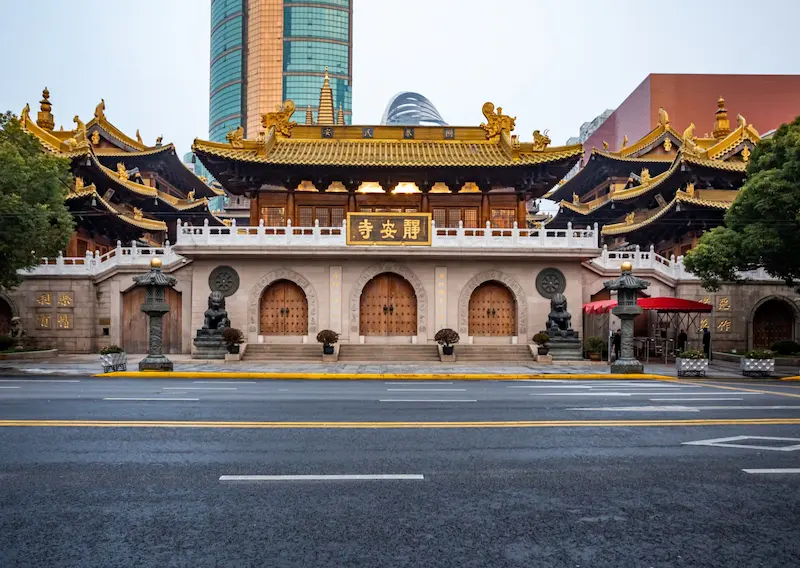
Built in 247 AD, this magnificent Buddhist temple stands as a tranquil sanctuary in Shanghai’s bustling urban landscape. Moved to West Nanjing Road in 1216 (Song Dynasty), its traditional architecture—glittering golden roofs, intricate details—contrasts stunningly with surrounding skyscrapers.
We love its central pulsing location: to us at Ink Voyages, it’s a healthy invitation to pause, reflect, meditate—a break from daily hustle. Inside, toss coins into the central bronze structure for good luck—if they pass through slots, fortune’s guaranteed!
Another highlight: the perfect color match between the skyscraper behind and the temple spires—in those golden reflections, we see modern Shanghai honoring its historic, traditional side.
Hangzhou
Marco Polo wrote in The Travels: “After three days’ journey, one finds the most noble city of Quinsai [Hangzhou], meaning ‘City of Heaven‘. I’ll tell of its nobility, as it’s the noblest and best city in the world […].” In China, a saying about Hangzhou and nearby Suzhou: 上有天堂,下有苏杭 (“Above is paradise; below are Suzhou and Hangzhou”). If that’s not enough, you will find below what we love.
Hangzhou developed a tech-contemporary soul (home to giants like Alibaba) while keeping its poetic, spiritual charm intact. Three magical elements:
Longjing Tea Hills
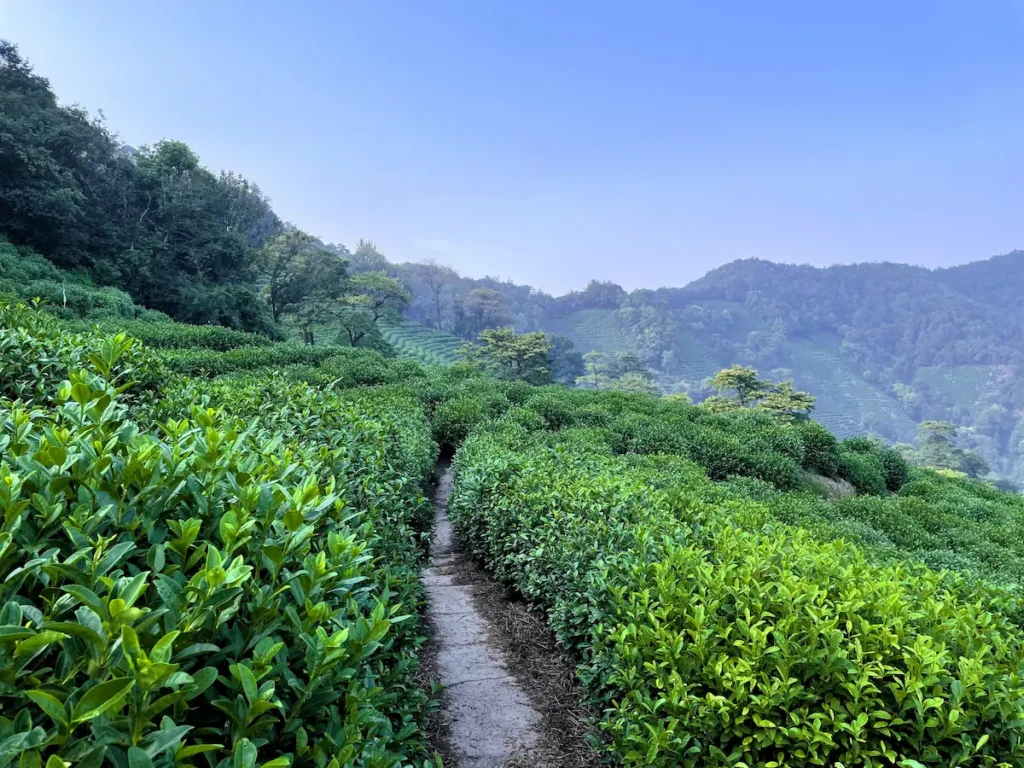
Our favorite in Hangzhou. If you only do one thing, hike the Longjing (famous green tea) hills to the Tea Village. Not strenuous, it’s immersive—walking through emerald hills dotted with plantations.
At the top, relax in a traditional teahouse. Some higher ones are more panoramic—don’t stop at the trail’s end; keep going for better views (unless you’re too thirsty!).
Longjing tops Chinese green teas, known for “four excellences”: intense emerald color, fresh complex aroma (toasted chestnut notes), sweet refreshing taste with lingering aftertaste, elegant flat sword-like leaves. Imperial for centuries, loved by Qing emperors—symbol of Hangzhou’s refined tea culture.
Buddhist Temples
Among many dotting West Lake hills, iconic Lingyin Temple (Soul’s Retreat)—one of China’s oldest/most important Chan Buddhist temples, founded 326 AD by an Indian monk. Hidden in lush valley: peaceful oasis with grand halls, imposing statues (huge camphor-wood Sakyamuni Buddha), ancient Feilai Peak grottoes with 300+ rock-carved Buddhist sculptures (10th-14th centuries). Walk the grottoes/outdoor statues: like a living museum of Chinese religious sculpture!
If you want to discover more of the Buddhist culture pulsing in China, we recommend you to have a look here at our itineraries in Yunnan, Gansu, Tibet and Sichuan provinces.
West Lake
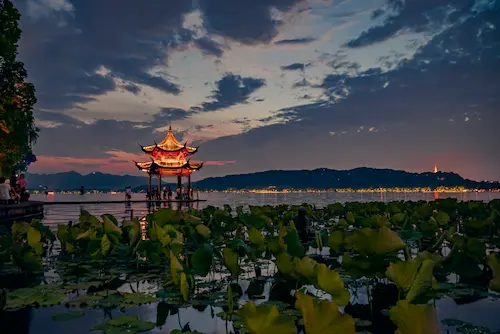
Hangzhou’s poetic heart—an enchanted mirror inspiring poets, painters, travelers for centuries. UNESCO-listed for unique cultural landscape blending nature and human harmony. Surrounded by green hills on three sides, with picturesque islands, ancient pagodas, blooming gardens—here Hangzhou reveals its romantic soul: sunset lakeside walk, traditional boat among Three Pools Mirroring the Moon, or bench-sitting listening to willow rustle—feels like stepping into ancient legends/poems calling it “paradise on earth.”
Houtouwan Abandoned Village
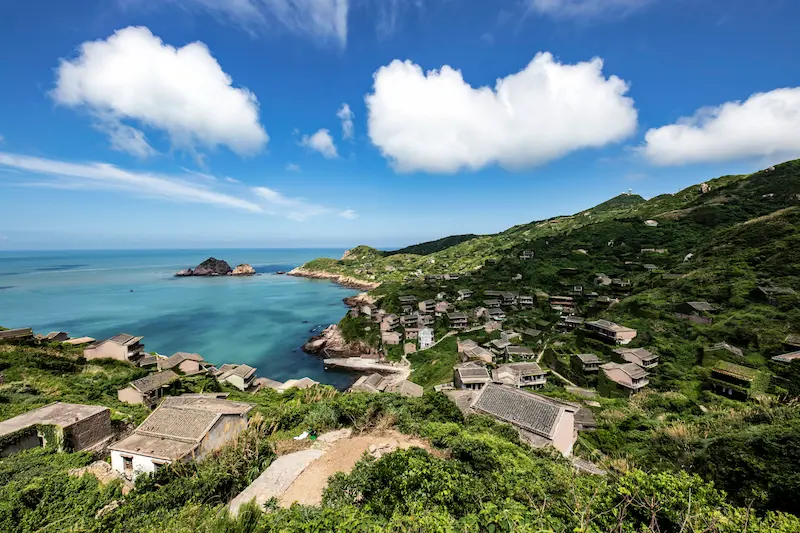
~40 miles from Shanghai on Gouqi Island, once a thriving fishing community. Abandoned since the 1990s as residents moved mainland for access/education/opportunities. Now a hauntingly beautiful landscape—lush vegetation reclaiming stone houses. Emerald vines cascade over walls, climbing windows/ roofs—surreal “green village” from a post-apocalyptic tale.
From Shanghai: doable day trip (better overnight): ferry ~4 hours (faster boats 2, seasonal). On Gouqi, taxi to Houtouwan (~60 RMB entry). Wear comfy shoes; visit summer for peak greenery.
Conclusion: Two Ideal Itineraries
To help organize your trip, here are suggested itineraries. They include spots not detailed above but still recommended. We’ve broken days into morning/afternoon/evening—general, fully adaptable guidelines.
Beijing and the Great Wall
For Beijing, Great Wall, including Cuandixia, suggest 7-day itinerary. Summary below, hoping Jiankou-Mutianyu reopens in 2026 (otherwise, just Mutianyu).
Day 1: Arrival in Beijing, Temples and Hutongs
- Morning: Colorful Lama Temple (Yonghegong)—Beijing’s top Tibetan Buddhist monastery—then serene Confucius Temple and Imperial College. Follow with peaceful Guozijian hutong walk.
- Afternoon: Magnificent Prince Gong’s Mansion (best-preserved Qing princely residence), picturesque Houhai/Qianhai lakeside stroll, hidden courtyard houses, relaxing boat ride.
- Evening: Peking duck dinner.
Day 2: Imperial Heart of Beijing
- Morning: Temple of Heaven—splendid complex for imperial good-harvest prayers. Continue to Qianmen Street for old Beijing taste.
- Lunch: Traditional hot pot.
- Afternoon: Tiananmen Square and Forbidden City (~3 hours), topped by Jingshan Hill climb for iconic panoramic golden-roof view.
- Evening: Optional opera or acrobatics show.
Day 3: Summer Palace and Transfer to Great Wall
- Morning: In-depth Summer Palace visit—gardens, Long Corridor, marble boat on Kunming Lake.
- Afternoon: Transfer to less-touristy Great Wall section (Gubeikou).
Day 4: Gubeikou → Jinshanling – Wild Wall Hike
- Full day: Guided 5-6 hour medium-difficulty hike on one of the most beautiful/least-touristy stretches—from rugged Gubeikou to photogenic Jinshanling (67 watchtowers).
Day 5: Jiankou → Mutianyu – The Great Wall
- Full day: Challenging but spectacular wild Jiankou hike (unrestored, steep climbs to Zhengbei Tower, unforgettable “Ox Horn” and “Arrow Nock” ridges), descending to restored Mutianyu. Try the toboggan down! (Note: Currently unavailable due to closure—substitute extra time at Mutianyu or another section.)
Day 6: Mutianyu → Cuandixia → Beijing
- Morning/early afternoon: Scenic drive to charming Ming-Qing Cuandixia mountain village—stone courtyards, ancient charm.
- Late afternoon: Return to Beijing, explore vibrant 798 Art District.
- Evening: Dinner in restored courtyard hutong house.
Day 7: Departure
- Head to Beijing Capital (PEK) or Daxing (PKX) Airport for onward flight.
Shanghai and the Golden Triangle
The name Golden Triangle refers to the prosperity and cultural richness of Shanghai, Suzhou, Hangzhou—ideally forming a triangle in Yangtze Delta: golden mix of commerce, tradition, natural beauty.
Day 1: Arrival in Shanghai
- Morning/early afternoon: Immediate ancient-modern contrast immersion. Jing’an Temple visit, Yu Garden stroll, lively old town.
- Afternoon/evening: Elegant French Concession and Xintiandi lanes, then Bund for stunning Pudong skyline night view. Dinner followed by panoramic rooftop cocktails.
Day 2: Ghost Island of Houtouwan
- Morning/afternoon: Reach magical Houtouwan on Gouqi Island—abandoned fishing village fully overgrown (one of China’s most photogenic hidden gems). Explore ivy-covered houses and coastal paths at leisure.
Day 3: Shanghai → Suzhou
- Morning: High-speed train to Suzhou. Humble Administrator’s Garden (UNESCO—finest classical Chinese garden), then splendid I.M. Pei-designed Suzhou Museum.
- Lunch: Delicate Suzhou specialties (sweet-sour fish, biluochun tea dishes).
- Afternoon: Boat ancient canals, walk Pingjiang Road.
Day 4: Suzhou → Hangzhou
- Morning: Fast train to Hangzhou (~1 hour). Lingyin Temple exploration (top Zen temple), fascinating Feilai Peak grottoes with ancient rock carvings.
- Lunch: Classic Hangzhou cuisine (Dongpo pork, beggar’s chicken).
- Late afternoon/sunset: Boat iconic West Lake as sun sets behind pagodas and willow-lined shores.
Day 5: Nature Wonders, Hangzhou
- Morning: Peaceful boat through bamboo canals and bird-rich trails in Xixi National Wetland Park.
- Afternoon: Scenic hike/drive through emerald Longjing tea plantations, Longjing village visit, best Chinese green tea tasting.
Day 6: Hangzhou → Shanghai, Departure
- Morning: Train back to Shanghai, transfer to Pudong or Hongqiao Airport for onward flight.
To discover more in-depth, meaningful China itineraries, check our catalogue here—we can use it directly or as a base to create your dream itinerary together. With this info, just pack your bags and start the journey! Beijing and Shanghai are already waiting!