Travel Guide to Southern Xinjiang
Discover the Preferences and Travel Tips from Ink Voyages
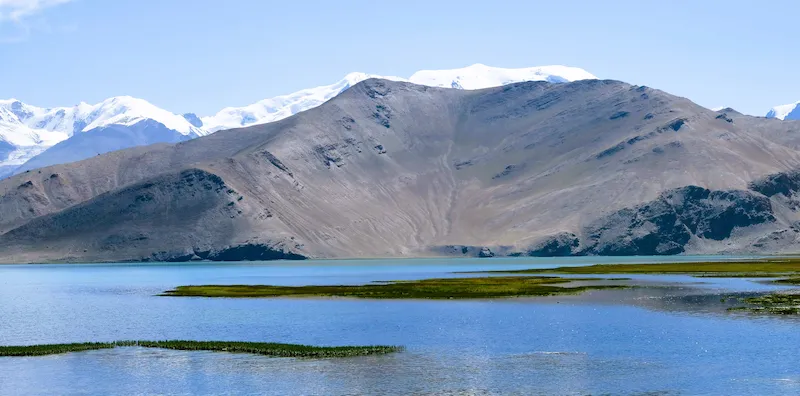
Table of Contents:
In this guide, we will take you to explore the southern lands of Xinjiang. We will cross deserts and rugged landscapes, where the atmospheres of the ancient Silk Road still echo. We will discover Uyghur culture and the hospitality of the Tajik minority in the Pamir Plateau area.
By visiting these places, you will also realize just how diverse China can be and how far it is from the traditional images that probably come to mind when thinking about this country. This is especially true in southern Xinjiang, where the Han ethnicity—majority in China—is instead a clear minority.
Below, we will share with you what makes southern Xinjiang special for us at Ink Voyages, guiding you through the destinations that impressed us the most.
If you’re interested, in the previous chapter of this guide, we talked about northern Xinjiang—a land of vast grasslands and mountains dotted with yurts of Kazakh and Mongolian nomads. If you like, you can read the article here.
If you’d also like to discover our practical tips for traveling in China, you can find our guide here, which will help you have a smooth experience and prepare your trip in the best way.
Introduction to Southern Xinjiang
Xinjiang is a surprisingly contrasting and diverse land, both in terms of landscape and culture—and immensely vast. Consider that it alone accounts for 1/6 of the entire China!
While the north is a land where you can explore endless grasslands, alpine valleys, and sapphire-colored lakes, southern Xinjiang will captivate you with its harsh terrain, vast desert expanses, and the atmospheres of the ancient Silk Road.
Compared to the more alpine north, the type of landscape offered by southern Xinjiang is therefore further removed from European scenic standards and, in our opinion, provides a more exotic visual experience.
In the south, the majority ethnicity is Uyghur, widely spread across the territory and distributed among the prefectures of Kashgar, Hotan, Aksu, and the Kizilsu Kirghiz Autonomous Prefecture.
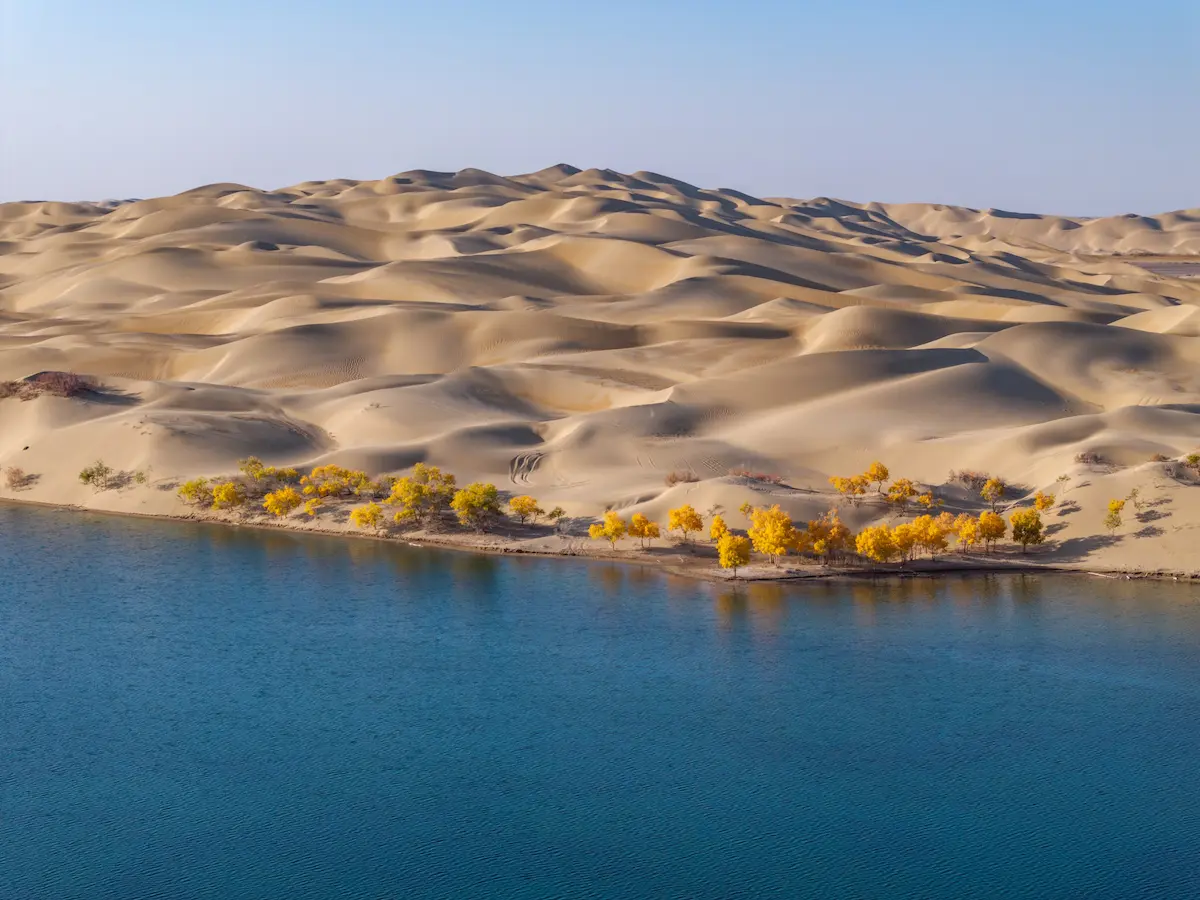
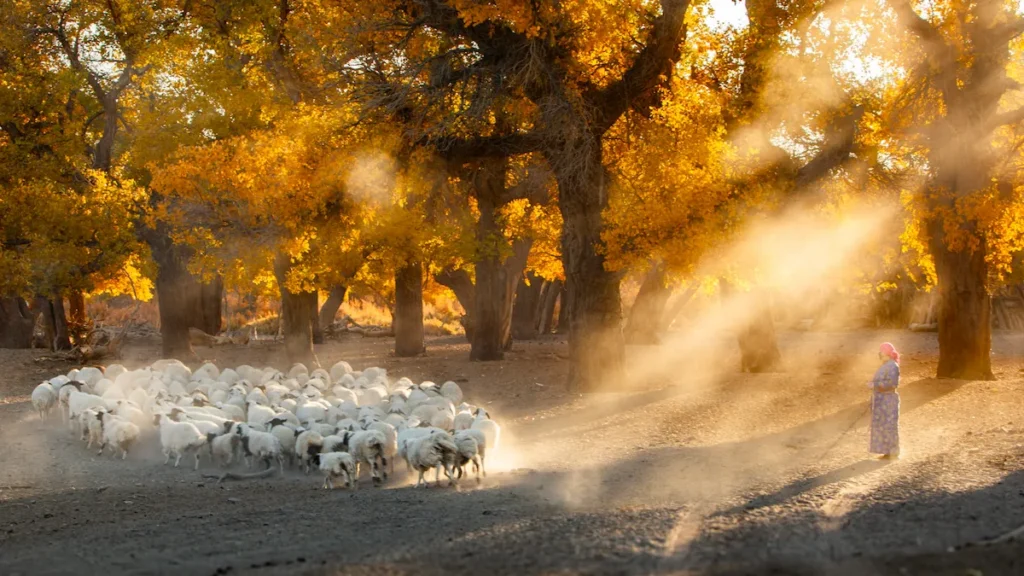
We recommend visiting in spring and summer for the blooms and lush nature; in particular, in the Tashkurgan area, there are secret and untouched valleys where apricot trees blossom. In autumn, instead, you can admire the golden colors of Euphrates poplars lighting up the landscape with their unique beauty: southern Xinjiang is indeed famous for hosting the Euphrates poplar on its territory, which creates splendid forests and borders desert oases with its golden foliage.
A practical note for your trip: the distances in this region are very demanding, in line with the vastness of its territory, so moving from one place to another can require significant driving effort in itself (even more than 8 hours, including highways crossing the desert). The landscapes you will cross are truly special, and if you enjoy on-the-road holidays in areas still unknown to international tourism, southern Xinjiang could truly be the ideal destination.
If you’d like to watch our introductory documentary on Xinjiang, you can click here.
Our Favorite Places in Southern Xinjiang
Urumqi (yes, it’s actually in the north, but we’ve taken a small tourist license)
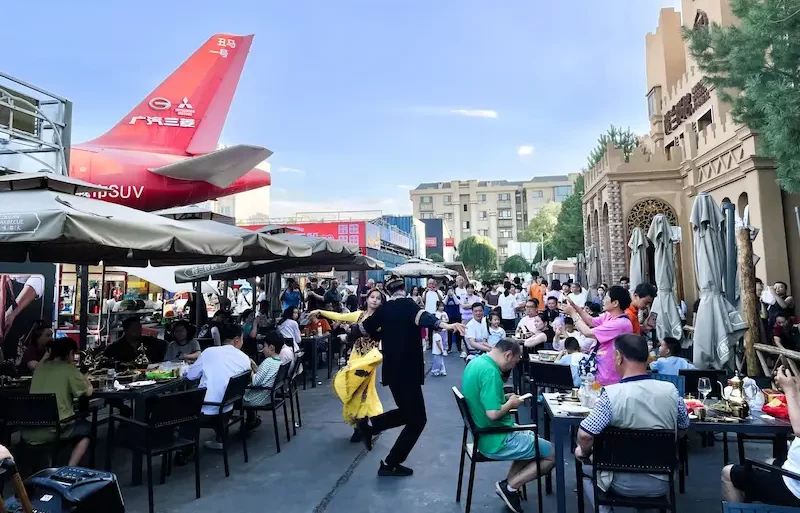
A geographical and cultural clarification first. Urumqi is located north of the Tianshan Mountains, so it belongs geographically to northern Xinjiang, and the urban population is mainly Han. However, we take a small “tourist license” and place the city in this part of our guide to southern Xinjiang because of the atmosphere it conveys as soon as you arrive at the airport: when you look around, you probably won’t be able to help wondering for a moment if you took the wrong flight and ended up in Istanbul!
Urumqi is the main gateway to Xinjiang for international tourists, and it won’t take you long to realize you’ve arrived in a different kind of China! We therefore want to consider Urumqi as the gateway to this diversity, which you can explore further on your journey south, just as we considered Lake Tianchi the gateway to the alpine natural beauty of northern Xinjiang.
The city of Urumqi welcomes you with its dusty charm and tall sand-colored buildings rising toward the sky like monoliths, guarded by the Tianshan Mountains in the background. There are two things we recommend not missing when visiting Urumqi: the Grand Bazaar and the Xinjiang Museum.
The Grand Bazaar is one of the most kaleidoscopic markets you’ll ever explore: it’s hard to imagine the abundance and variety of goods you can find inside—food, spices, lamps, Uyghur hats, carpets, traditional clothes, knives and daggers that seem straight out of the tales from One Thousand and One Nights (note: in Xinjiang, you are not allowed to enter/exit with this type of souvenir, even if packed in checked luggage), fresh food sold from Uyghur vendors’ stalls, medicines and ointments made from the most magical ingredients—including expensive worms attributed with important therapeutic properties. The list could go on forever. If you want to immerse yourself in a kaleidoscopic experience, plan to spend a few hours in this literally “Grand” Bazaar!
If you’re a history lover and want to delve deeper into Xinjiang’s culture, the Xinjiang Museum is a highly recommended stop. Among the various artifacts that will allow you to reconstruct the history of the Silk Road and this region, you’ll also find the famous “Tarim Mummies“.
For more information, you can check here one of our recommended itineraries in southern Xinjiang, which starts right from Urumqi and ventures into the sands of the Taklamakan Desert!
Turpan
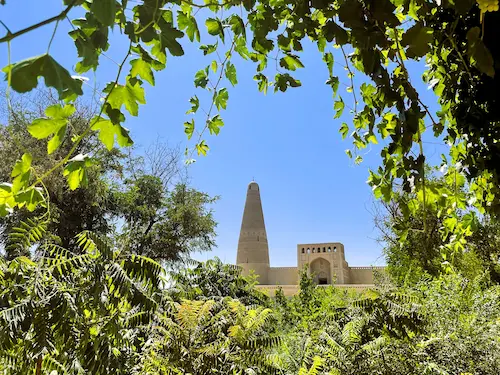
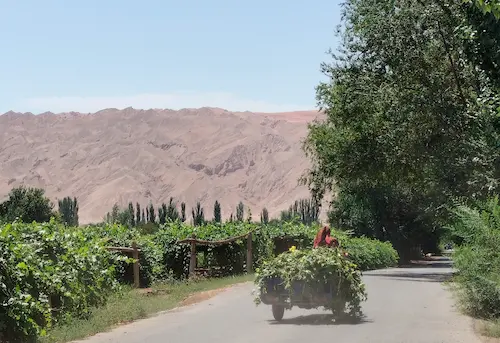
Arriving in Turpan (Turfan), given the atmosphere of this place, you wouldn’t be too surprised if you found a magic lamp in your hotel room drawer or ran into Aladdin on the street… And if you asked the locals in Turpan, they wouldn’t hesitate to confirm that Aladdin is indeed from their parts!
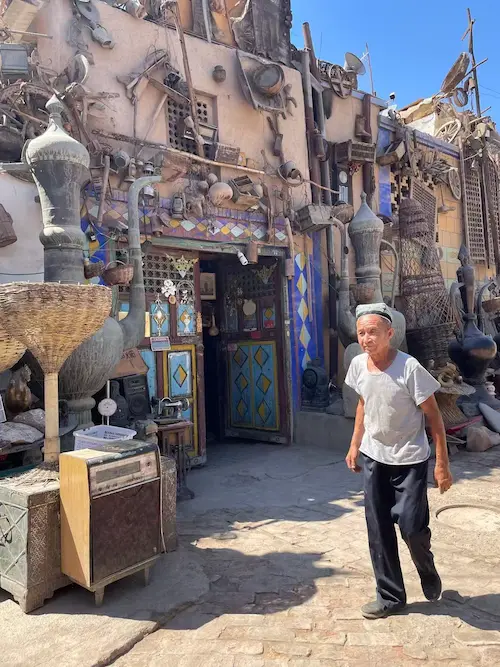
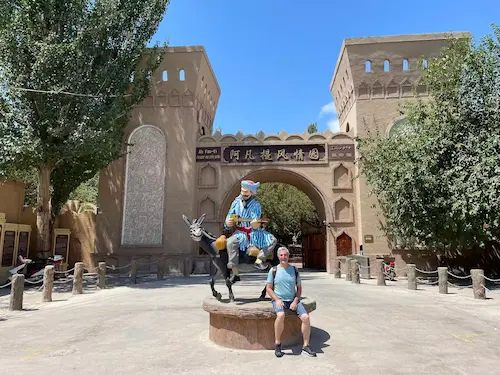
The atmosphere of this city, located 190 km southeast of Urumqi, is truly special: the low, square houses in earth tones or pastel colors, the patios and courtyards where locals set up beds and tables sheltered by grapevine tendrils, spending most of their domestic time essentially “outdoors,” create the uniqueness of a place we recommend spending at least a couple of days in.
This area is the quintessential center for grape and raisin production, cultivated using the traditional underground karez irrigation channels. As you visit, you’ll see numerous earth houses with walls perforated by small windows scattered everywhere: these are the drying rooms for raisins, which are then collected and distributed to the market.
There are also multiple points of interest you can choose to visit: the village of Tuyoq, the Grape Valley, the ruins of Jiaohe, the Flaming Mountains, and the Kumtag Desert.
We share our perspective to help you choose if you don’t have time to see everything.
In fact, our advice is first and foremost to visit the Flaming Mountains outside the official tourist attraction and the villages along the road after Tuyoq. Here you’ll find the most authentic atmospheres that make Turpan truly special for us at Ink Voyages.
Regarding the Flaming Mountains, we recommend exploring the secondary roads that venture into the mountains. The scenery will first offer vast expanses of vineyards stretching as far as the eye can see to the foothills, then you’ll notice the vineyards stop to make way for fiery red rocks. As you go deeper, you’ll feel like a real explorer, face-to-face with a surreal scene under Turpan’s scorching heat.
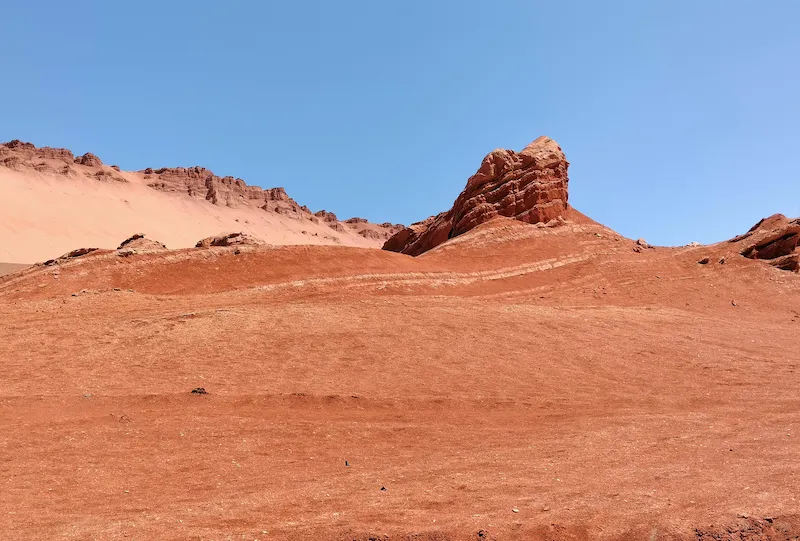
The last time we visited the area, we found a dirt road still under construction that plunged right into the heart of the mountains, offering furious red colors! We reached the point where the road turned into pure rock, making further progress impossible, and returned satisfied with that solitary adventure.
Similarly, if you continue after the village of Tuyoq, you’ll find a beautiful village with pastel blue houses. In front of the houses, residents doze on colorful beds in the patios, and children swim in small pools set up outside the homes. A true immersion in local life!
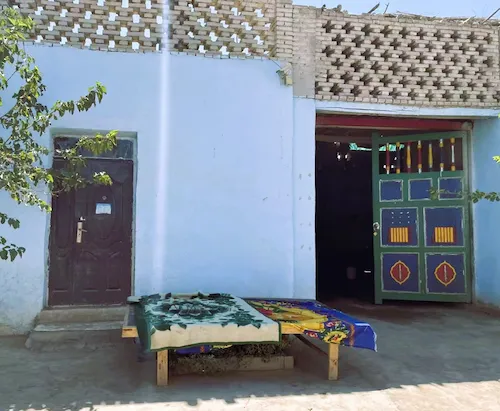
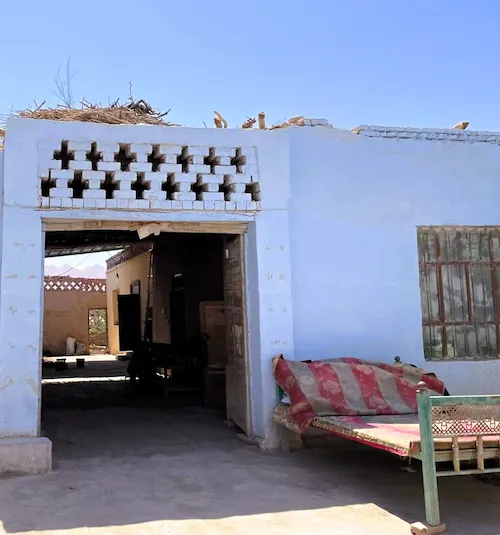
If you don’t feel like playing Indiana Jones, you can simply stop at the entrance to the Flaming Mountains tourist area, guarded by the statue of Sun Wukong, the protagonist of one of the pillars of Chinese literature, who in one chapter of the story passes right through those mountains.
The village of Tuyoq has splendidly preserved architecture; however, it has recently experienced a boom in domestic tourism, prompting locals to line the streets with souvenir stalls for tourists. If possible, avoid peak season or come early in the morning for a more peaceful atmosphere.
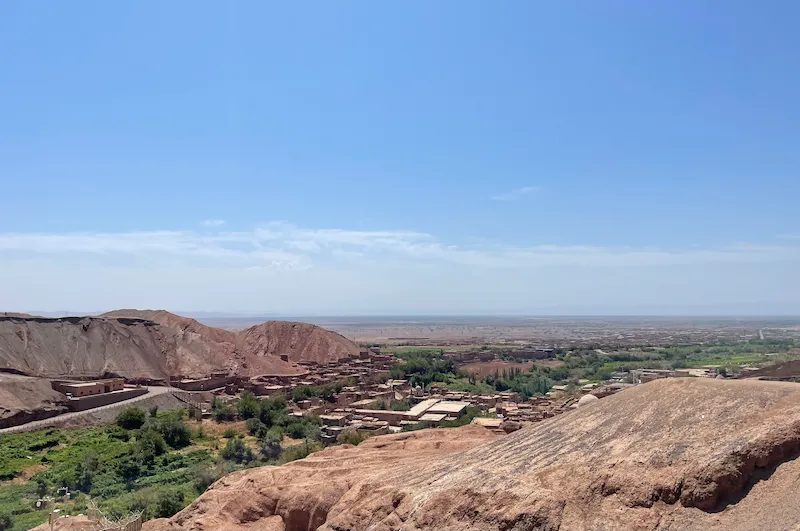
Finally, the setting of the ancient Jiaohe ruins is very beautiful—they rise on a leaf-shaped earthen spur surrounded by vegetation. More than the ruins themselves, what makes them truly spectacular in our opinion is their location.
As for the Grape Valley, consider that it’s mainly a celebration of local viticulture, and the Kumtag Desert—which has the peculiarity of bordering the city of Shanshan—is a destination where you can enjoy desert activities like jeep rides or sandboarding, but it’s just an appetizer for the Taklamakan Desert you’ll explore later in your southern Xinjiang trip. Since the latter is about two hours’ drive from Turpan, you could also decide to skip it.
The Taklamakan Desert
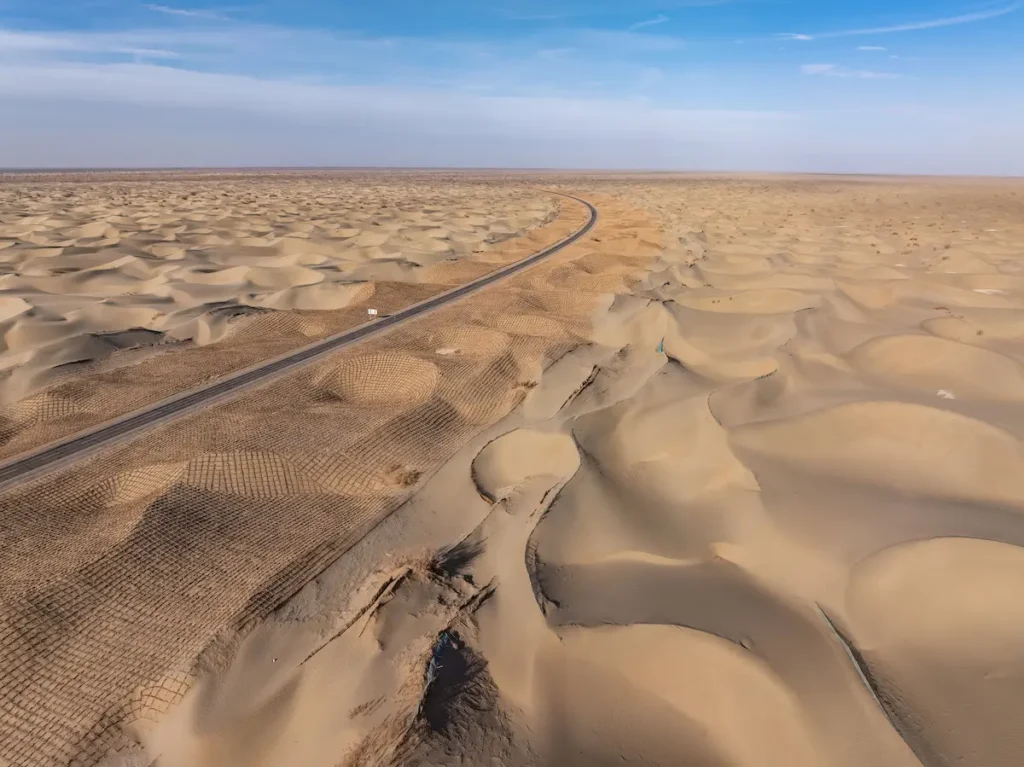
Before venturing into the Taklamakan Desert, we recommend stocking up on fruit at one of the markets on the edge of this boundless expanse of golden dunes. Xinjiang melons, in particular, rightly famous for being delicious thanks to the favorable climate.
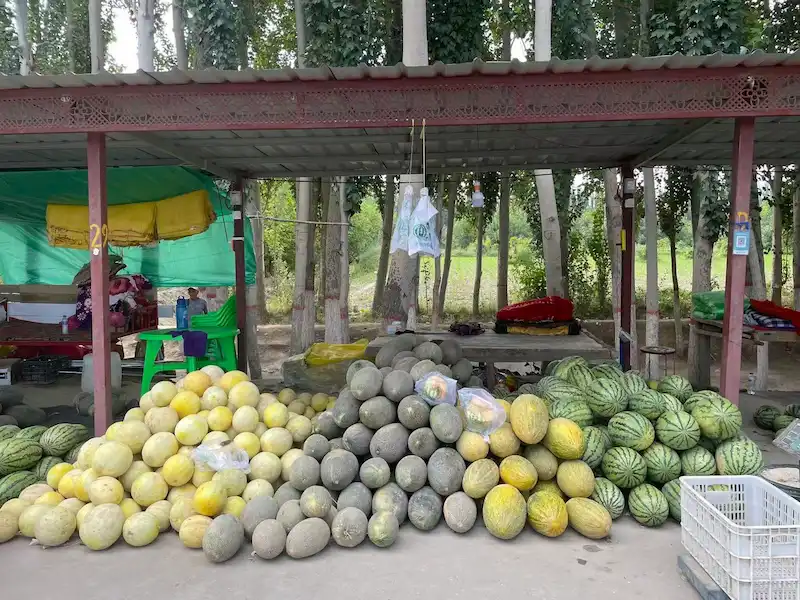
In itself, crossing the desert is an extraordinary experience that, hour after hour, will transport you to another dimension. Be careful: do not underestimate its danger, which requires eight or even twelve hours depending on the route you choose.
At the entrance, your car’s license plate will be registered by an officer: it’s a way to keep track of who enters and who exits…
Another thing that might happen: local police are usually genuinely surprised (and curious) about foreigners’ presence. Their very direct way of ensuring you’re aware of the risks of long desert driving is to show you a gallery of real accident photos with no filter…
You’ll see all the consequences of some incidents in the area: prepare yourself psychologically—the sight is truly raw. After about half an hour, meant for your awareness and rest, they’ll let you continue.
The desert awaits: China’s largest shifting sand desert and the second largest in the world—a mass of golden dunes stretching across southern Xinjiang. Known as the “sea of death,” its wild and surreal beauty is miraculously held at bay by patient barriers relying on a dense network of vegetation along the roadside, which—miraculously—prevents the asphalt from being buried by moving dunes.
There are two routes to cross the desert:
- The Tarim Desert Highway (G216): the longest road crossing the Chinese desert (552 km), connecting Luntai to Minfeng along the northern Tarim basin, built with reed and vegetation barriers to block shifting sands. Estimated travel time: 12 hours.
- The Hotan-Qira Desert Highway (G580): a southern route (424 km) connecting Hotan to Qira (Yutian), crossing the heart of the desert with stunning dune views. Estimated travel time: 8 hours.
Taking care not to get stuck, we recommend stopping the car roadside when you find a suitable spot and climbing the dunes for a spectacular view over the vast desert expanse.
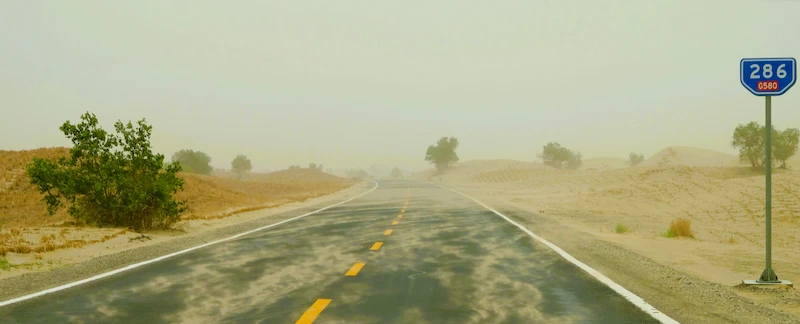
Here, the landscape has the dramatic charm of nature in its most extreme forms. If you’re lucky, you might spot wild Bactrian camels wandering among the dunes in search of shrubs.
A note of caution: sandstorms! Common in spring but possible off-season. If the scene turns too apocalyptic, don’t insist on continuing—stop roadside and wait for the storm to pass.
Kashgar
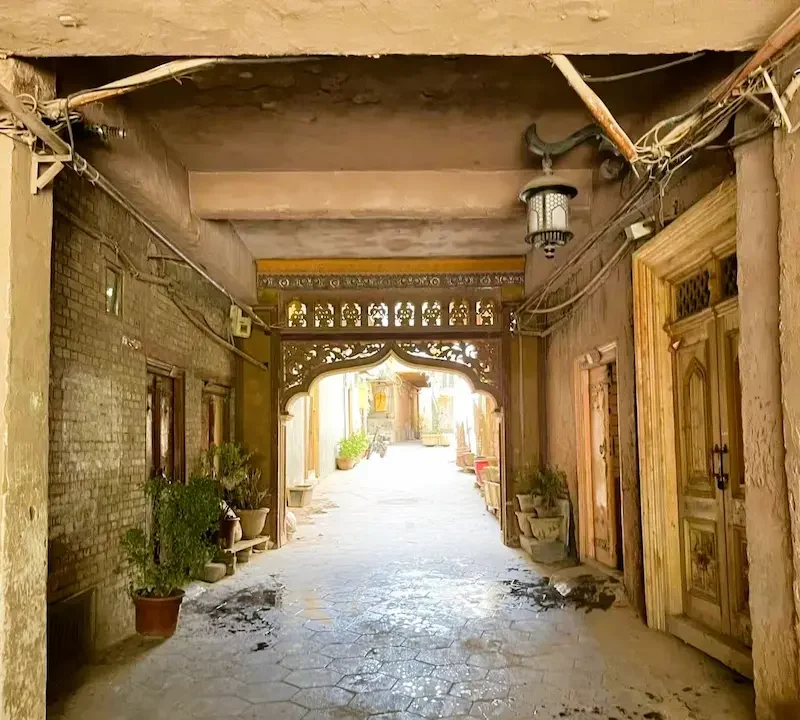
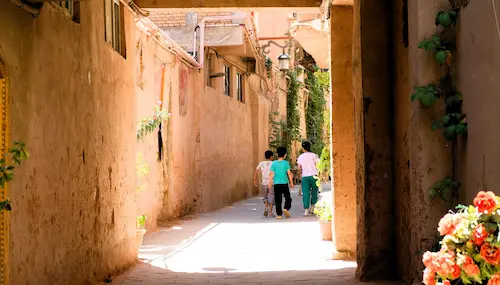
The old city of Kashgar is one of the places where the ancient Silk Road atmosphere pulses strongest. Here you can immerse yourself in the heart of Uyghur culture, among colorful markets, traditional architectural styles, and faces that seem to emerge from ancient tales of caravans, oases, and desert fires…
Take a couple of days to visit Kashgar leisurely, and if possible, try to be there on Sunday for the traditional livestock market—an event centered on animal trading that weekly attracts area herders.
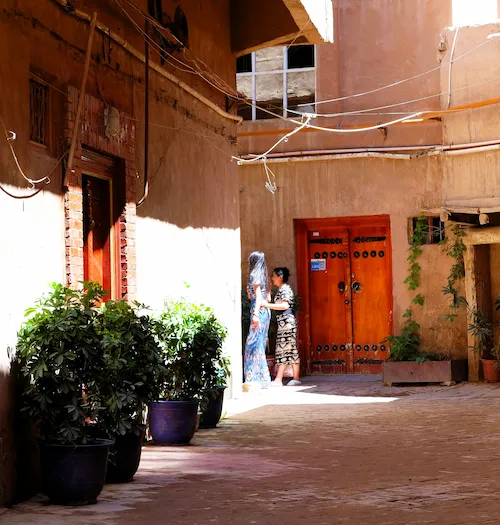
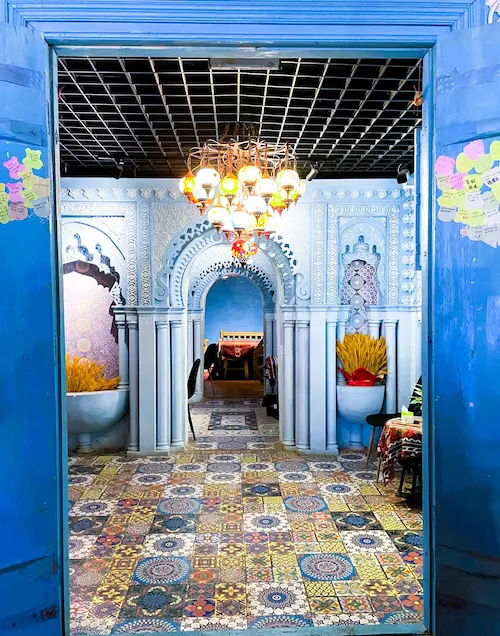
In the evening, walking along one of the main streets of the historic center, you’ll pass a bar with a beautiful blue door. Inside, you can enjoy a cocktail while listening to performances in Mandarin and Uyghur, and watch beautiful domesticated doves that perfectly complete this little gem.
At Ink Voyages, we think few names are as fitting as Kashgar, whose exotic sound perfectly evokes the magical atmosphere of this city.
If you’d like to discover other itineraries connected to the Ancient Silk Road, explore our catalogue here, where you’ll find sections dedicated to Gansu and Yunnan (Southern Silk Road).
Duku Highway (Southern part: Narati-Kuqa)
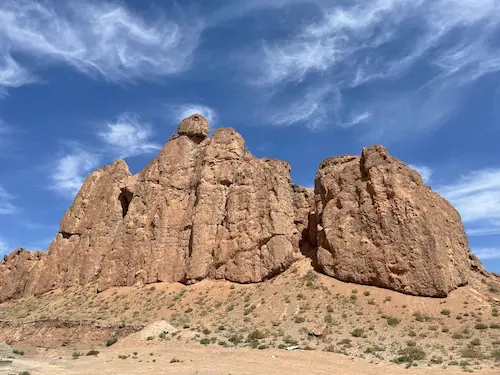
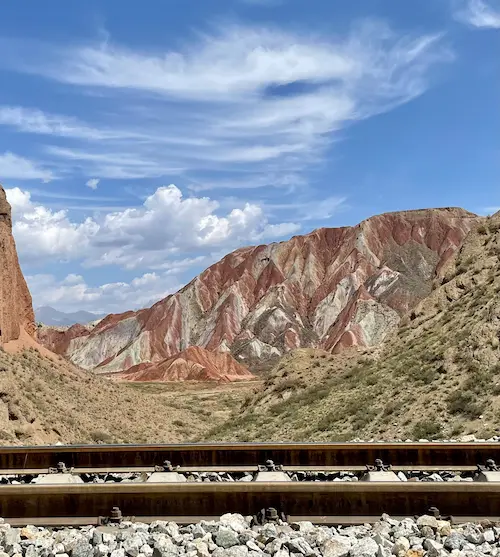
The southern part of the Duku Highway, from Narati to Kuqa, completes the journey along this extraordinary engineering feat. In the previous part of this guide, we covered the northern section. Heading south, the road retains its full spectacularity. What you’ll notice is that in its final section, northern colors gradually give way to the desert and fiery hues of the south, boldly imprinting themselves on the rocky walls around you.
If you have time, take a detour from the main road toward Wushikai (before reaching the Tianshan Grand Canyon) to explore backcountry where small villages display colorful murals on house walls, and residents will widen their eyes in disbelief seeing a foreigner venture there!
If you encounter local police patrols, expect to be stopped. Don’t worry: checks are completely peaceful and mainly due to the officers’ friendly curiosity. The last time we were stopped in this area, they escorted us to the village’s best restaurant and ensured we sat in the “VIP” room!
Besides the Tianshan Grand Canyon mentioned above, if you have time we recommend stopping to admire the Bayinbuluke grassland, which however requires access through a dedicated tourist entrance and payment of the entry ticket.
Driving the entire Duku Highway is an extraordinary on-the-road experience we recommend taking in no less than two days of driving, and it naturally fits into your itinerary if you’re planning to visit both northern and southern Xinjiang during your trip to China.
Karakoram Highway
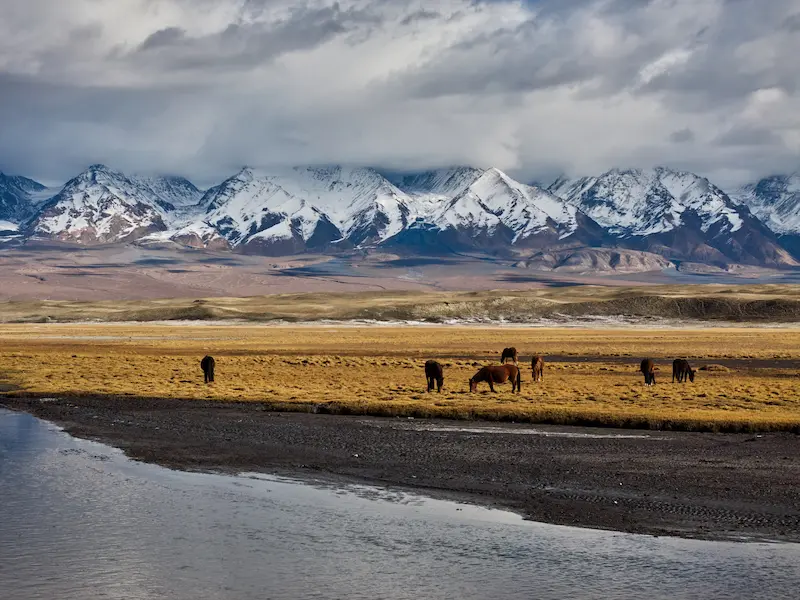
It’s hard to choose between the Duku Highway and the Karakoram for beauty and spectacularity. The good news, however, is that you don’t have to choose!
Heading south from Kashgar, you’ll find yourself on another of the world’s most scenic roads, taking you across the Pamir Plateau. The Karakoram Highway connects China to Pakistan, winding among imposing peaks, turquoise lakes, and breathtaking landscapes in a mix of desert, ice mountains, and endless grasslands.
Driving the Karakoram Highway, we recommend reaching Tashkurgan, about three hours from Kashgar, to experience this magnificent part of the world. You’ll pass by Baisha Lake and Karakul Lake, admire the imposing peak of Mount Muztagh Ata, and the rugged terrains dotted with wild camels.
From Tashkurgan, you can push further toward the old Panlong Road: an asphalt dragon with over six hundred breathtaking hairpin turns climbing the Pamir Plateau, offering dizzying aerial views of colorful valleys and snow-capped peaks.
If you’re interested in other on-the-road exploration experiences, you can also check here our private organized trips, which we can customize based on your travel preferences.
Finally, our heartfelt advice: take the time to venture into the Pamir Mountains toward the village of Tar, nestled remotely in a small valley along a crystal-clear river, where you’ll discover the most authentic face of Tajik hospitality. The road is not easy, boldly skirting the river, and you’ll feel dangerously overshadowed by surrounding mountains, but there won’t be a single kilometer where the effort isn’t rewarded by breathtaking landscape beauty. And if you arrive during apricot blossom season… we’re ready to bet this will take first place in your ranking of the most beautiful places you’ve ever visited!
If you’d like to know more about this area, you can read here our travel story/testimony dedicated to it.
Conclusion
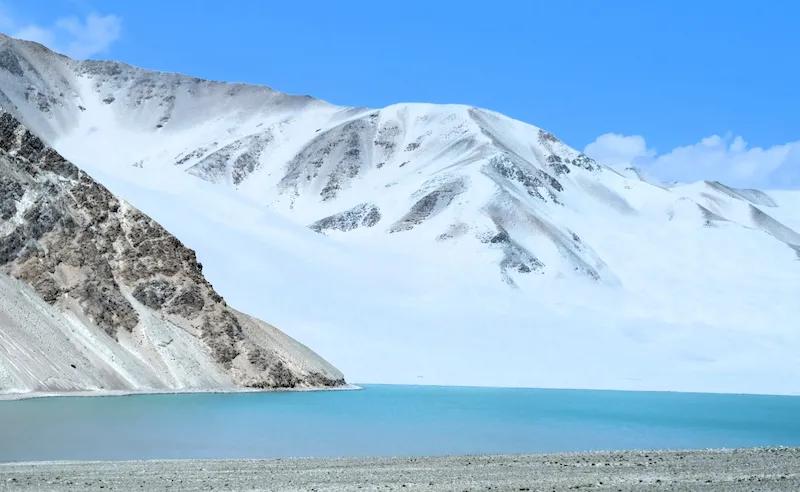
Southern Xinjiang is a land of wild charm that genuinely awakens your desire for exploration and discovery. Its cultural richness will also pleasantly disorient you, being far from what we collectively consider typical of a country like China. This travel experience will thus allow you to get closer to ethnic groups preserving a heritage as rich as it is rare, within a breathtaking and still largely unspoiled natural setting.
If you’d like to discover other itineraries aimed at deep and meaningful exploration of China, check our catalogue here—we can use it directly or as a base to create a tailor-made itinerary together.
We hope the information in this guide will be useful for planning your trip. Whether you choose to travel with Ink Voyages or not, we strongly recommend dedicating a chapter of your world adventures to this extraordinary land. With that said, all that’s left is to pack your bag and start the journey. Southern Xinjiang is already waiting for you!