Travel Guide to Tibet
Discover Ink Voyages’ Travel Preferences and Tips
Table of Contents:
A Spiritual Premise to Your Journey
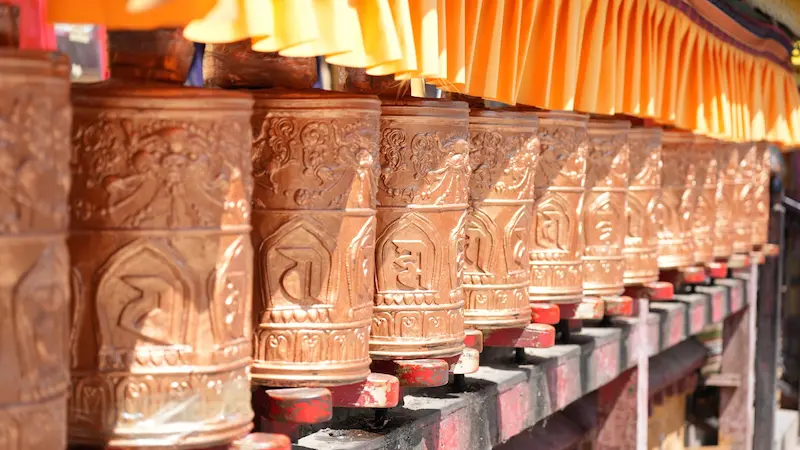
In this guide, we will take you to explore Tibet. First of all, allow us to make a cultural premise, which we think could be useful to put your journey into perspective.
According to us at Ink Voyages, visiting this remote western province of China is a travel experience that inevitably takes on a very spiritual connotation – without this term referring to a particular religious denomination.
Rather, we say that we use the term “spiritual” here to indicate that substratum that is common to all religions, and that comes before the specific formulations of each of them. Visiting this region, you will therefore notice how the physical realm and the spiritual one intertwine in a bond of profound harmony, so that traveling through the sacred geography of Tibet can become at the same time a path toward greater understanding and personal transformation.
If you’re interested, we propose here some points for reflection and meditation (otherwise, feel free to proceed to the next chapter for practical travel tips and information):
- Moving to higher altitudes physically embodies the ascent along the spiritual path. The rarefied air heightens awareness of every breath, a fundamental meditation practice.
- The peaks of Tibet are physical manifestations of a higher consciousness. Tibetan Buddhists consider these mountains as divine abodes where sky and earth converge. Their immobile nature also reflects the mental stability sought in meditation and prayer.
- The crystal-clear waters embody the clarity of perception and purity of mind, while their mirror-like surfaces exist both as water and as reflection, demonstrating the paradoxical nature of reality, central to Buddhist philosophy, according to which our common perception of things is stuck in illusion (the reflection) – while only a free mind is capable of seeing beyond.
Below, we will share with you what makes Tibet special for us, leading you through the destinations that have impressed us the most.
If you’re interested, in the previous chapter of this guide, we talked about southern Xinjiang – a region of rugged landscapes, desert expanses, immersed in the atmospheres of the Silk Road. If you want, you can read the article here.
If you also want to discover our practical tips for traveling in China, you can find our guide here, which will allow you to have a smooth experience and prepare your travel experience in the best way.
Introduction to Tibet (Some Sore Points, but Useful for Your Journey)
A Guided Trip (By Necessity)
Let’s start right away by telling you that Tibet is a region as fascinating as it is difficult to access. Unfortunately, foreign tourists are not allowed to visit freely, and it is necessary to be associated with an officially recognized local agency.
This doesn’t mean you can never detach yourself from your guide: for example, if you arrive in Shigatse, in the evening you go out to eat, you can calmly do it alone, enter a restaurant, dine, take a walk around the city, return to your hotel. You’d have to be really unlucky to be subjected to a check… That said, you cannot make movements, or enter places of attraction, without the accompaniment of your guide.
We also tell you something that really few people know: if you have a temporary Chinese driver’s license, provided you are still associated with an authorized agency, you can drive your rental car yourself in Tibet. Your guide doesn’t even have to be necessarily in the same car, and can act as a lead vehicle during your itinerary.
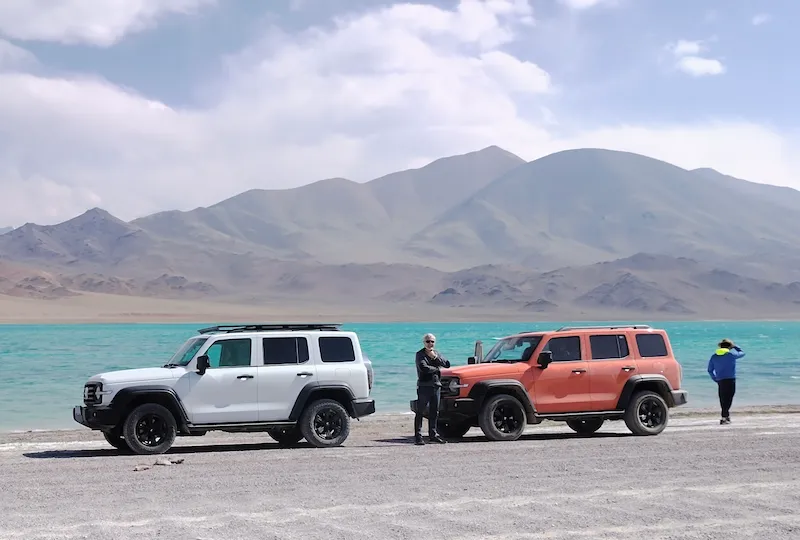
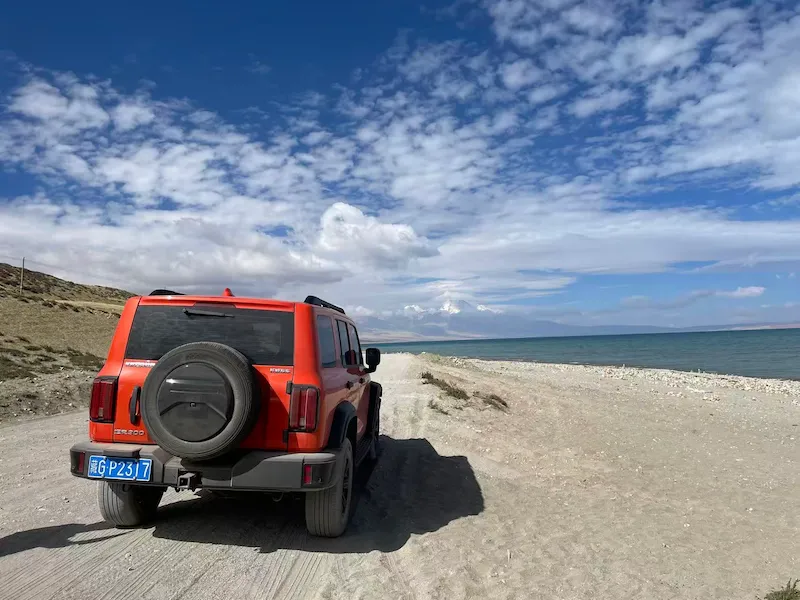
If you’re interested in self-drive experiences in Tibet, or in other parts of China, at Ink Voyages we can help you organize everything necessary. You can read our guide with practical tips for traveling in China above, and explore our catalogue of organized trips in China here.
The Permits
In addition to this restriction, consider that it is also necessary to obtain a special permit to visit Tibet, without which you can’t even board the plane that will take you to Lhasa. The agency you travel with will have to arrange to request the permit, and have the original delivered to you before your departure at your hotel in China.
As if all that weren’t enough, consider that in addition to the basic permit, others may be added, depending on the areas included in your itinerary… Below we give you a quick recap of the main permits:
- Tibet Travel Permit (TTP): Specific entry permit for Tibet, necessary for all foreigners. It must be requested through an authorized tourist agency at least 15-20 days in advance, providing passport and Chinese visa. It is sufficient for Lhasa and surrounding areas. ·
- Alien’s Travel Permit (ATP)*: Required for areas outside Lhasa, such as Shigatse, and to reach some western regions.
- Additional Permits: For border or sensitive zones (e.g., Mount Kailash or military areas), the Frontier Pass or Military Permit may be necessary.
For completeness, know finally that there are zones whose access is completely forbidden, such as some areas of the Changtang Plateau, which are considered remote (potentially dangerous for travelers’ safety), as well as of high ecological value.
*2025 Update: according to new official indications, the ATP is no longer required for some main tourist routes, including the path to Everest Base Camp, as part of a simplification approved by the Tibet Tourism Bureau starting from June 2025.
In any case, consider that you won’t have to deal with this directly, and that local agencies must implement the most updated regulations on the matter, to ensure you can access the areas planned in your itinerary.
The Altitude
Another sensitive point to take into account is that of altitude, which can really become a problem during your itinerary. This is a fairly unpredictable factor, in the sense that – while it’s true that prolonged exposure to high altitude will almost certainly have an impact on your health – it’s not possible to predict its extent.
From experience, we can tell you that you have to account for headaches and breakage of blood capillaries in the nose, especially when sleeping, which will make you sleep with your mouth open to compensate for the obstruction of the nostrils (sorry if we go into these details, but we believe it’s useful for you to know in advance).
There are people – and fortunately they are the majority – who get by with mild symptoms. Then there are also more unfortunate cases, where the lack of oxygen is felt heavily, making a prolonged hospital stay necessary to re-oxygenate your blood.
Also be careful not to underestimate the symptoms and make sure to monitor your oxygen level frequently! Ensure that your guide has emergency oxygen tanks with them, because when you’re in the middle of the Tibetan Plateau, let’s say you don’t find a hospital on every street corner…
We are not doctors, so we don’t presume to advise you anything in this field, and we simply limit ourselves to sharing with you what we equip ourselves with when we visit Tibet:
- Acetazolamide, which we start taking a few days before arriving in Lhasa, and then continue to take throughout our stay to mitigate the effects of high altitude.
- Ibuprofen, to alleviate headaches.
- We also drink as much as possible.
Be clear, we don’t tell you all this to discourage you. On the contrary, at Ink Voyages we are convinced that Tibet is really a place to visit at least once in a lifetime! We just want to make sure you have all the practical information necessary to face the experience in the best way.
If you’re interested in delving deeper, you can look here at our itinerary that will take you to the foothills of Everest, and here the one that will take you to explore the area north of Ali, through one of the wildest and least touristy parts of the Tibetan plateau.
When to Visit
When planning your trip, consider that May-June and September-October are considered the best periods. These months offer an ideal compromise: weather conditions are generally stable, with clear skies, mild temperatures and scarce precipitation, perfect for exploration and photography. In addition, the chances of encountering access restrictions for foreign tourists that are sometimes implemented on sensitive anniversaries (such as the period around March 10) are reduced.
The months of July and August constitute the high tourist season, characterized by warmer temperatures. However, they coincide with the monsoon season, which brings more frequent precipitation, especially in the southeastern regions (such as Nyingchi) and eastern parts of the plateau. The rains are often short and intense, but can make some itineraries impracticable.
Finally, if you want to get to know Tibetan culture without running into the difficulties of permits and extreme altitude, we recommend taking a look at our private trips (in particular the sections dedicated to Yunnan, Gansu and Sichuan), since, in China, Tibetan culture and atmospheres extend also outside of Tibet.
Our Favorite Places in Tibet
Lhasa
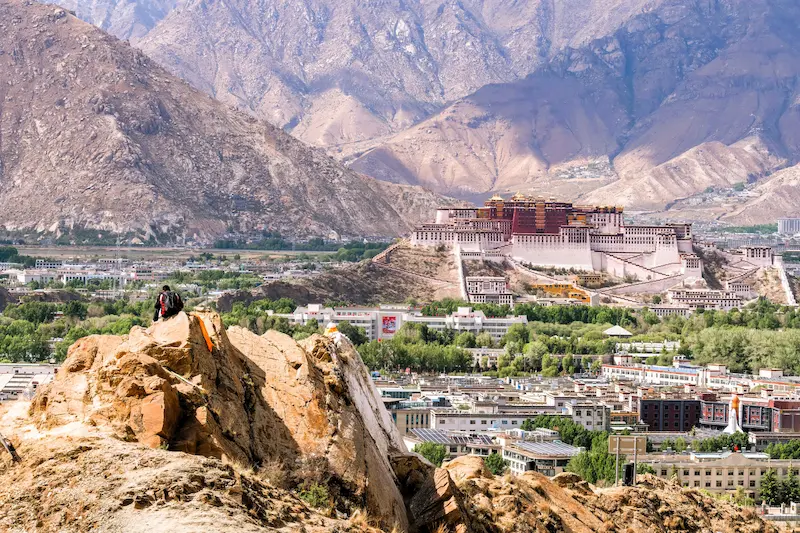
Usually this city represents the arrival and departure point of itineraries in Tibet, providing an excellent base to acclimatize (3,656 meters) before reaching even more challenging altitudes.
The most iconic place in Lhasa is undoubtedly the Potala Palace, which rises majestically on Marpo Ri hill. This palace-fortress, once the winter residence of the Dalai Lama, dominates the city with its white and red walls and houses over 1,000 rooms, including sacred temples, intricate chapels, tombs of past Dalai Lamas, and vast libraries. A note of attention: remember that photos inside the palace are not allowed.
Lhasa is much more than the Potala Palace, and you’ll realize it right away by venturing into the streets of the historic center: here, the intensity of the primary colors used pretty much everywhere will immediately catch your eye, and they deeply characterize Tibetan culture, creating a strong chromatic experience. Near the Jokhang Temple you can also observe pilgrims, coming from other parts of Tibet, incessantly practicing kora (be discreet if you want to take photos).

This practice consists of completing, multiple times, the perimeter of a sacred place, performing ritual movements that involve genuflection and lying on the ground. Through this prayer exercise, which requires a really significant physical commitment, the pilgrim’s purification is accomplished. It’s really touching to see the devotion of these people, who are also supported by the local population with offerings to sustain their spiritual commitment.
The Omnipresence of Breathtaking Mountains and Lakes
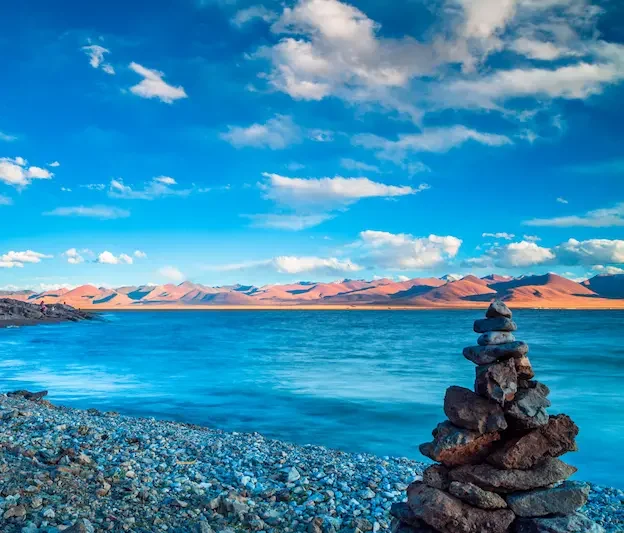
In this section of our guide, we decided to talk to you in general about the experience you can have of the mountains and lakes of Tibet, which represent a truly essential landscape feature of this region. We will also mention the peaks and bodies of water that we consider to be the most beautiful and significant – but what we want to convey here is above all the overall feeling that the mountains and lakes of Tibet will arouse throughout your journey.
The mountains, first of all: to name two among all, don’t miss Mount Everest and Mount Kailash. You can admire the first from the panoramic point of Everest Base Camp – majestic in the golden light of dawn. Next to the world’s highest mountain, there is also the world’s highest monastery, which perfectly completes the picture of a scenario that is both natural and spiritual.
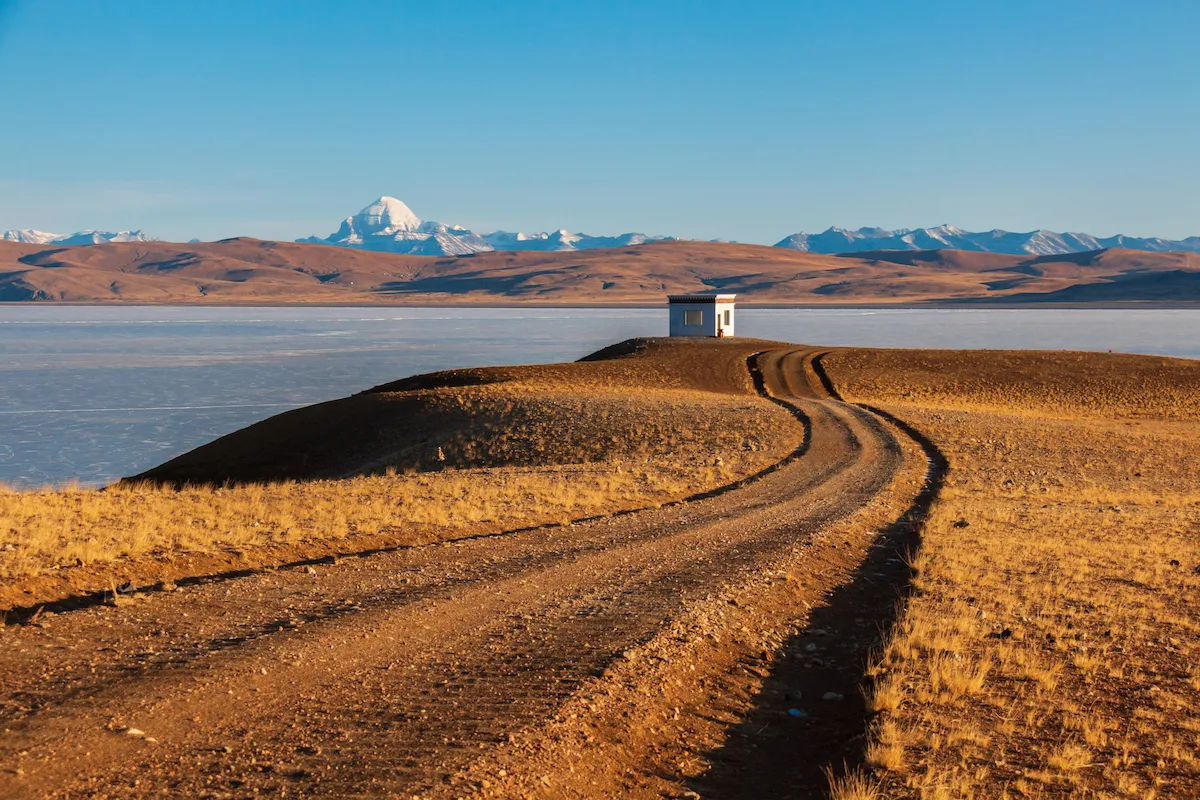
Mount Kailash is a mountain sacred also to Hinduism, around which both Buddhist pilgrims and Indian ones assiduously engage in the sacred exercise of kora. Although lower than Mount Everest (6,638 meters vs 8,848 meters), it does not hesitate to tower and emanate splendor among the surrounding mountains.
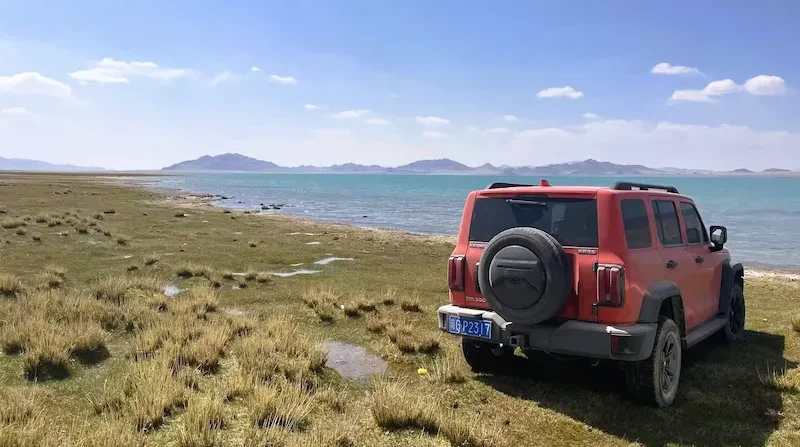
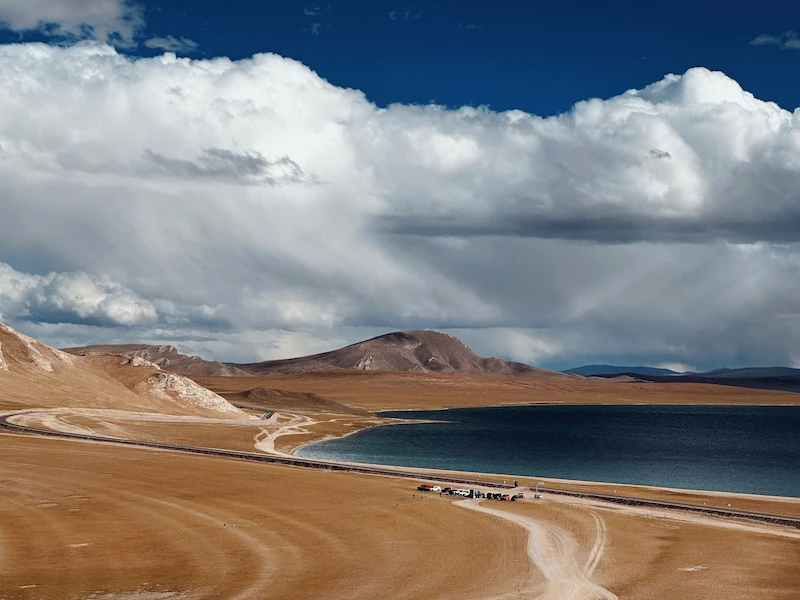
Near this mountain, there is one of the sacred lakes of Tibet, Lake Manasarovar, sapphire blue in color, so intense as to appear surreal. (The others are: Namtso, Yamdrok Tso, and Lhamo La-tso). This is a typical trait of Tibetan lakes: their color in fact challenges the principle of reality, for how intense it can be. Like the mountains, these lakes too are natural places that become symbols of spirituality, hosting monasteries and ancient meditation caves on their shores.
All around Lake Manasarovar there is a dirt road, traveled by pilgrims practicing kora around the lake, which can also be traveled by car (since a few years, they have introduced a paid entrance). If you get the opportunity to meet them, sharing a moment of refreshment around the lake with them can be a really touching experience. You can be sure they will offer you dried yak meat and yogurt (be careful with the yogurt – we say this from experience – it might play some intestinal tricks on you).
If you want to explore other regions where nature offers spectacular scenarios, you can take a look here at other possible destinations.
Paryang
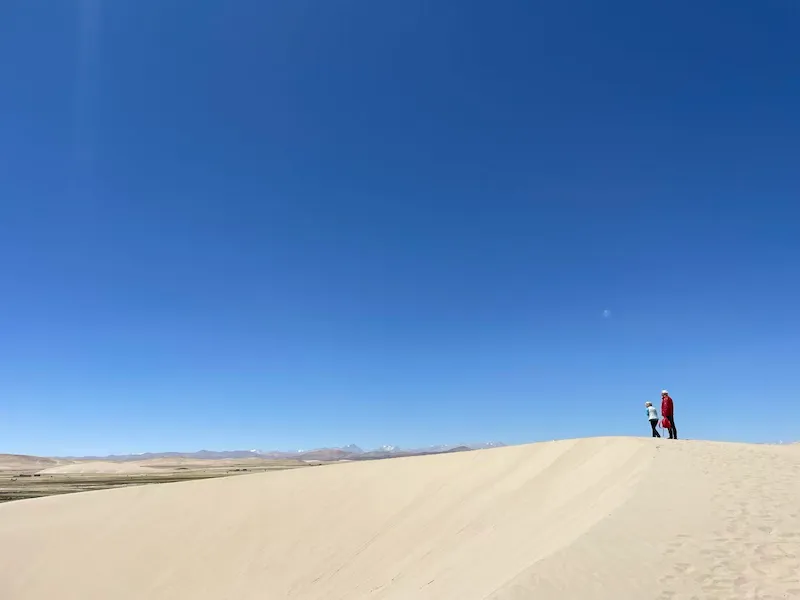
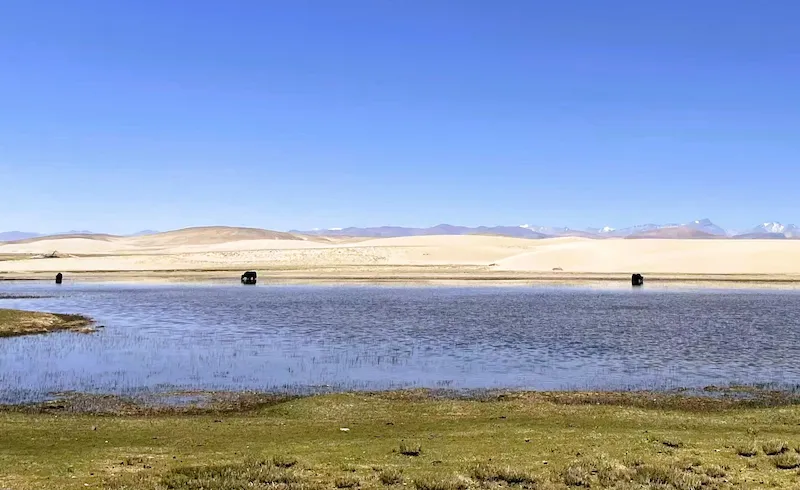
The thing we like most about this place is the surprise effect! At a certain point on the road, you look around and wonder if you’re still in Tibet… What are sand dunes doing all around you? How did they end up on the “roof of the world”?! And while you’re asking yourself these questions, know that you’ve arrived in Paryang.
This area, with its sand dunes, will offer you a truly unexpected and beautiful landscape. Moreover, if you’re lucky, you’ll have the chance to observe Tibetan fauna, which earns this area the name of “wild animals’ paradise”. Consider anyway that Tibetan wild animals are scattered pretty much everywhere on the plateau – and in particular in the part north of Ali, which we will talk about later. In any case, the sand dunes among the mountains are in themselves more than sufficient reason to make a stop in Paryang, before reaching the city of Saga.
A note of attention: if you want to climb the dunes – even the lowest ones – don’t underestimate the importance of doing it without hurrying. If you go too fast, in fact, the burning in your lungs due to the scarcity of oxygen will be felt painfully as soon as you’ve reached the top and stopped.
For other destinations that will allow you to climb sand dunes, you can look here at one of our recommended itineraries in Gansu, and in southern Xinjiang.
Ruins of the Ancient Kingdom of Guge
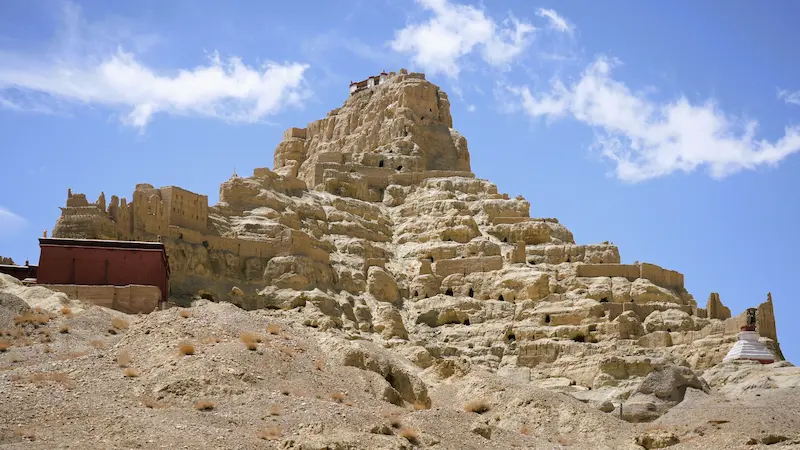
The Kingdom of Guge was an ancient kingdom of western Tibet, which was finally annexed in 1679–80 by the central Tibetan government based in Lhasa under the guidance of the Fifth Dalai Lama. Its history is very articulated and, if you want to delve deeper, you can find it summarized here.
We recommend reaching this ancient archaeological site, located in the western county of Zanda, because it’s really evocative. You will see numerous cavities opening in the sand-colored rock, which were the dwellings of the ancient inhabitants of those places. The social stratification of the kingdom also provided for a class diversification between the inhabitants of the houses built higher up and those built lower down. At the top, you will see the regal silhouette of the rulers’ temple-palace.
There are also numerous places of worship that you can visit along the ascent, which guard spectacular sacred frescoes. The state of conservation inevitably suffers from the centuries passed in this remote corner of Tibet, but through some points that still retain a certain chromatic intensity, it will be possible for you to imagine the level of original splendor of the whole.
Also consider that you have to climb along a path consisting essentially of stairs during the visit. It wouldn’t be demanding, if it weren’t located at 3,800 meters altitude – which makes every movement more burdensome… Don’t hurry along the path, and remember to cover your head with a hat to protect yourself from the sun.
Since the Kingdom of Guge was, indeed, a kingdom, you will notice that, even beyond the main archaeological area, it is possible to spot the characteristic cavities carved into the rock. In particular, heading from Zanda to Shiquanhe, there is another important site, at the top of which we recommend you arrive to have the opportunity to have a really touching encounter: at the top, you might indeed meet an elderly gentleman, who has transformed his life into that of a semi-hermit monk, moving right to the summit of one of the places where the ancient Kingdom of Guge stood. Here, you can share a really touching moment of prayer with him.
North Ali
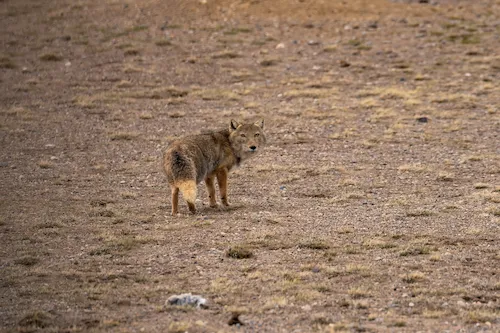
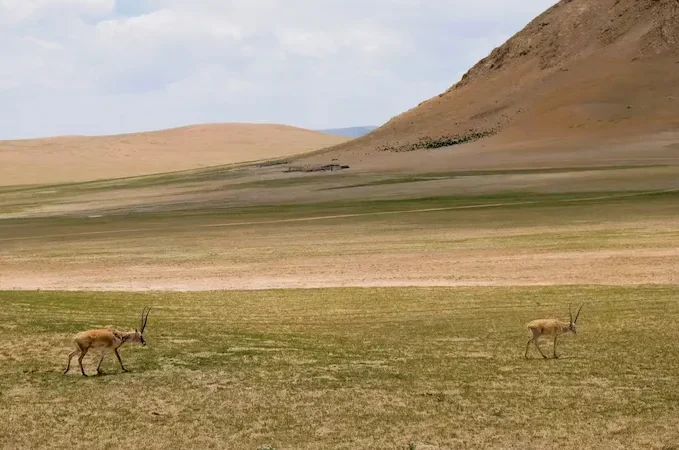
You might hear it said that north of Ali is where the true soul of Tibet is kept. What we can tell you is that it is certainly a little-touristed area, which preserves intact the charm of a primordial and uncontaminated place. Even in high season, you will happen to meet really very few other travelers.
If you’ve arrived in Lhasa, you might decide to reach Baingoin, passing through one of the sacred lakes of Tibet, the splendid Lake Namtso, after which you can head west, along the S301 to Shiquanhe. This route will give you the opportunity to delve into one of the wildest parts of the Tibetan plateau, where nomads essentially live, who base their survival on livestock breeding.
If you’re interested in visiting places characterized by a nomadic lifestyle, you can also read here our travel story in the lands of Gannan, and take a look here at our itinerary focused on northern Xinjiang.
Seeing the shepherds grazing the yak herds gives images of timeless beauty, showing a lifestyle that has been able to adapt to very difficult conditions, creating a delicate balance with the environment.
In these areas, it will also be relatively easy for you to spot wild animals, including Tibetan antelopes, foxes and wild donkeys. During the journey, you will also have the chance to skirt incredible lakes, for vastness and color, which as we said, are a recurrent and always welcome encounter throughout the Tibetan landscape.
If you like exploring remote areas, the area north of Ali will give you the opportunity to enjoy Tibet in a truly exclusive way. You will have to be ready to adapt to essential accommodations (although recently the conditions of the lodgings have improved considerably – unlike those of the sanitary services you might find along the road, which remain… dramatic).
Moreover, here you will really perceive being on the roof of the world – or rather, on the “terrace” – since you will find yourself crossing the vast expanses of the plateau for hundreds of kilometers, surrounded in the distance by the imperious frame of the mountains. Exploring these lands made of wind, nomads’ tents, wild animals, wandering herds, and profound silence, is an experience that will allow you to discover one of the most authentic faces of Tibet.
Wenbunan
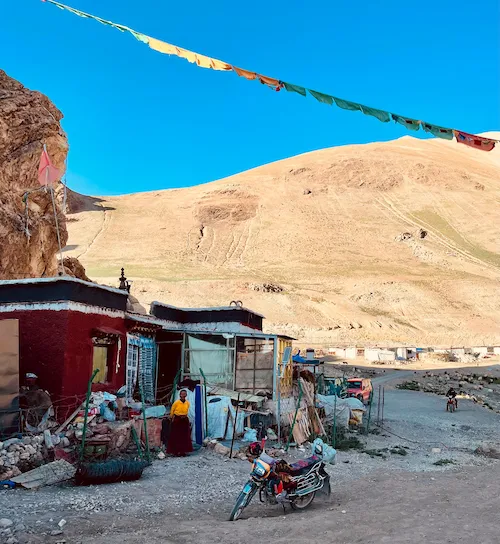
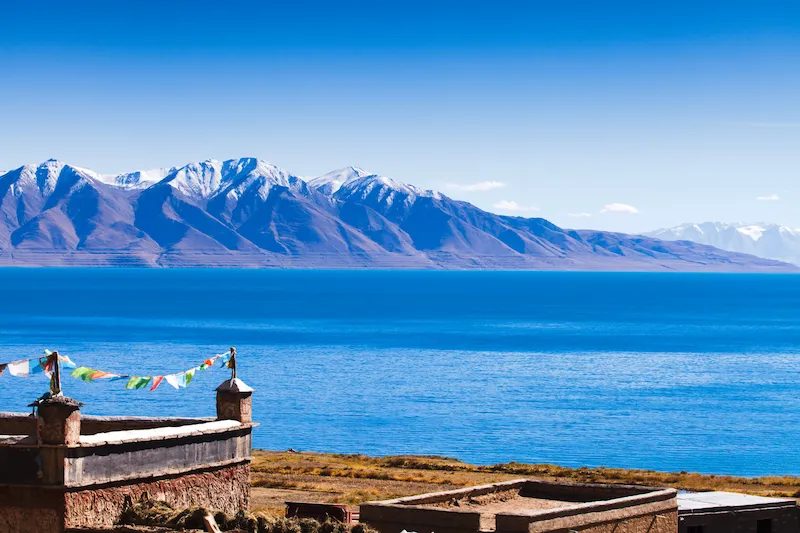
This village is located on the shores of one of the most beautiful lakes in Tibet, Lake Dangqiongcuo, and is positioned on the route that takes you from Baingoin to Shiquanhe, taking a detour along the S205. We mention it here because it’s really a special place, where Tibetan-style life maintains all the strength of its harsh and spiritual charm.
Take the time to savor the atmosphere of this village and stay here at least one night – all the more so since now they have built new hotels, much more comfortable than the accommodations that were made available to tourists previously.
Moreover, not far from the village, the lake and the mountains guard a true cultural gem: continuing along a dirt road that takes you out of the village (eastward), you will find yourself skirting the lake, and then climbing up the mountain. At a certain point, you will notice the presence of prayer flags vibrating in the wind, and some houses built precariously on the mountainside.
In this place there is a small monastic community, follower of the animist (Bon) current of Tibetan Buddhism, which lives isolated in this remote corner of the world. Make sure to be accompanied by your guide, and be discreet when it comes to taking photos. You can also visit their main place of prayer, a temple-cave that delves into the rock and overflows with prayer objects.
Conclusion: Where Nature and Spirituality Intertwine
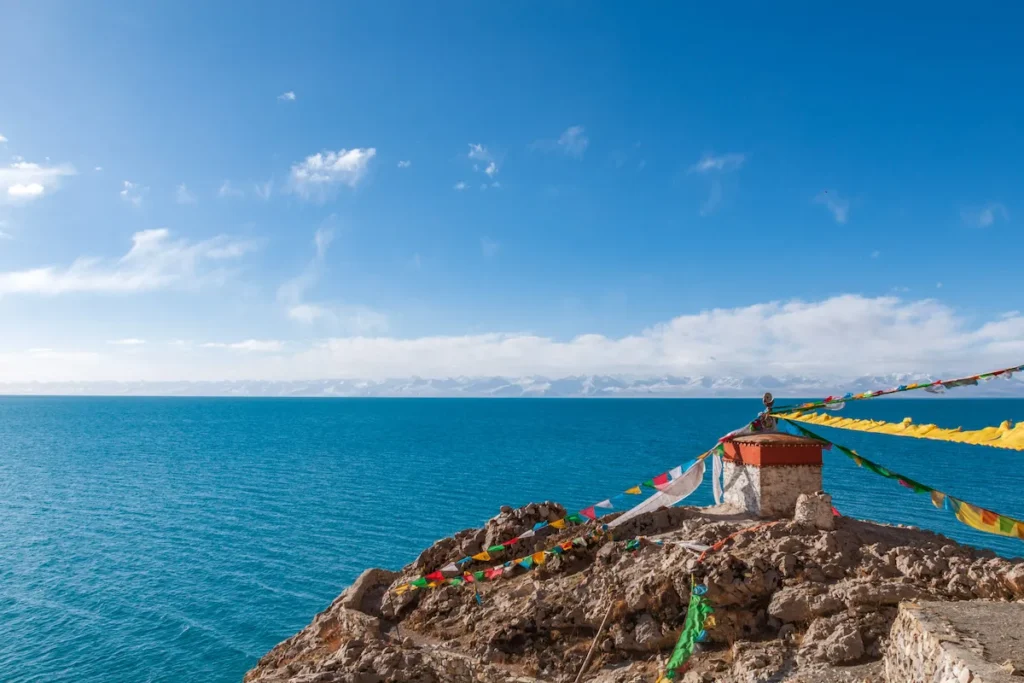
Tibet is a destination that, despite China’s recent visa-free policies, remains more difficult to reach compared to other regions. In any case, the beauty of its landscapes and the authenticity of the encounters awaiting you will repay you for every effort – including those connected to altitude.
Observing pilgrims performing kora around a temple, a lake or a sacred mountain, you will realize the profound interconnection that exists between Tibetan culture and the elements that make up the landscape, and you will return from your journey carrying with you the perception of the universal connection underlying everything, which becomes stronger in you after having been on the roof of the world.
If you want to discover other itineraries aimed at an in-depth and meaningful exploration of China, you can look here at our catalogue – to use directly, or as a base to create together the itinerary tailored for you.
We hope that the information contained in this guide can be useful for organizing your trip. Whether you choose to travel with Ink Voyages or not, we strongly recommend dedicating a chapter of your adventures in the world to this extraordinary land. That said, all that’s left is to pack your suitcase and start the journey. Tibet is waiting for you!