My Yunnan Travel Odyssey – Part Two
A Yunnan Itinerary through Ancient China Villages, Matriarchal Lakes, and Hungry Seagulls
Table of Contents
One of the reason Yunnan enters the top 3 of Ink Voyages‘ favourite destinations is Baoshan Stone Village… One day, a Baoshan Stone Village elder pressed a cup of home made rice wine into my hands, a forty-two degree alcohol bomb, as powerful as utterly foreign to my Western palate. Through gestures and broken Mandarin, she was trying to explain how her stone house had weathered seven centuries of storms, but her eyes said more: You thought you understood Yunnan after one trip?
She was right. My first 10-day loop through Tiger Leaping Gorge and Shangri-La had been intoxication—the kind of travel high that convinces you you’ve cracked a place’s code. But Yunnan, I was learning, keeps deeper secrets. This second journey would take me places that don’t appear in guidebooks: cliff-carved villages where time moves differently, lakes governed by matriarchal societies, and mountain roads that test both patience and suspension systems. If you are interested in discovering more about Yunnan, you can also look into our regional travel catalogue!
Return to Lijiang
Lijiang Sanyi Airport felt familiar this time—the same mountain silhouettes, the same thin air at 2,400 meters, the same anticipation as I collected another SUV. But instead of heading to Dayan Old Town’s comforting cobblestones, I pointed north toward a destination that most travelers never hear about.
A local friend I could meet in Deqin during my first trip had mentioned Baoshan Stone Village during a dinner—a place so remote it barely registers on tourism radars. “It’s not comfortable,” he’d warned, “but it’s real.” After months of thinking about Yunnan’s pull, real sounded exactly right.
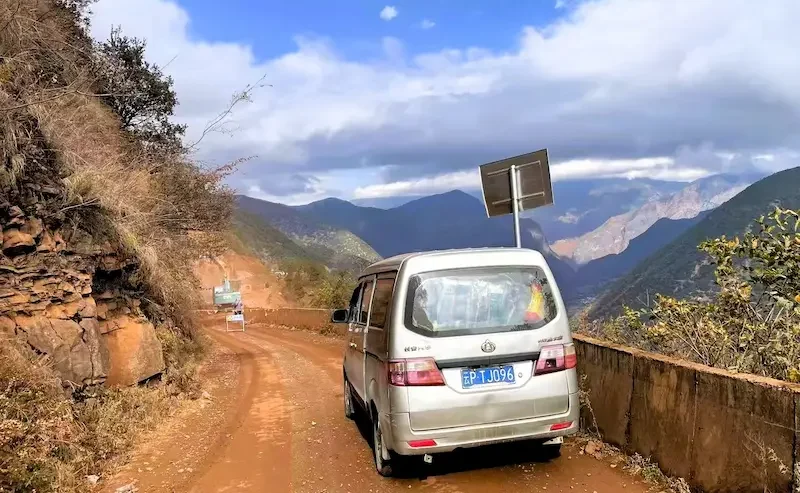
The 110 kilometers looked innocent on Baidu Maps. What it didn’t show was that recent landslides had triggered emergency rebuilds, blocking the tiny mountain road for over two hours – and that the road itself was barely large enough to have two cars pass. Well, sometimes not large enough at all… However, my SUV behaved brilliantly on the gravel ground and slowly but steadily took me deeper into the mountains.
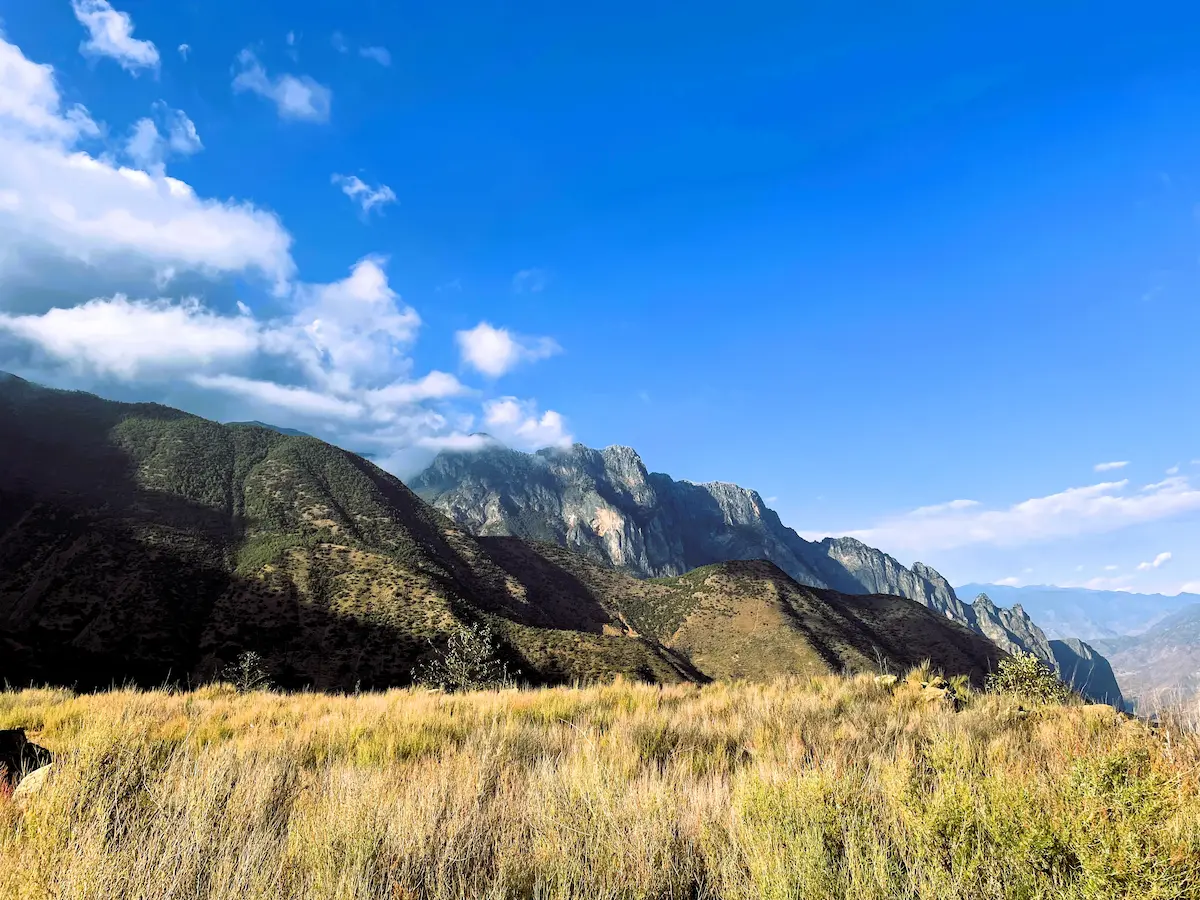
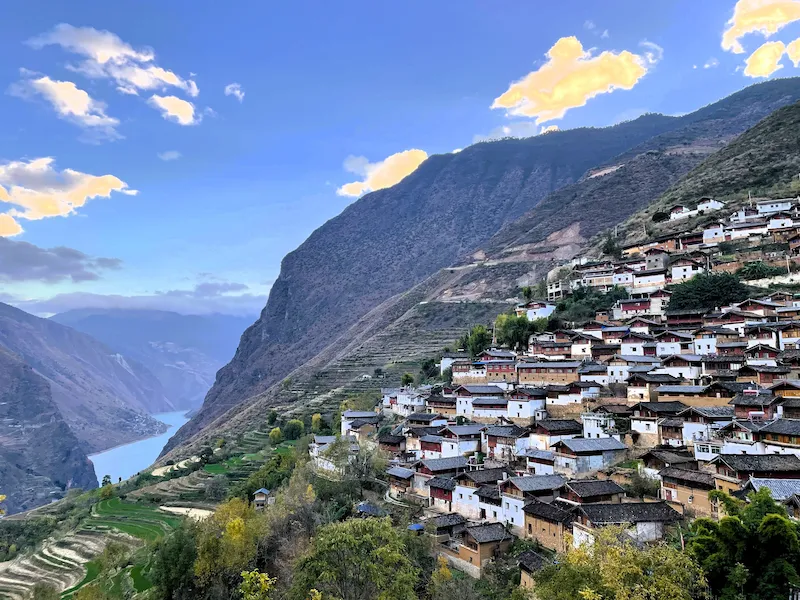
The landscape becomes progressively more beautiful, reaching its peak when the road, cresting a ridge, suddenly revelals the Jinsha River carved turquoise ribbons through vertical cliffs. In the distance, a village that looked more geological formation than human settlement perched impossibly on a mushroom-shaped rock.
Baoshan Stone Village: Where Architecture Defies Gravity
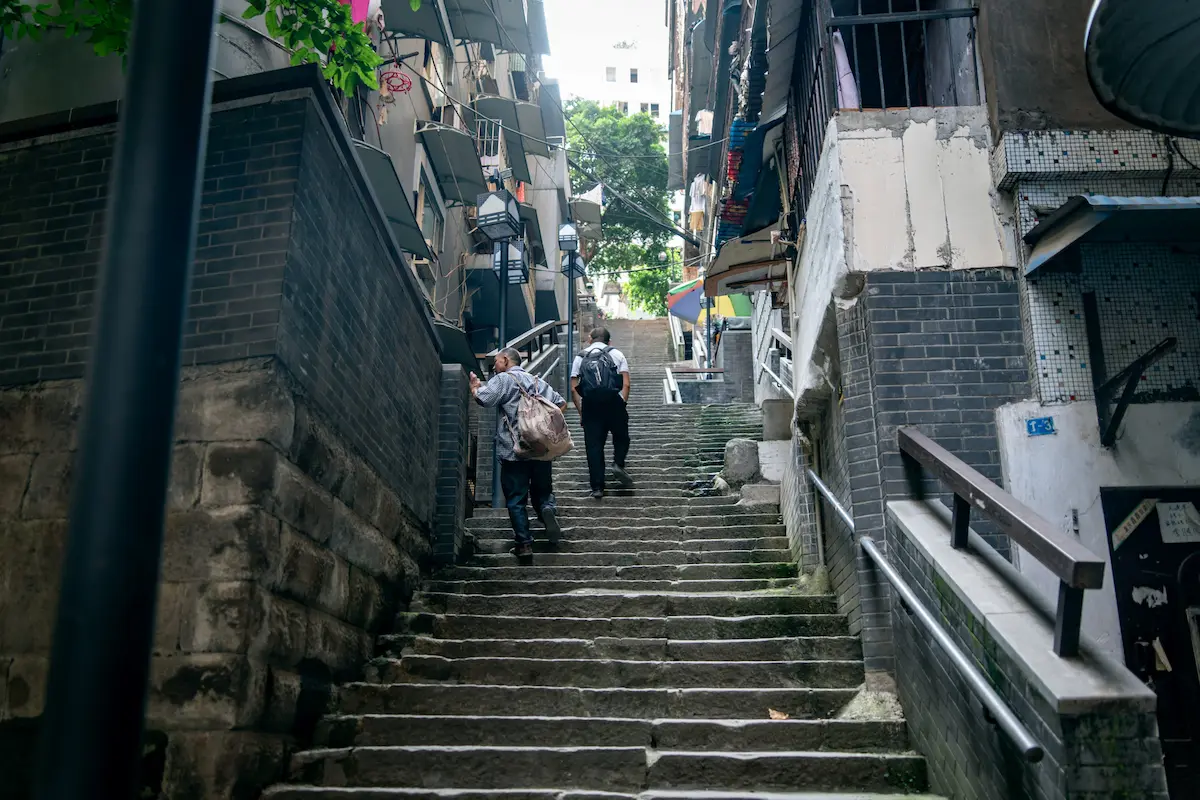
No cars could navigate Baoshan Stone Village‘s pedestrian paths, so I parked outside the village gates and shouldered my backpack for the climb. Stone steps, worn smooth by centuries of feet, wound upward past houses that seemed to grow from the cliff itself.
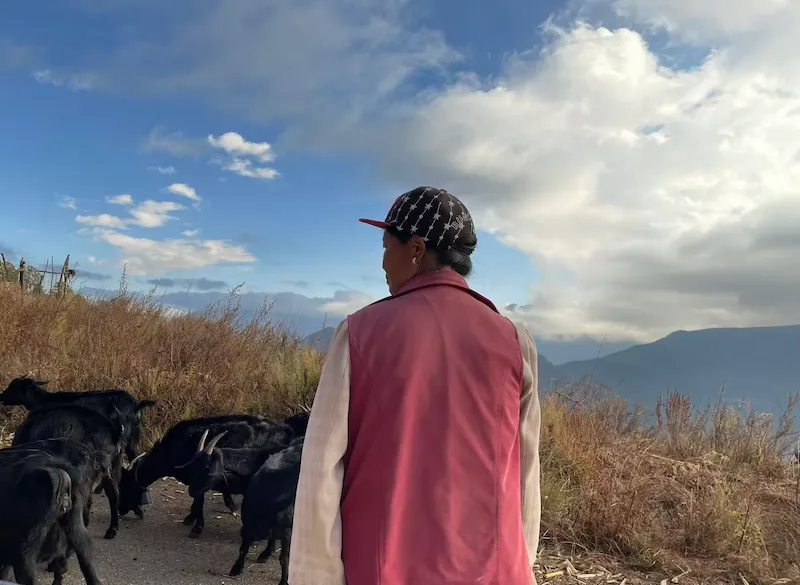
The village elder who’d eventually serve me that memorable cup of rice wine found me first. Her weathered hands gestured toward a surprisingly cosy guesthouse carved directly into the rock face, its wooden balcony offering views that hotels spend fortunes trying to replicate.
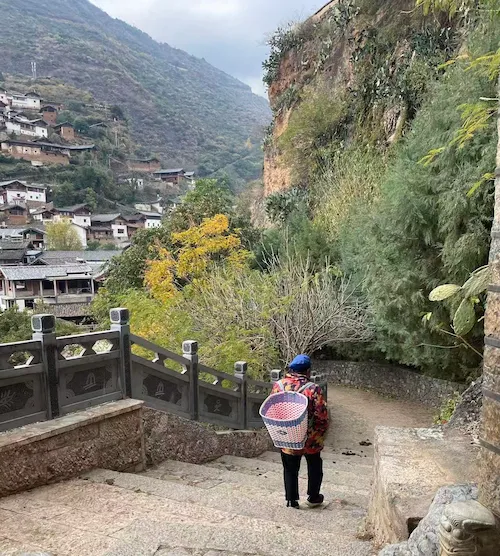
We climbed to her courtyard where huge pumpkins were waiting to dry. Through charades and smartphone translations, she explained how her ancestors had built this place during the Yuan Dynasty, around 1277-1294. Each house represented generations of knowledge about living with stone, water, and weather that could kill the unprepared.
The moment that stayed with me came when she pulled out a faded photograph showing the same courtyard in the 1980s. Three generations of women stood in identical poses, same backdrop, same prideful expressions. She pointed to herself as a young girl, then to the current layout. Nothing fundamental had changed because nothing fundamental needed to change.
Practical Wisdom for Baoshan: The 110-kilometer drive from Lijiang takes 3-5 hours depending on road conditions and construction delays. An SUV is essential for the final approach. Family-run guesthouses charge 200-400 CNY and offer basic accommodation with spectacular views. The cosiest one is above 1,000 CNY – and if budget allows, it is indeed worth every yuan. Village entry is free. Budget 100-200 CNY daily for meals featuring very local fresh food. For other practical arrangement through China, let us guide you with our dedicated private tours!
Jinsha River Morning: Floating Through Geological Time
Dawn at Baoshan arrives with bird calls echoing off canyon walls and the Jinsha River’s constant murmur far below. My guesthouse host had arranged a private boat tour into the gorge’s heart where few tourists venture.
The boat captain met me at a precarious dock carved from the cliff face. His vessel was functional rather than comfortable—a metal-hulled motorboat whose deck vibrated with engine rhythm and whose amenities consisted of plastic stools and a thermos of tea.
But once we pushed off into the Jinsha’s emerald current, comfort became irrelevant. The water’s color defied photography—a blue-green so intense it seemed artificial, created by mineral deposits that had been accumulating since before humans walked upright. The gorge walls white like cathedrals, carved by millions of years of patient water.
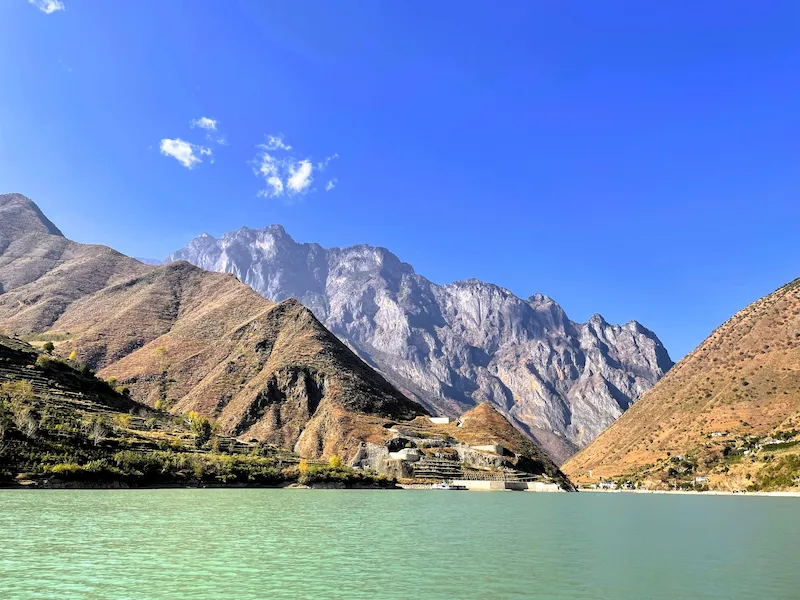
We drifted past ancient trail markers for the tea horse route, spotted other ancient villages scattered on the surrounding hills, and some newly built villas that seemed to be dangerously too close to the water. The boat’s metal deck grew warm under winter sun, and the engine’s vibration became hypnotic while I lost myself in admiration of that primeval landscape.
Boat tours cost 300-500 CNY per person, arranged through guesthouses rather than independent operators. Winter offers optimal conditions with clear water and stable weather. For river-cruise passionates, it is worth mentioning the Li River cruise in Guangxi, or the Yangtze River cruises (from 4-days to 12-day itineraries), which we can help you arrange as part of your exclusive China travel.
Toward Lugu Lake: Roads That Test Resolve
The 200-kilometer drive to Lugu Lake promised five hours of hairpin turns, altitude changes, and mountain weather that could shift from sunshine to snow squalls without warning. Each switchback offered views that demanded stops, but finding safe parking on narrow roads carved from cliff faces required constant attention.
The payoff came suddenly. One final curve, and Lugu Lake spread below like a blue jewel set in white-capped mountains. At 2,690 meters, the air was thin enough to notice, but the lake’s perfect surface reflected clouds so clearly that sky and water became indistinguishable.
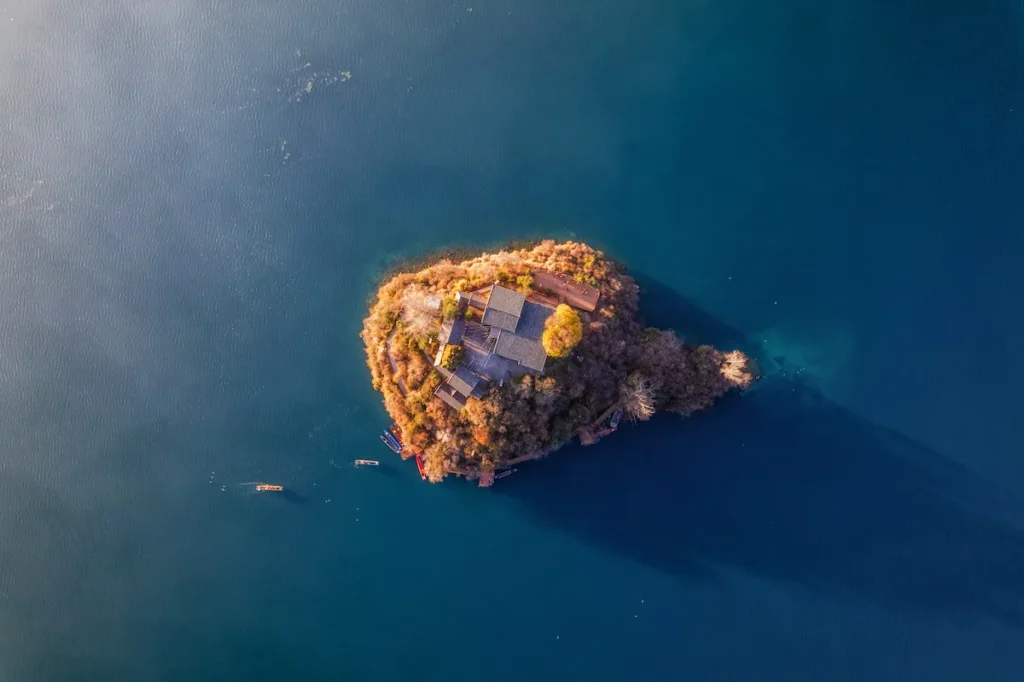
This was the homeland of the Mosuo people, one of China’s last matriarchal societies. For over a thousand years, they’d developed social structures that would challenge every assumption I’d inherited about family, marriage, and gender roles. This cultural discovery is a key factor in our private travel experiences, it is deeply coded Ink Voyages’ travel DNA – as we truly aim to connect the travelers with the local communities.
The Mosuo People Of China: Lessons from a Matriarchal Society
My accomodation sat directly on the lake’s edge, its wooden balcony pointing in the direction of water so clear that fish shadows moved like living calligraphy across the sandy bottom. The owner, Ama, introduced herself as the household’s “dabu”—the senior woman who made major decisions, controlled finances, and guided family direction.
In Mosuo culture, lineage flows through women. Property passes from mother to daughter. Children belong to the mother’s household, and men visit their partners at night but return to their maternal homes by morning. It’s called “Mosuo walking marriage,” and after some observation, it appeared to work with less drama than most Western arrangements I’d witnessed.
The evening bonfire became my classroom. As stars emerged over the lake’s mirror surface, Mosuo women sang songs that told their culture’s history—working songs that celebrated female strength, mourned lost harvests, and teased lovers with earthy humor that needed no translation.
A young woman named Namu taught me to identify constellations by their Mosuo names—stories that connected sky patterns to lake rhythms and the sacred mountain Gemu that the goddess was said to inhabit. When I mentioned that Western cultures often depicted the moon as female, she laughed. “Of course. Who else would be patient enough to watch over sleeping children every night?”
Cultural Immersion Guidelines: Reaching Lugu Lake takes 5-6 hours on winding mountain roads. Entry fee is 100 CNY. Mosuo guesthouses (300-500 CNY) offer authentic cultural immersion with basic amenities. The place has become increasingly popular in recent times, so that comfortable hotels can be easily found along the lake. Despite tourism having taken away the type of charm you can still find in Baoshan Stone Village, this place is still immersed in a wonderful natural setting and incredible, worth-experiencing culture. Altitude at 2,690 meters affects some visitors—hydrate constantly and avoid alcohol the first night. Respect Mosuo customs by greeting women first and purchasing handmade crafts directly from artisans. Traditional pig-trough boats (50-150 CNY) offer peaceful lake exploration.
Ciman Village: Mountain Meditation
From Lugu Lake, I drove towards Dali, making a deliberate stop to Ciman Village—a Bai settlement closeby Lijiang where traditional life continued with minimal tourism impact. The village was plunged in genuine tranquility, perfect for a night rest.
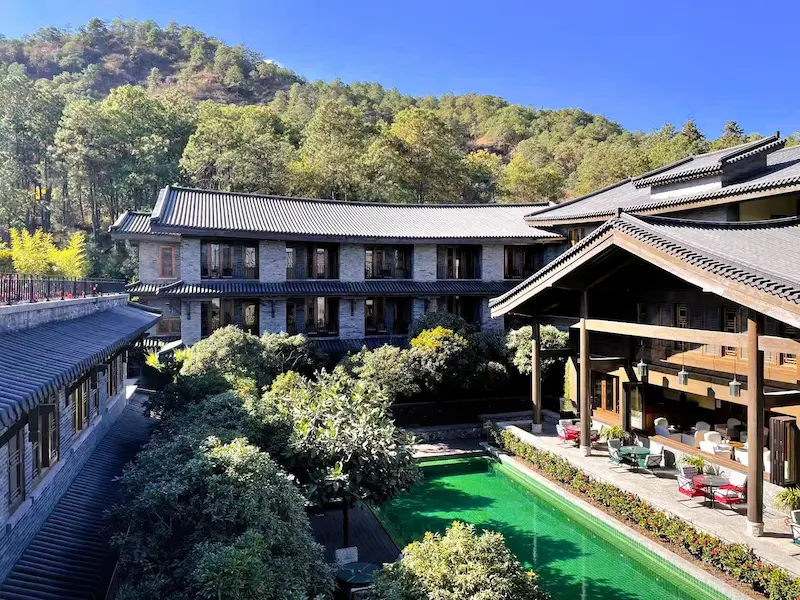
Ciman’s 200 residents maintained traditional occupations. The village’s rhythm followed natural cycles rather than commercial schedules. Meals happened when hunger and ingredients aligned. Conversations continued until topics exhausted themselves. Sleep came with darkness and ended with sunrise, synchronized with rhythms that modern life had largely forgotten.
Ciman Village Wisdom: Ciman Village is a recommended stop before continuing the road to Dali. It offers a peaceful retreat and a stunning accomodation: the local eco-luxury Songtsam, which will make you forget in a glimpse all the effort of driving along twisting roads. If you are planning to come to China, we are glad to provide you with many other ideas to design your China travel at best!
Dali Finale: Bohemian Dreams and Lake Erhai Bicycle Paths
My final destination, Dali, announced itself through Lake Erhai’s impossible blue gleaming between distant peaks. The ancient town maintained its reputation as Yunnan’s bohemian capital—artist studios shared space with traditional medicine shops, backpacker hostels neighbored Bai family restaurants.
But Dali’s real attraction lay along Lake Erhai’s newly completed Ecological Corridor—115 kilometers of dedicated cycling paths that followed the shoreline through wetlands, farming villages, and scenic viewpoints.
My first day explored Three Pagodas Dali’s symbol (100 CNY entry): their ancient Buddhist towers standing against Cangshan Mountain’s snowy peaks, then wandered markets hunting tie-dye fabrics that local Bai artisans had perfected over generations. From Dali Ancient Town to villages like Xizhou and Caicun, I passed Bai-style homes with their distinctive curved roofs, agricultural fields waiting for the spring, and the dramatic backdrop of snow-capped Cangshan ranges.
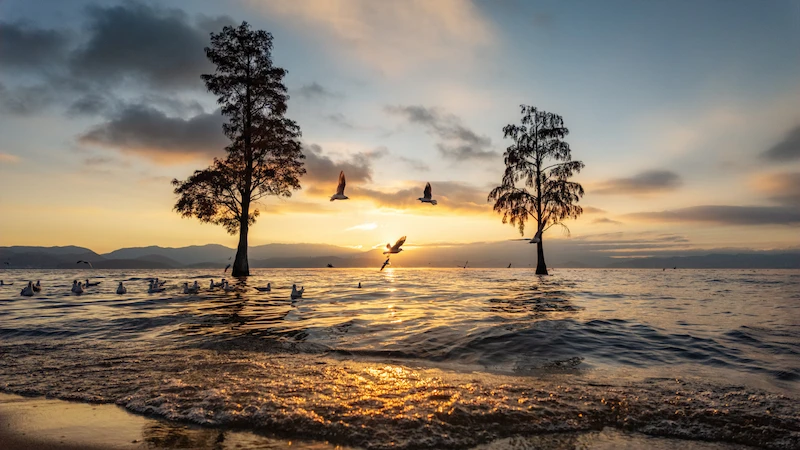
Renting an electric-assist bicycle (80 CNY daily), I chose the western section—46 paved kilometers from Dali Ancient Town showcasing Erhai Lake’s beauty. Morning cyclists shared the path with commuting farmers and migrating seagulls that had discovered Erhai as winter sanctuary.
Xizhou Village
A special note of merit goes to Xizhou Village, a historic gem in China’s Yunnan Province, lies about 18 kilometers north of Dali Old Town. With over a millennium of history as a key trading post along the ancient Tea Horse Road and a center of Bai ethnic culture, the village boasts more than 100 well-preserved Ming and Qing Dynasty residences, showcasing intricate “three courtyards and one wall” architecture adorned with white walls, upturned eaves, and carved wooden details. Home to around 55,000 mostly Bai residents, Xizhou thrives with vibrant morning markets offering local specialties like the iconic Xizhou baba flatbread, tie-dye crafts, and the ceremonial three-course tea ritual, drawing visitors to immerse in its timeless traditions and stunning natural backdrop.
Back in Dali, at a lakeside restaurant specializing in Erhai’s fresh catch, I ordered grilled fish that had been swimming hours earlier. The proprietor, a Bai woman whose family had fished these waters for generations, prepared the meal with wild herbs and lake vegetables foraged from surrounding wetlands. Seagulls gathered hopefully as I ate, their bold panhandling providing entertainment worth the bread scraps they demanded.
Cycling and Lake Exploration: Dali offers numerous bicycle rental options. Electric-assist models (80 CNY) handle hills comfortably on the Ecological Corridor’s paved surfaces. The western path provides the most scenic riding with minimal traffic. Start early to avoid midday heat and afternoon winds. Lake cruises (100 CNY) provide different perspectives on Erhai’s size and surrounding peaks. Bring bread for seagull feeding—their aerial acrobatics create memorable interactions.
Reflections: Yunnan’s Endless Call
Flying out of Dali’s airport with another 800 kilometers on the odometer, I realized that Yunnan’s genius lies not in individual attractions but in cumulative impact.
Baoshan Stone Village taught me about adaptation—how humans modify impossible environments through generations of careful observation. Lugu Lake demonstrated alternative social structures that work precisely because they evolved for specific conditions. Ciman proved that authentic peaceful lifestyle could survive tourism if approached respectfully. Dali showed how traditional and modern elements could blend without either dominating.
Fellow Travelers, I sincerely invite you to explore Yunnan with Ink Voyages. Yunnan isn’t conquered in two trips; it invites endless returns. What’s your Yunnan hidden gem? Share below or submit to the Ink Team—we’d love to feature you! Safe journeys, and may your roads lead to wonders.