My Yunnan Travel Odyssey – Part One
Table of Contents
A Self-Driven Exploration Through Lijiang, Tiger Leaping Gorge, Shangri-La, Deqen & Tacheng
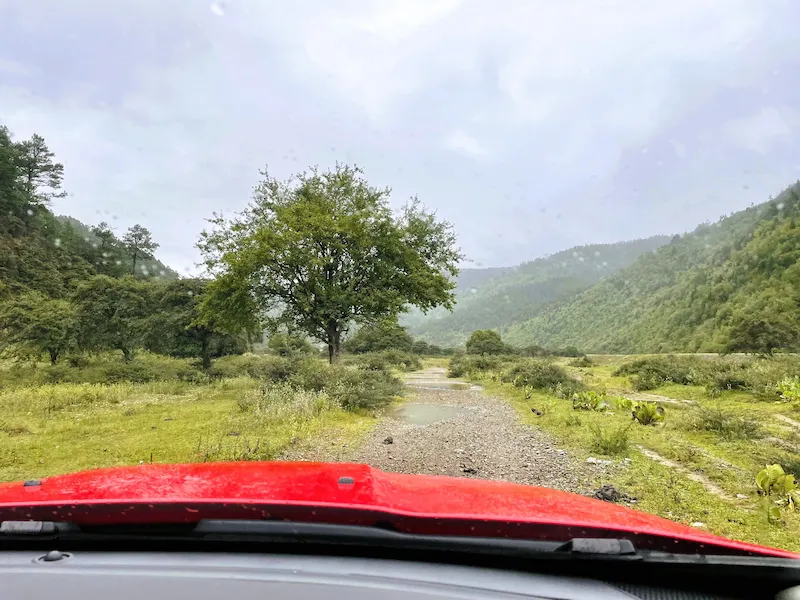
The rental SUV’s engine hummed as I wound through Yunnan’s mountain curves at dawn, chasing a legend about a tiger that once leaped across China’s deepest gorge. Eight days later, I’d understand why this province refuses to let travelers go.
I’m Martina Li, Travel Expert at Ink Voyages, and this is my first love letter to Yunnan—equal parts adventure story and survival guide. I believe the best travel advice comes wrapped in real stories, so here’s mine: a 8-day loop that started in ancient Lijiang, dove into Tiger Leaping Gorge’s raw power, climbed to Shangri-La’s thin air, touched sacred peaks in Deqen, and ended with playful monkeys in Tacheng’s hidden forests.
The secret weapon? A rented SUV to have the freedom to stop, explore, and change course on mountain whims transformed everything. Yunnan’s 1,000 kilometers of winding roads became my classroom, and every village a new chapter.
But first, let’s talk about getting behind the wheel in China for foreigners —because this changes the game entirely.
The License That Opens Everything: Self Driving Car China
Most travelers assume you can’t drive in China as a foreigner. Wrong. The temporary driving license exists, it’s legitimate, and it unlocks a different kind of journey entirely.
What You Actually Need:
- Your home country driver’s license and passport
- Official Chinese translation of your license
- Registry of Accomodation Form for foreigners
- One passport photo, which can be taken on site
- Patience for a simple traffic rules video, which you have to go through for 30 minutes.
Then…You are ready to go! And if you are willing to explore China, our private China travels can help you get some inspiration!
Lijiang: When Ancient China Whispers
The Heart Of Lijiang: Dayan Old City
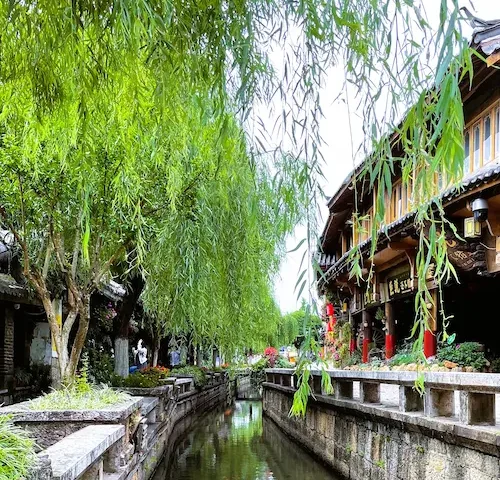
I collected my SUV at Lijiang Sanyi Airport as the sun painted the surrounding peaks gold. The 40-minute drive into town felt like time travel—traditional Naxi architecture replacing modern buildings with each kilometer.
Dayan Old Town at 6 AM belongs to the cats and the cleaners. Mist curled around wooden houses that have weathered centuries, and the only sounds were water trickling through stone channels and my footsteps on worn cobblestones. Before the souvenir shops stirred and tour groups arrived, I had this UNESCO World Heritage site to myself—exactly as I’d hoped.
During the day, the town transformed into a dynamic carousel. Using the Dianping app, I found a local restaurant tucked into the old town’s maze. The owner, a Naxi woman with silver jewelry catching the lamplight, served wild Yunnan mushrooms in a broth that tasted like the forest floor in the best possible way. Each mushroom carried earth and rain and something indefinably wild. Paired with rice wine, the meal for two cost 350 CNY and felt like a proper welcome ceremony.
Black Dragon Pool Lijiang & Mufu Mansion
Make sure you dedicate at least a full day to Lijiang attractions, which are indeed very well worth visiting. In addition to walking around in the old city, I recommend reserving some time for visiting the Mufu Mansion and the enchanting Black Dragon Pool.
Jade Dragon Snow Mountain & Lijiang Impression Show
From Lijiang to Jade Dragon Snow Mountain it takes half a day trip (count around 1 hour by car). So, if you have time, you could extend your visit to this majestic mountain and assist to the local performance “Lijiang Impression Show”, where local people, which are not professional actors, gather to perform for the audience on a stunning outdoor stage, representing scenes of local life in choreographies.
Practical Intel for Lijiang:
Getting there is straightforward: fly direct to Lijiang Sanyi Airport. The old town’s narrow streets ban vehicles, so park in designated lots near the gates for 20-30 CNY daily.
Altitude hits at 2,400 meters—not extreme, but enough to notice. Hydrate constantly and take your first day slow. The best times are spring (March-May) and autumn (September-November) when weather cooperates and crowds thin. Avoid October’s Golden Week unless you enjoy sardine-can sightseeing.
For accommodation, courtyard guesthouses like Lijiang Old Town Inn (300-500 CNY) offer authentic architecture and mountain views. Splurge budgets can consider Banyan Tree (1,000+ CNY) for luxury with conscience or the unforgettable Aman Dayan, directly connected to the Old City.
Navigation tip: Baidu Maps offers works reliably in rural areas where Google fails. Download offline maps before heading into the mountains.
But Lijiang was just the appetizer. The real flavors waited in nearby villages.
Baisha Village & Shuhe Village: Where Hipsters Meet History
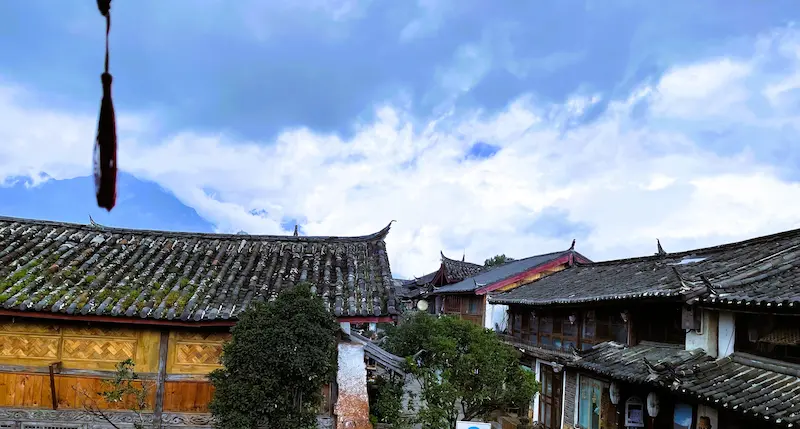
Twenty minutes north of Lijiang, Baisha Village exists in beautiful contradiction. Ancient Ming Dynasty frescoes share walls with artisanal coffee shops. Prayer flags flutter above Instagram-worthy cafes. It’s gentrification with Chinese characteristics, and somehow it works.
I parked beside a quiet lane where an old man repaired bicycles under a walnut tree. His weathered hands moved with the same precision as his ancestors who once painted those famous frescoes. This felt like the real Baisha—not the tourist version, but the living village where past and present coexist without drama.
The teahouse on the village’s upper level became my afternoon sanctuary. Aged pu’er tea, dark and complex, warmed my hands as Jade Dragon Snow Mountain dominated the horizon. The proprietor, a young woman who’d returned from Beijing to revive her grandmother’s recipe, explained how each tea brick aged differently, like wine vintages. Below us, Baisha’s tile roofs created patterns that photographers spend hours capturing. I just sat, sipped, and absorbed.
Fifteen minutes away, Shuhe Ancient Town polished Baisha’s rough edges into boutique perfection. Canal-lined streets hosted night markets where grilled yak meat (20 CNY for generous skewers) competed with handcrafted silver jewelry for my attention. Local Naxi musicians played in small squares as darkness fell—no tickets required, just curiosity.
Village Wisdom: Both villages offer free entry, though Baisha’s fresco hall charges 30 CNY for close-up cultural immersion. Parking runs 10-20 CNY in Shuhe, free in Baisha’s outer areas. A good option is to reach these locations by taxi. Budget 300 CNY daily for food and experiences—less if you picnic, more if you collect artisan crafts. At Ink Voyages, it is indeed our mission to take you discover hidden gems, such as remote villages, where you can experience the authentic meaning of a private China travel.
Visit early morning or late afternoon when day-trippers from Lijiang retreat. Golden hour transforms both villages into photographer’s dreams. Support local artisans over mass-produced trinkets—your purchase funds preservation efforts.
The villages prepared me for authentic experiences, but nothing could prepare me for what came next.
Yunnan Tiger Leaping Gorge: Where Legends Leave Marks
Ninety kilometers from Lijiang, the road drops into one of Earth’s deepest canyons. Tiger Leaping Gorge earned its name from a legend: a hunted tiger escaped from its hunter by leaping across the Jinsha River’s narrowest point. Whether true or not, standing at the precipice makes the story feel inevitable.
Tiger Leaping Gorge Hike Experience
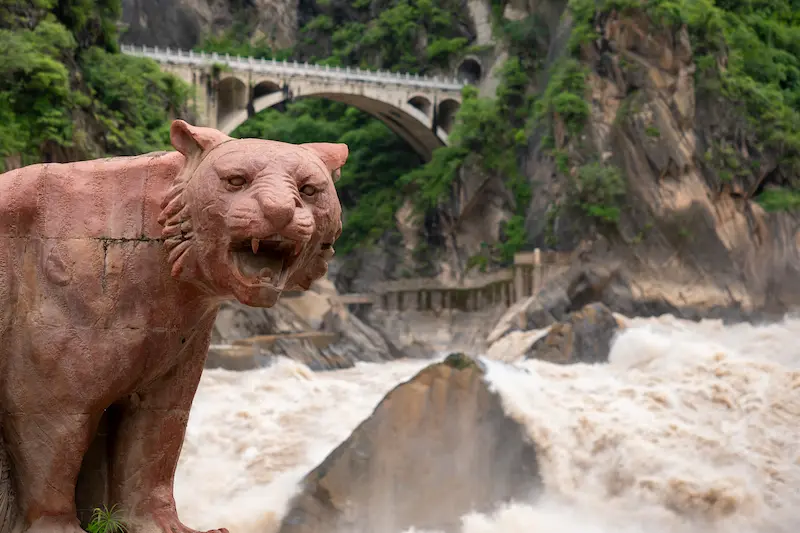
After parking in the dedicated area (20 CNY for secure overnight parking), iI started studying the high trail snaking up the opposite canyon wall. The 28-kilometer trek promised two days of punishment and revelation. The notorious “28 Bends”—a switchback climb that tests both lungs and determination—waited like a challenge from the mountains themselves.
The first ascent nearly broke me. At 3,000 meters, each switchback demanded rest stops where I gulped thin air and questioned my sanity. But then the trail leveled, and the gorge revealed its secret: walls of red rock plunging 3,900 meters to a river that roared like a constant thunder, reverberating deep in your soul while you observe it more and more captivated by its power.
Tea Horse Guesthouse became my first night’s refuge—200 CNY for basic rooms with million-dollar views. The owner, a former trekking guide, served potato soup while sharing stories of foreign hikers who’d underestimated the gorge. Outside my window, stars crowded a sky unpolluted by city light.
Day two brought gentler paths through terraced Naxi villages where elderly women spun wool on wooden wheels and children waved from doorways. The trail descended through pine forests to Tina’s Guesthouse, where thick potato pancakes provided the carbohydrates my legs craved. Then came the rain.
Mountain weather changes without warning. What began as afternoon drizzle became a proper storm that turned trails into streams. My rain jacket—initially an afterthought—became survival gear. Good hiking boots went from comfort to necessity as rocks turned treacherous. The gorge demands respect, and weather is its primary weapon.
Tiger Leaping Gorge Trek Survival Guide: The high trail requires 2-3 days and 100 CNY entry. Non-hikers can drive the lower road for canyon views without the cardio punishment.
April-June and September-October offer optimal conditions. July-August brings daily rain that makes trails dangerous. Always inform guesthouses of your plans and stick to marked paths—the gorge has claimed unprepared hikers. For other outdoor, immersive, experiences in untamed nature, in Yunnan and beyond, you can also inspire yourself with our China Tours catalogue.
Emerging from the gorge felt like rebirth, but the mountains weren’t finished with me yet.
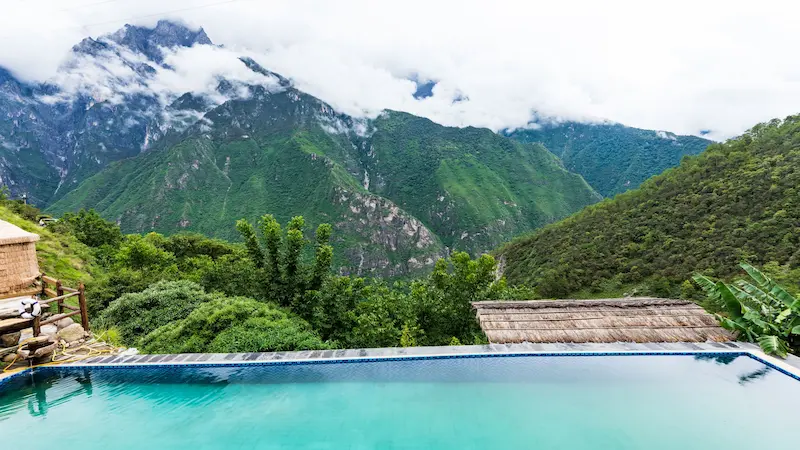
There are now beautiful accommodations in the area, from fancy hotels built right inside the mountains, to comfortable and cosy guest houses, which can be reached by car – just in case you wanted to take it easier!
Shangri-La: Finding Paradise at 3,300 Meters
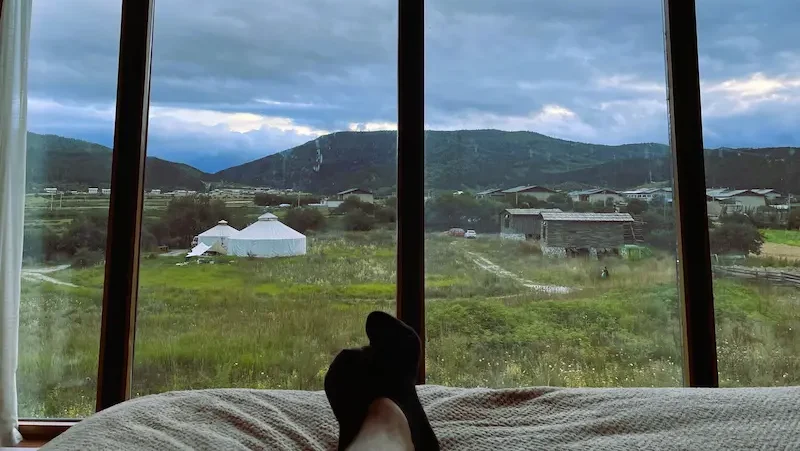
Shangri La Yunnan China – let’s confirm this first: yes, it is a real place, not just the utopian name of a fairy tale land coming out from Hilton’s book.
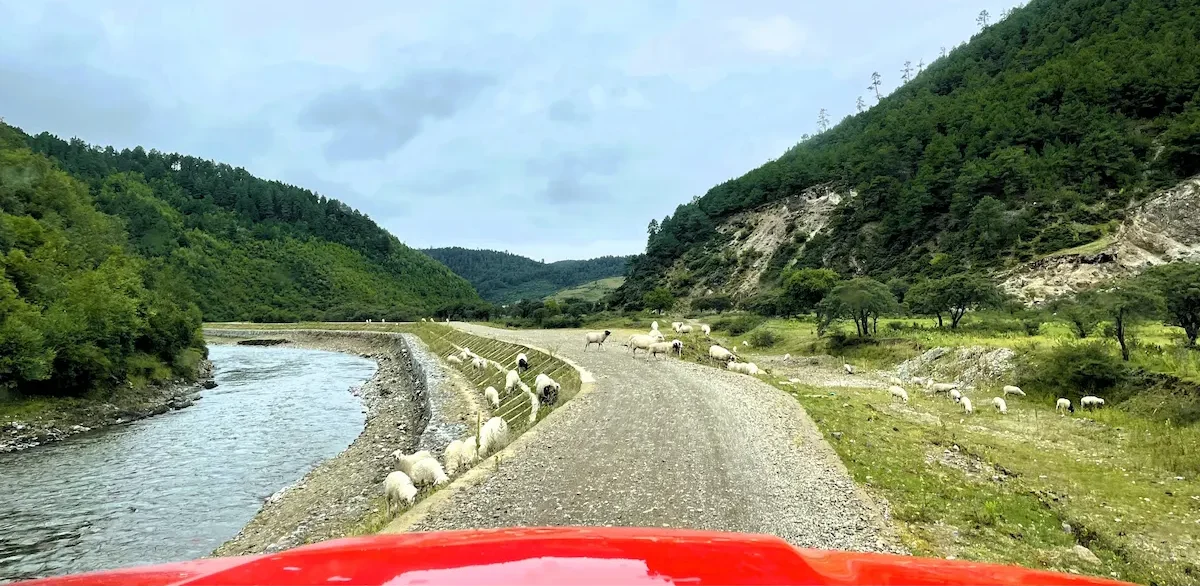
The 100-kilometer drive from Tiger Leaping Gorge climbed steadily through changing landscapes. Pine forests gave way to alpine meadows where yaks grazed beside Buddhist stupas. Prayer flags created color storms against gray peaks, and the air grew thin enough to notice each breath.
Shangri-La—the town formerly known as Zhongdian until tourism officials embraced James Hilton’s fictional paradise—sits at 3,300 meters with the confidence of a place that knows its worth. The 2014 fire that destroyed much of the old town couldn’t erase its spiritual magnetism. Rebuilt wooden houses now host Tibetan families who’ve adapted to sharing their sacred space with curious outsiders.
Songzanlin Monastery
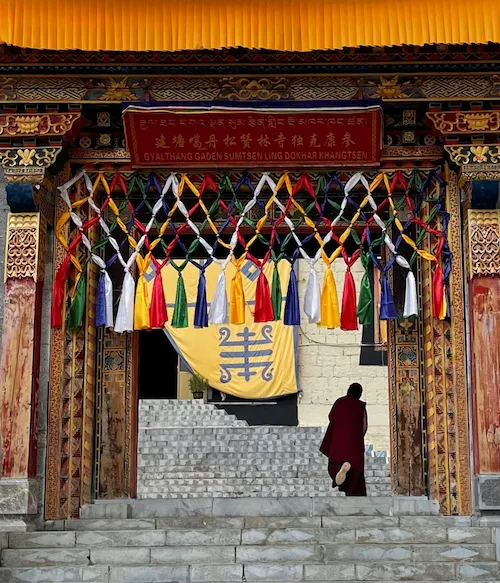
Songzanlin Monastery, the “Little Potala,” commanded the hillside like a golden fortress. Inside its main hall, butter lamps flickered before towering buddhas while monks chanted in voices that seemed to emerge from the earth itself. A elderly monk gestured for me to join the prayer circle. I couldn’t understand the words, but the rhythm carried something universal—hope, maybe, or simply the human need to believe in something larger.
In Dukezong Ancient Town, I discovered yak butter tea—a salty, warming brew that tastes nothing like tea but everything like survival. The Tibetan grandmother who served it laughed at my expression after the first sip, then showed me how to add sugar until it became almost palatable. Her teahouse, tucked into a maze of rebuilt streets, felt like a living room where strangers became temporary family.
Napa Hai’s wetlands stretched beyond town like a mirror reflecting clouds and migrating cranes. The birds had traveled from Siberia to winter here—pilgrims of a different sort seeking their own Shangri-La. Standing among them as sunset painted the grasslands gold, Hilton’s paradise didn’t seem fictional at all.
High-Altitude Wisdom: The drive from the gorge follows paved roads but watch for wandering livestock. Parking costs 10-20 CNY in town centers. Tibetan guesthouses (300-600 CNY) offer authentic experiences, while Arro Khampa or the local-luxury designed Songtsams provide comfort for bigger budgets.
Altitude affects everyone differently. Ginger tea helps with symptoms, and rest prevents problems. Avoid alcohol the first night and drink water constantly. Be aware that summer can bring rain; spring and autumn offer fewer crowds, fresh air and a clean sky.
Respect monastery etiquette: no photos inside prayer halls, always turn prayer wheels clockwise, and dress conservatively. Potatso National Park (150 CNY) showcases pristine lakes and forests for day trips.
It is worth mentioning that China has a very rich Buddhist heritage also outside of Tibet. If you are looking for spiritual journeys without the heavy impact of super high-altitude, our private tours to Yunnan and Sichuan are perfectly designed for you!
The thin air called me higher still, toward peaks that touch the sky.
Deqen: Feilai Temple, Meili Snow Mountains and Highland Prayers
Four hours and 180 kilometers from Shangri-La, the road climbed relentlessly toward Deqen (or Deqin) County. At 4,000 meters, every curve demanded attention as cows and sheep wandered freely across the pavement. I took my time to enjoy the sorrounding landscape and drove patiently, with respect for animals that considered highways their ancestral paths.
Deqen’s Tibetan character intensified with altitude. Stone houses clustered around stupas, and prayer flags strung between buildings created tunnels of color. The air carried pine scent and temple incense, thin enough that each breath required intention. This was Tibet without crossing borders—cultural immersion at altitude that demanded physical respect.
Feilai Temple perched on a ridge facing Meili Snow Mountain’s thirteen peaks like a front-row seat to the divine. At sunrise, I joined pilgrims who’d traveled hundreds of kilometers to witness Kawagebo—the highest peak—catch the first light. The mountain glowed like molten gold for exactly seven minutes before clouds reclaimed it. A Tibetan-looking grandmother beside me wept softly and spun her prayer wheel faster, as if the mountain’s beauty required urgent gratitude.
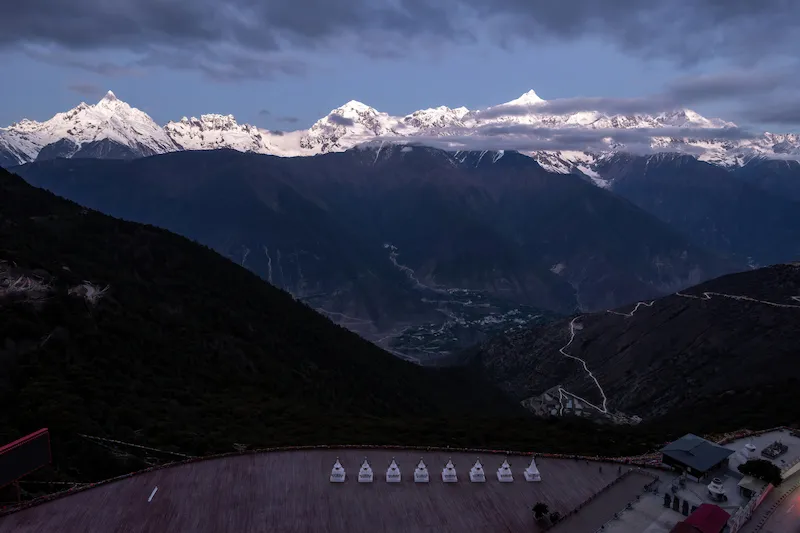
A useful clarification: from the viewing deck at Feilai Temple, you are not seeing just one mountain. You are looking at the entire main ridge of the Meili Snow Mountains, a range which includes several majestic peaks. The most famous one you will see is Kawagarbo: at 6,740 meters, this is the highest peak in the range and the highest in Yunnan. It is a sacred mountain in Tibetan Buddhism and is notoriously difficult to climb (it has never been summited successfully, and climbing is now banned).
Short trails around the temple led through rhododendron forests and past meditation caves where monks had spent years in solitude. The thin air limited hiking ambitions, but the spiritual weight of the place made every step feel significant.
Highland Survival: The drive from Shangri-La follows narrow, winding roads that demand patience. Refuel before leaving. Free parking at Feilai Temple, though donations support maintenance.
Budget 100 CNY daily for simple meals—tsampa (roasted barley flour) and yak dishes dominate local menus.
Mingyong Glacier trek attracts fit hikers, but altitude makes every step challenging. Stay on marked trails to protect fragile highland ecosystems, and respect pilgrimage routes.
The sacred peaks prepared me for my final surprise—an encounter with some of China’s rarest residents.
Tacheng and Qibei: Comedy Hour with Yunnan Golden Monkeys
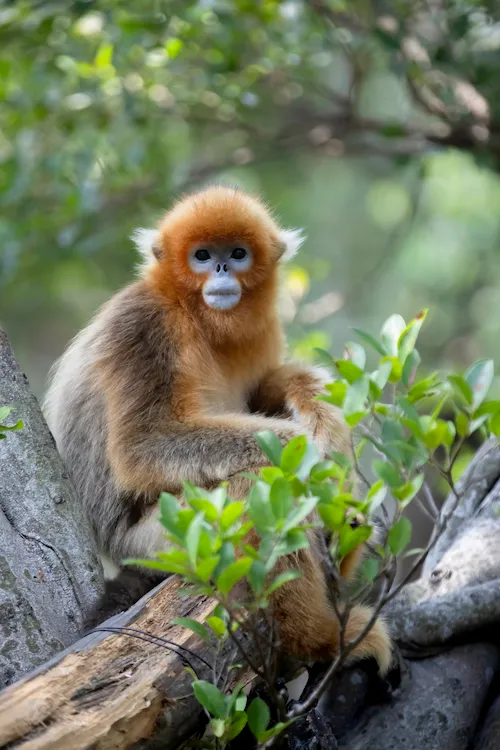
The 150-kilometer drive from Deqin descended through changing ecosystems toward Tacheng, where the Mekong River bends through valleys that hide one of China’s most endangered species. Yunnan’s snub-nosed monkeys survive in numbers smaller than giant pandas, but with personalities far more entertaining.
I spent the night in Tacheng, Qibei Village, joining rangers at 9 AM for the trek into Qibei Village’s protected forests. The ranger, a compact man who moved through 3,000-meter terrain like sea level, explained that finding the monkeys required luck, and long hours of silent patient wait. Just kidding – he said, finally – they know I take them their food, they will show up for sure!
Then we heard them—hoots and crashes echoing through morning mist as a family group foraged in ancient fir trees. The first Yunnan golden monkey I spotted hung upside down, methodically stripping lichen from branches before tossing it at a juvenile who’d apparently committed some simian social error. Their faces and upturned noses looked like evolutionary pranks, but their intelligence showed in curious eyes that studied us as intently as we watched them.
For one hours, I observed a comedy show featuring monkeys who seemed to exist purely for entertainment value, showcasing acrobatics that would challenge Olympic gymnasts, failing spectacularly and trying again with undiminished enthusiasm in between recurrent little fights.
When the troop finally moved deeper into the forest, they vanished like mist, leaving only the memory of wild intelligence and remarkable adaptation.
Monkey Business Logistics: Rangers are essential; the vast forests hide monkeys effectively without expert guidance.
Morning tours only—monkeys are most active after dawn. Book through WeChat or local hotels. Park entry costs additional 100 CNY. Bring binoculars and warm layers as altitude creates morning chill.
Observe the monkeys peacefully and do not make sudden movements. Also avoid giving them your own food – let the rangers feed them with adequate one. These primates require careful protection. Consider donations to conservation programs that support habitat preservation and anti-poaching efforts.
Back to Lijiang: Carrying Yunnan’s Secrets
The 200-kilometer return drive to Lijiang felt like emerging from a dream. Four hours of winding mountain roads provided time to process ten days that had reorganized my understanding of China’s diversity. From ancient Lijiang’s timeless rhythms to the gorge’s raw power, Shangri-La’s spiritual intensity, Deqin’s sacred peaks, and Qibei’s playful monkeys—each location had revealed different facets of a province that refuses simple categorization.
Yet every kilometer had also revealed how much remained unexplored. Yunnan’s rice terraces around Yuanyang, the tea plantations of Pu’er, and the tropical borders with Myanmar and Laos beckoned like unread chapters in an endless book.
Returning the SUV at Lijiang airport felt like handing back a magic carpet. The odometer showed over 1,000 kilometers of mountain roads, village lanes, and highway adventure. If you are also looking for adventures and meaningful China travels, do not hesitate to contact us!
Yunnan doesn’t just show you landscapes—it rewards curiosity and immerse you in a kaleidoscopic experience. The province earned its reputation as China’s most diverse region not through marketing but through the accumulated weight of authentic explorations.
What’s your Yunnan story? Share your adventures with Ink Voyages! Whether you follow this exact route or create your own variation, drive safely, travel sustainably, and prepare for a province that specializes in exceeding expectations.
The tiger that leaped across the gorge understood something fundamental—sometimes the only way forward is to take a daring leap and trust that the landing will teach you something worth knowing.