
Travel Guide to Yunnan
Discover the Preferences and Travel Tips from Ink Voyages
Table of Contents
In this article, we will tell you about one of the most beautiful regions in China, Yunnan, sharing with you what makes it truly special for us at Ink Voyages.
In the previous chapter of this guide — Destinations for Your Trip to China: Guide to Well-Known and Lesser-Known Spots in China — we discussed two classic itineraries: Beijing, Shanghai, and their surroundings. If you’re interested in exploring these destinations as well, you can read the article here.
If you’d also like to discover our practical tips on how to travel in China, you can find our dedicated guide here, which will help you have a smooth experience and prepare your trip in the best way possible.
Introduction to Yunnan
China’s Most Multicultural Region
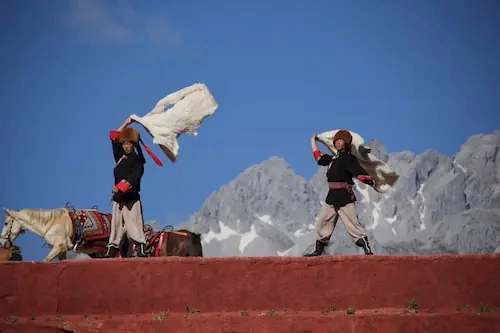

The province of Yunnan is the Chinese region with the greatest ethnic diversity, hosting 25 of the 55 officially recognized minority groups in China. These minorities make up between 33% and 38% of Yunnan’s population, in stark contrast to the national average of 8%. The province resonates with over 60 different languages and dialects, creating a linguistic mosaic unmatched anywhere else in China. Keep in mind that in some remote areas, locals may not be very familiar with Mandarin, so don’t be surprised if using a translator doesn’t yield results.
It is noteworthy that within each county, multiple ethnic groups coexist peacefully, evidence of centuries of cultural blending and harmony in this southwestern province.
As an artery of the Southern Silk Road—the ancient Tea Horse Road, along which Tibetan steeds were traded for tea from the city of Pu’er—Yunnan served as a bridge between Tibet and Southeast Asia, facilitating the trade of tea, spices, and silk, as well as the exchange of Buddhist teachings that shaped its spirit.
Han Chinese gradually migrated to Yunnan in waves, pushing indigenous ethnic groups into more remote mountainous areas while simultaneously creating opportunities for cultural exchange and mixed marriages.
The ethnic landscape of this border region is thus characterized by distinct cultural identities that have evolved in response to the province’s varied terrain and climate zones. Each group still maintains distinctive clothing, architecture, religious practices, and agricultural specialties. The main ethnic groups and their cultural characteristics are as follows:
- Yi: The largest minority group in Yunnan, known for their warrior traditions and agricultural practices in mountainous regions.
- Bai: Concentrated around Dali in northwestern Yunnan, they have become highly Sinicized while retaining their unique cultural identity as skilled rice farmers and traders.
- Hui: Descendants of Muslim immigrants who arrived during the 13th-century Mongol conquest, they maintain Islamic traditions adapted to local culture.
- Naxi: They practice the indigenous Dongba religion with its unique pictographic script, preserving ancient traditions in modern Yunnan. Note that the Mosuo people, closely related to the Naxi, maintain a matrilineal social system where property and surnames pass through the female line.
- Tibetan communities: In northwestern Yunnan, these communities preserve their Buddhist practices, architecture, and cultural identity.
- Lisu: They maintain a distinctive cultural identity despite linguistic ties to the Yi, with unique clothing and traditions.
Fifteen of Yunnan’s ethnic minorities are unique to China and not found in neighboring countries (Bai, Hani, Dai, Lisu, Lahu, Wa, Naxi, Jingpo, Bulang, Pumi, Achang, Nu, Jinuo, De’ang, Drung/Dulong), making the province an irreplaceable treasure of cultural diversity.
Today, Yunnan’s diversity represents nearly half of China’s officially recognized ethnic minorities, making the province essential for cultural preservation efforts and the development of ethnic tourism.
A Spectacular Geography

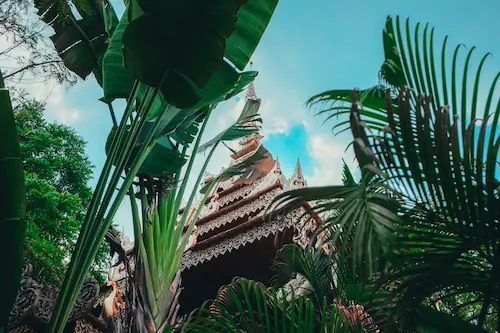
The diversity of this region is not only ethnic but also landscape-related. Geographically, Yunnan consists of a vibrant mosaic of climate zones, from lush tropical rainforests in the south to alpine valleys in the north, with surprisingly stable temperatures in central areas (15-25°C year-round), earning it the nickname “land of eternal spring.”
This extraordinary diversity is home to over 18,000 rare plant and animal species, making Yunnan a global biodiversity hotspot and a paradise for nature lovers. Fun fact: among Yunnan’s beautiful flowers, some are edible. There is a specific local culinary tradition that incorporates flowers into food. In particular, we recommend trying the rose cake “xianhua bing,” which will release a delicious flavor and aroma from the very first bite!
When to visit: Yunnan is visitable year-round and is an ideal destination in spring, autumn, and winter thanks to its mild temperatures. We recommend avoiding the summer months (June to August), as the region is affected by the rainy season.
If you’d like to watch our introductory documentary on Yunnan, you can click here.
Our Favorite Places in Yunnan
It’s not easy to select favorite places in a region we’re passionate about in its entirety. However, we’ve tried, and we want to share with you what we think makes them special, while also providing an overall overview of the region—so you can get a comprehensive idea of what Yunnan has to offer.
Lijiang, Baisha and Shuhe
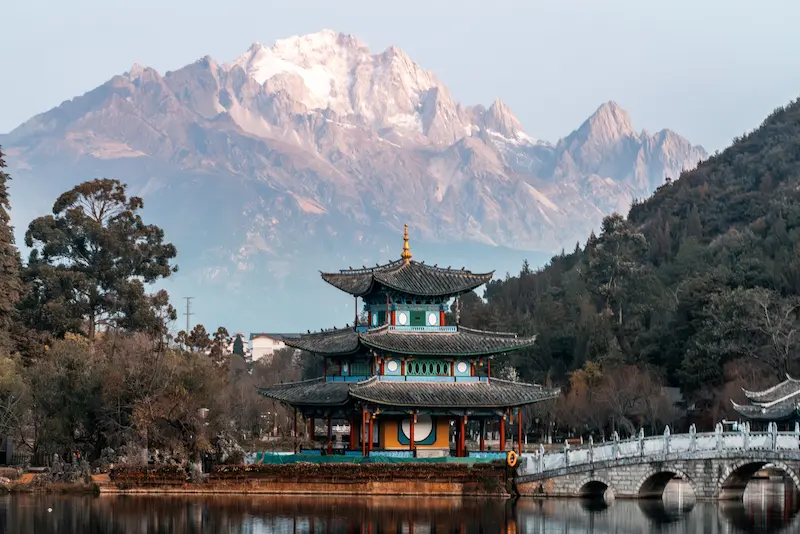
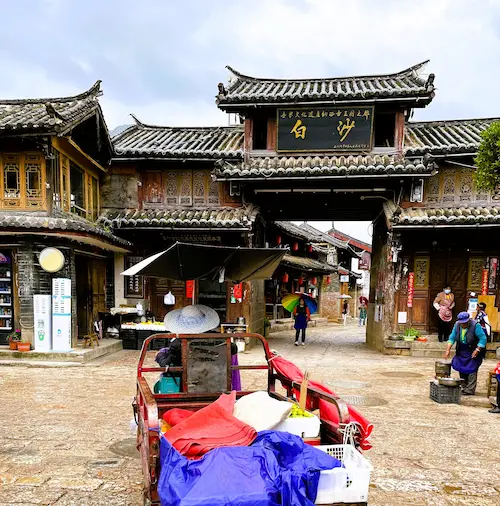
The historic center of Lijiang is called “Dayan” and is a jewel characterized by cobblestone streets, canals, and bridges, all in the Naxi architectural style that favors wood and skillfully balances structural simplicity with refined decorations. Protecting the city, the imposing silhouette of the Jade Dragon Snow Mountain rises on the horizon, offering the possibility of a pleasant day excursion.
Naxi culture, of which Lijiang is the capital, preserves the world’s only living pictographic script—the Dongba script—which connects to the rituals and shamanic traditions of this people. If, while visiting Lijiang, you happen to see symbols on signs that remind you of ancient Egyptian hieroglyphs—those are Dongba pictograms!
Lijiang’s charm has significantly attracted domestic tourism, so today the historic center has a pronounced commercial feel. We recommend visiting it early in the morning, when most shops are still closed, to fully enjoy its ancient charm. If you are interested to know more about Lijiang, you can also read our travel story here.
We also suggest visiting Mufu Palace, the historic residence of the Naxi family that ruled the area for centuries. Due to its grandeur, it is often compared to Beijing’s Forbidden City.
If your budget allows, we recommend two truly special places for your stay:
- Amandayan: Located on Lion Hill, Amandayan stands majestically above the old town: it’s a true gem that combines luxury with traditional historic charm.
- Songtsam Lijiang Lodge: A short distance from Lijiang, in the village of Ciman, is the splendid Songtsam Lijiang Lodge, offering luxury accommodation integrated into local architecture and atmosphere. We asked why the hotel was positioned in Ciman rather than in the more popular Lijiang, or at least in the nearby more touristy villages of Baisha and Shuhe. The hotel manager told us that Ciman was once the oldest core of Naxi culture, so the location was chosen to honor these deep origins.
About a 30-minute taxi ride from Lijiang are two villages we recommend visiting: Baisha and Shuhe. Technically, along with Dayan, these two villages are part of a single UNESCO site called the “Old Town of Lijiang”.
Both settlements reproduce Lijiang’s charm on a smaller scale, each maintaining its own specific atmosphere and greater tranquility. If you’re a coffee lover, note that in Baisha, bars and coffee houses are emerging on the wave of a pleasant hipster trend, allowing for the most diverse tastings.
We also recommend not missing the splendid murals of Baisha, mainly preserved in Dabaoji Palace, created during the height of the Ming Dynasty (1368-1644), when local Naxi leaders promoted cultural exchanges to consolidate their power in a multi-ethnic region.
These artworks involved artists of various origins—Han Taoist painters from central China, Tibetan lamas, local Naxi artists—resulting in syncretic masterpieces that, after 500 years, still display vibrant colors and teach the ancient lesson of harmony and peaceful coexistence so characteristic of this land.
Baoshan Stone Village
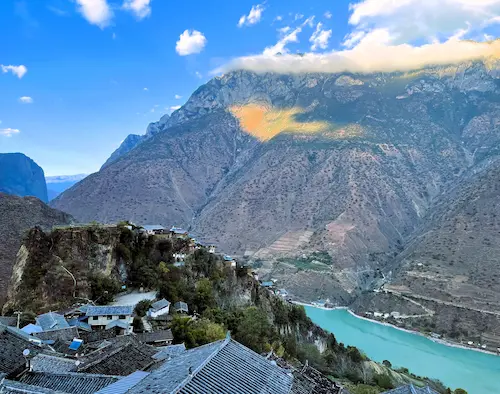
This village is one of our favorite places, not just in Yunnan but in all of China (you can read here our travel story featuring the exploration of Baoshan Stone Village). Its location is a challenge to gravity in itself—perched on a rocky spur overhanging the deep azure waters of the Jinsha River. As the name suggests, the houses emerge from the rock itself, defying the elements and the passage of time, stubbornly clinging like guardians of ancient traditions.
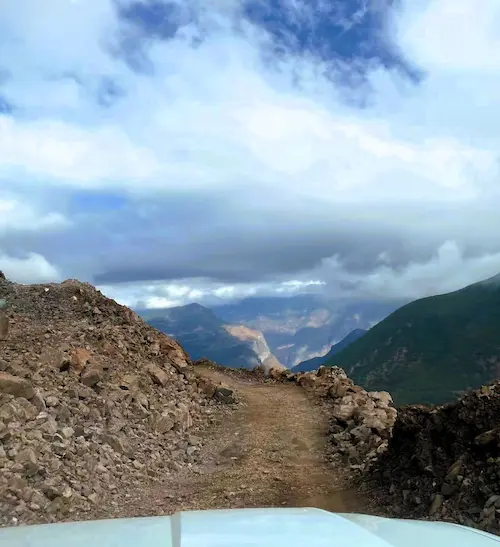
Beyond the picturesque beauty of the village, what makes it special is the journey to reach it. When you look at the map and count the kilometers separating it from Lijiang (about 120 km), keep in mind that it actually takes at least three hours to cover them! The village is at the end of a dirt road of breathtaking panoramic beauty, winding precariously through the mountains—sometimes making it impossible for vehicles coming from opposite directions to pass at the same point.
A note of caution: The road is generally passable but can be treacherous. In particular, considering possible landslides, we recommend not traveling it during the rainy season (June-August).
Once you reach the village, you’ll need to park the car and continue on foot: the streets are too narrow and steep, traversable only on foot or by mule—still used by locals as a means of transport. For overnight stays, you can choose from a few guesthouses, including one particularly luxurious (Lux* Stone Town). The village’s breathtaking location inevitably makes each one “panoramic.”
If you want to observe the village directly from the water and navigate the Jinsha River—which owes its intense color to minerals carried by its waters—you can take a ride on an old motorboat, buzzing and devoid of any comfort—but perfectly matching the ancient atmosphere of the village.
Lugu Lake
Lugu Lake preserves one of Yunnan’s most fascinating cultural traditions: the walking marriage of the Mosuo people. In this matriarchal culture, forming a couple always excludes living under the same roof. Husband and wife meet only at night, then separate during the day. In Mosuo culture, children continue to live in the maternal home even after marriage, which, due to the husband’s frequent movements, is called “walking.”
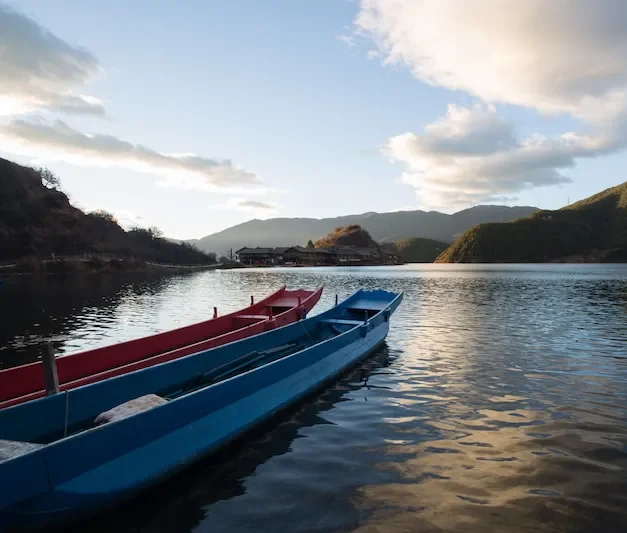
In Mosuo culture, the woman is the pillar of the family, and it is up to the household head (“dabu“) to make the most important decisions. The original Mosuo religion is a form of animist shamanism centered on the worship of a mother goddess, embodied by Mount Gemu, which is reflected in the lake.
Visiting this place in northern Yunnan means discovering a rare and unique culture in the world, still enduring in the villages along these remote shores. The lake itself is a very beautiful natural destination, enriched by the colorful Mosuo boats, on which you can take a ride to immerse yourself even more in the local atmosphere.
A note: In recent years, tourism has made the visiting experience more commercial. Numerous resorts have sprung up in the area, and the Mosuo people have organized cultural experiences that encourage the sale of local crafts. In short, Lugu Lake is no longer an off-the-beaten-path place, and it’s understandable that locals seek to benefit from the growing interest in their culture.
If you want to know more about how to travel in this area, we recommend you to have a look here at our dedicated itinerary.
Tiger Leaping Gorge
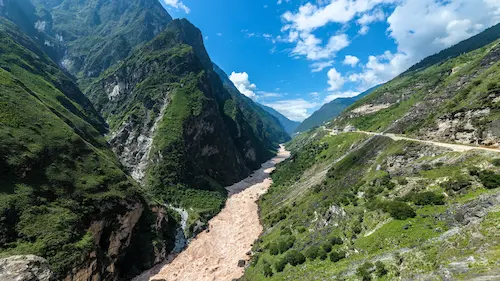
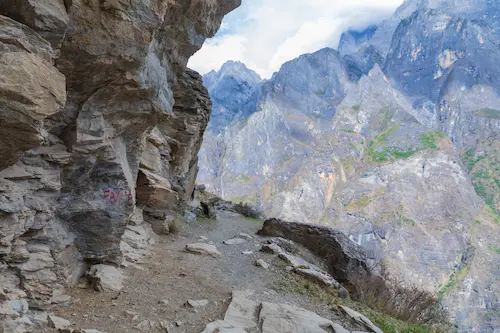
Legend has it that a tiger hunted by hunters, finding itself facing the Jinsha River gorge, made a majestic leap at the narrowest point, reaching the other side and escaping its pursuers. At this point, the river flows with truly frightening force, and at Ink Voyages, we’re glad the tiger didn’t fall below.
If you’re passionate about hiking, this is truly an ideal place, and we recommend undertaking the two-day trek that—with some effort—will allow you to fully explore the gorge’s beauty.
If you prefer a less strenuous approach, you can still reduce the hike to one day or simply stroll without much physical effort along the walkways near the parking area, from which you’ll still be impressed by the power of nature.
In addition to historic guesthouses along the hiking trails, many more have recently opened in the area, offering excellent value for money. There are also luxury hotels, including one truly unique, opened in 2024, integrated directly into the gorge’s rock walls.
In short, Tiger Leaping Gorge, both from a hiking perspective and accommodation options, is a destination adaptable to your travel style.
If you want to explore more destinations to match your travel style at best, you can explore our private tours here, which are fully open to customisation based on your preferences.
Northern Yunnan and Tibetan Culture
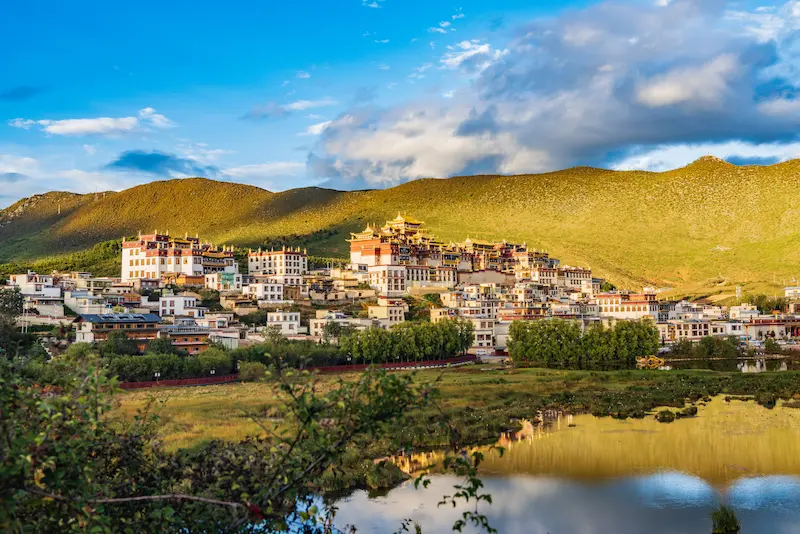
In this guide, we group and introduce together the Tibetan counties in northern Yunnan because they share an underlying cultural and landscape unity, allowing exploration of territories still authentic and untouched by mass tourism.
As you know, Tibet is a region of China characterized by spectacular landscapes and deep Buddhist culture. If you want to explore Tibetan culture without the difficulties associated with obtaining permits required for Tibet, and avoiding exposure to very high altitudes—we have good news for you!
In China, Tibetan culture extends beyond Tibet into more easily accessible areas that retain the charm of centuries-old traditions. Northern Yunnan is among these—as are some border areas of Sichuan, Qinghai, and Gansu. If you’re interested in exploring these regions further, you can find our catalogue of private trips here.
Continuing north from Tiger Leaping Gorge, you’ll reach the place that symbolically announces entry into Tibetan Yunnan, more precisely “Kham-Tibetan“—a place named after a utopian land inspired by Hilton’s novel Lost Horizon: Shangri-La.
In Shangri-La, we definitely recommend visiting Songzanlin Monastery to immerse yourself in a deeply spiritual atmosphere. Due to its resemblance to the Potala Palace in Lhasa, this monastery is also called the “Little Potala” and is the largest Tibetan monastery outside Tibet.
We’ll risk being unpopular and tell you that, while the exterior of the Potala Palace is undoubtedly more beautiful, as for the interiors, we at Ink Voyages prefer the Little Potala, as it offers a more spacious and meditative atmosphere.
Continuing northward, we recommend heading to the Meili Snow Mountain range in Deqin County. Stop at Feilai Temple, where white stupas honor the sacredness of nature with their triangular shape, reproducing on a human scale the masterpieces of the snow-capped peaks rising imposingly right in front. The highest is Mount Kawagebo (6,740 meters), one of the most venerated in Tibetan Buddhism. Note that this peak has never been successfully climbed, and attempts have recently been prohibited for religious reasons.
Another noteworthy destination in this area is Yubeng, a remote settlement located directly within the Meili Mountain scenic area. Today, there are numerous hotels and guesthouses, some truly luxurious, offering breathtaking views of the surrounding panorama. A tip: Since many of these accommodations are within the protected area, we recommend arriving at its entrance by 5:00 PM at the latest (earlier is better)—to ensure you catch the last shuttle bus of the day.
Nujiang Lisu Autonomous Prefecture
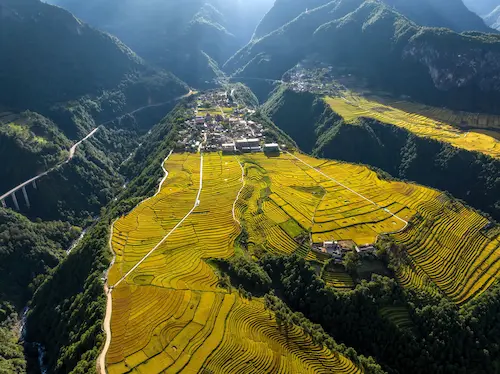
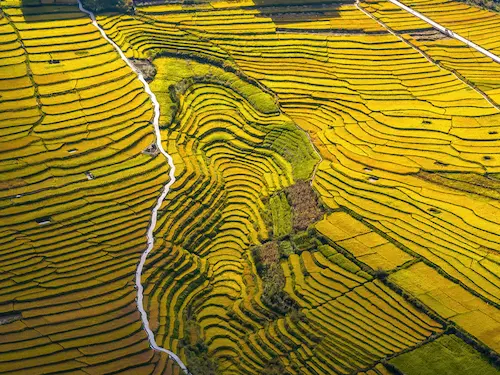
The Nujiang Prefecture, dominated by the majestic Nu River canyon, is one of the most remote and authentic areas of northwestern Yunnan, inhabited mainly by Lisu, but also Nu, Dulong, and Tibetan communities. Here, wild nature blends with extraordinary cultural and religious diversity: there are even Catholic churches (legacy of French missionaries from the 19th and 20th centuries), alongside Tibetan temples and stupas.
The heart of this area is Bingzhongluo, often called “a paradise on earth where humans and gods live together.” From here, you can admire the famous First Bend of the Nu River, a spectacular U-shaped meander the river forms between high cliffs. Don’t miss Shimen Pass, a natural gorge that marked the ancient entrance to Tibet along the Tea and Horse Road.
Practical note: The panoramic road along the canyon is an adventure in itself, with breathtaking views of turbulent rapids and forest-covered slopes. Although the area is still little-touristed, there are multiple accommodation options.
If you want to know more about how to travel in this area, you can also have a look here at our dedicated itinerary.
Dali, the Capital of the Bai Kingdom
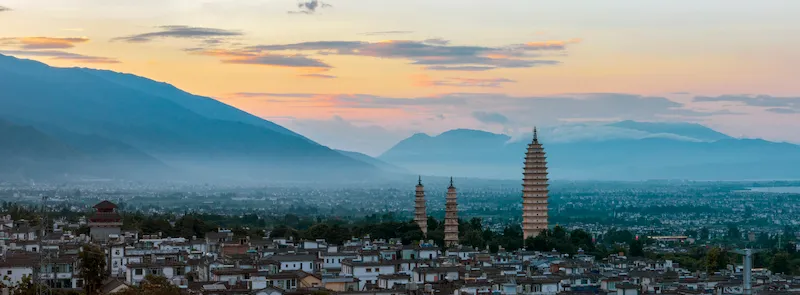
Dali represents the cultural heart of the Bai people, with its ancient city overlooking Lake Erhai on one side and the Cangshan Mountains on the other. Dali’s historic center is a relaxed place, with pedestrian streets, traditional Bai architecture, and a bohemian atmosphere.
Visit the Three Pagodas of Chongsheng Temple—the iconic symbol of the region—and enjoy the sunset from Lake Erhai, perhaps renting a bike for a ride along the shore. If you decide to eat by the lake, prepare for performances by the seagulls, who will try every way to convince you to share a bite with them!
A short distance from Dali is Xizhou Village, one of the best-preserved places to observe Bai architecture, which thrived supported by the prosperity of the ancient Tea and Horse Road. Here you can taste the exquisite Xizhou Baba (a kind of crispy sweet or savory flatbread) and immerse yourself in the magnificent fields unfolding around the village, creating a true spectacle when they bloom! Also, do not forget to look for the iconic bayan tree closeby the village.
Southern Yunnan: Tea Plantations, Tropical Forests, and Rice Terraces
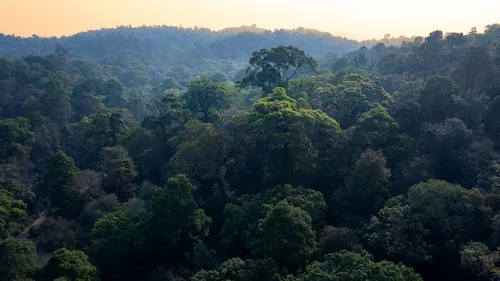
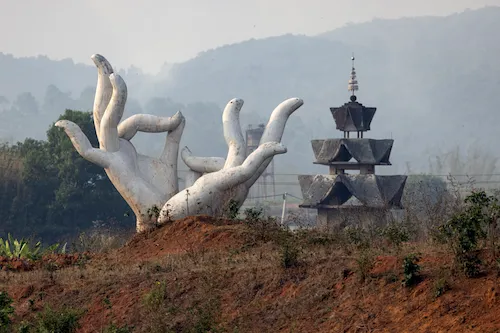
Southern Yunnan is a world unto itself: subtropical climate, lush rainforests, and strong influence from the Dai and Hani minorities.
Here you’ll find Xishuangbanna, China’s most tropical region. Explore the Botanical Garden, trek in the rainforest to spot wild elephants in the Wild Elephant Valley, and visit Dai villages with their golden Theravada Buddhist temples and colorful markets.
Not far away, the ancient tea plantations of Pu’er represent the heart of production for the famous fermented tea. Visit tea mountains like Jingmai or Nannuo, where ancient trees grow amid the mists, and participate in tastings to understand why Pu’er is considered a national treasure. Note that this very tea was the basis for the ancient Tea and Horse Road, transporting tea from southern Yunnan to Tibet in exchange for horses.
For a breathtaking experience, finally head to the Yuanyang Rice Terraces (in Honghe Prefecture, in southeastern Yunnan). Created by the Hani people over 1,300 years ago, these terraces are an agricultural masterpiece combining artistry and engineering, still used today for growing rice.
The main viewpoints are Duoyishu, Bada, and Laohuzui. Also visit the Hani villages in the area, with their typical mushroom-shaped houses. A tip: The rice terraces are most spectacular from late December to March, when filled with water and beautifully reflecting the sky’s colors.
If you are looking for an itinerary including Dali, Pu’er and Xishuangbanna, have a look at our short video, for a 12-day meaningful exploration.
Conclusion: A Kaleidoscopic Exploration
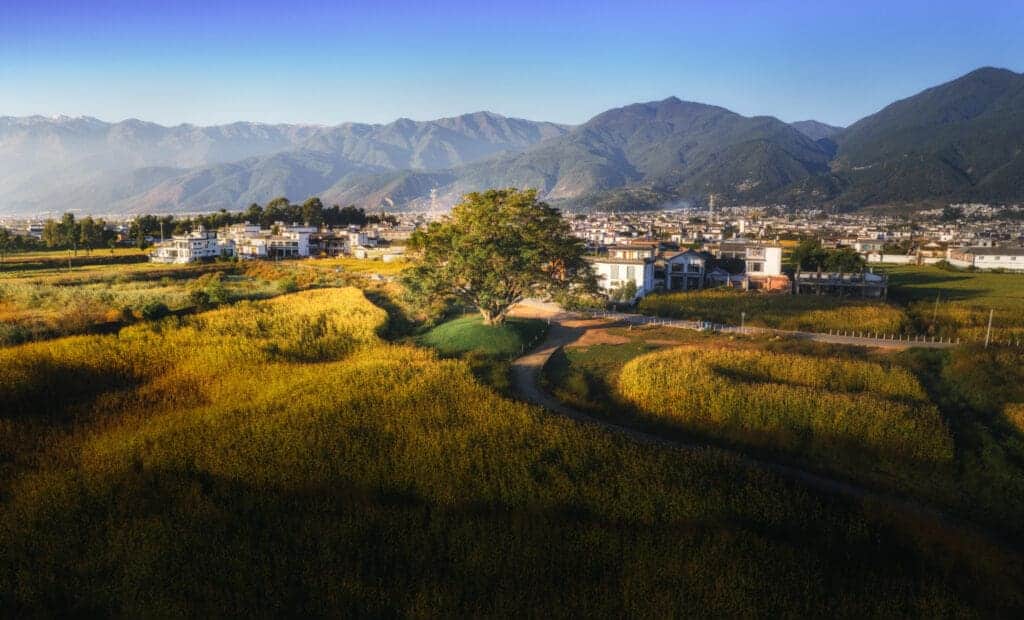
Yunnan opens the doors to an authentic and diverse exploration of one of China’s faces still largely unknown to international tourism. Traveling in Yunnan, discovering the colorful cultural and landscape diversity of this region, will amaze you like when, as a child, you first looked into a kaleidoscope.
If you’d like to discover other itineraries aimed at a deep and meaningful exploration of China, you can check our curated catalogue here—which we can use directly or as a base to create your personalised itinerary together.
We hope the information in this guide will be useful for organizing your trip. Whether you choose to travel with Ink Voyages or not, we strongly recommend dedicating a chapter of your world adventures to this extraordinary land. With that said, all that’s left is to pack your bags and start the journey. Yunnan is already waiting for you!