
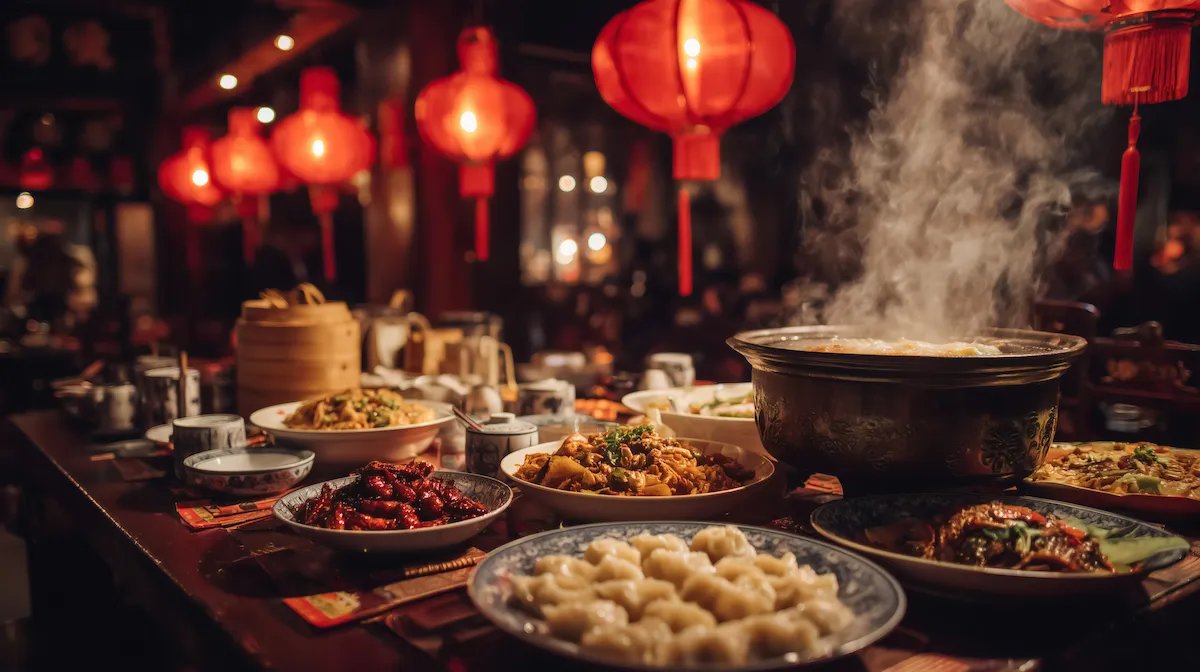
How to eat in China: Apps, Restaurants & Dining Customs
Table of Contents
Food: An Essential Part of Chinese Culture
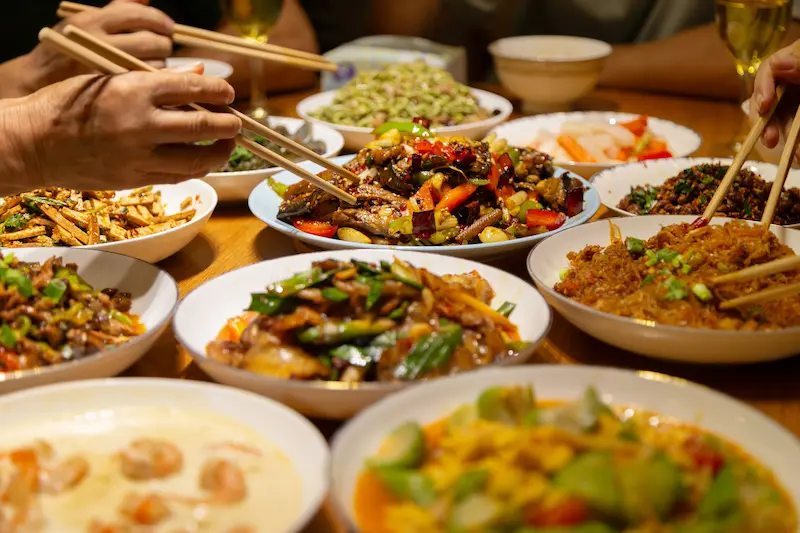
In China, there is an old saying: 民以食为天 (mín yǐ shí wéi tiān), which can be translated literally as “the people regard food as their heaven”. It expresses a profound idea: food is not simply a daily necessity, but one of the fundamental elements of Chinese life, culture and society.
You only need to spend a few days in China to see this for yourself. The streets are lined with small restaurants, food stalls, markets and eateries specialising in a particular dish. Eating out is an extremely common part of everyday life, and it is possible to find meals at very affordable prices.
In cities, countless restaurants are also listed on major food delivery platforms such as Meituan and Ele.me, which make accessing food even easier. To use these services, you need a local phone number and a compatible payment method. However, if you are visiting China as a tourist, you will probably find that you can easily do without these apps: restaurants of all kinds are everywhere, and ordering directly at the restaurant is generally very straightforward.
In other words, we can certainly reassure you on this point: finding something to eat will never be a problem when travelling in China. The last time Martina and I were walking around Chongqing, we suddenly burst out laughing when Martina exclaimed: “There are more restaurants than people in this neighbourhood!” Considering how many people live in China, that gives you a pretty good idea of just how numerous and ubiquitous restaurants are.
It is worth mentioning that many of these are family-run businesses: small, informal eateries, sometimes located on the ground floor of buildings where the family who runs them lives upstairs. This domestic and informal atmosphere is very common in China, particularly when you move away from the central areas of major cities. You can also find it within the cities themselves, as soon as you start exploring their more local neighbourhoods. It is an experience we would definitely recommend.
It is also worth remembering that when talking about Chinese food, we should really be talking about Chinese cuisines in the plural. The country’s gastronomy has a deep history and is deeply connected to its geography and cultural diversity. There are numerous regional cuisines, often very different from one another, with ingredients, cooking techniques and culinary traditions that vary considerably.
For anyone visiting China, discovering these differences is one of the most interesting ways to get to know the country, and it can lead to some truly surprising experiences.
How to Order at Restaurants in China: QR Codes, WeChat and Dianping
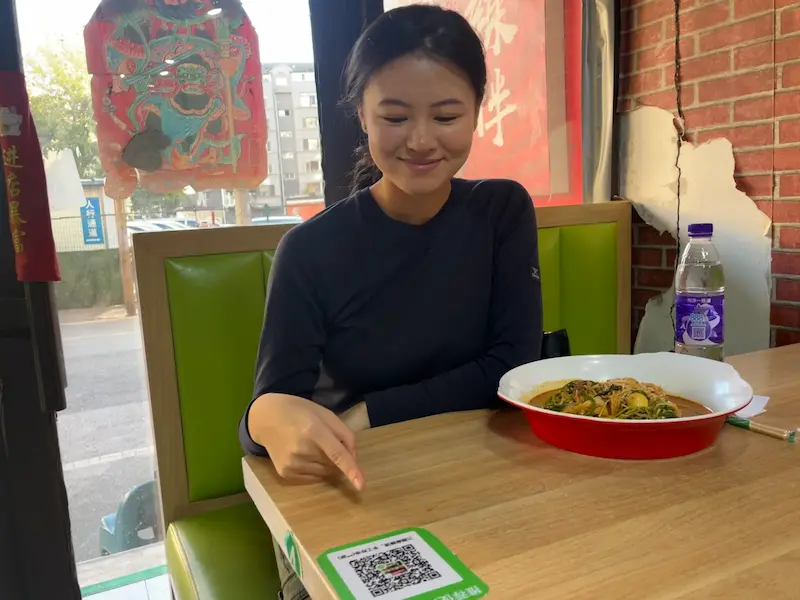
While finding somewhere to eat is generally very easy, ordering at a restaurant can present a few initial challenges for foreign travellers. Not all establishments have an English menu, and in many restaurants the ordering process involves scanning a QR code.
Once you get over the initial surprise, however, you will discover that ordering through these systems is often extremely convenient.
Ordering with a QR Code
In countless Chinese restaurants, particularly in larger cities, the menu is made available through a QR code placed directly on the table.
Simply open WeChat, select the scanning function and point your phone’s camera at the code to access the digital menu.
After scanning it, you will generally be redirected to the restaurant’s menu, where you can select dishes, specify quantities and send your order directly to the kitchen. In many cases, you will also find photographs of the available dishes, which are probably the easiest way to overcome the language barrier.
Some restaurants also allow you to pay directly from your phone, without having to ask the staff for the bill. Others let you place your order digitally but pay at the end of the meal.
In some restaurants, you may also find dedicated tablets, allowing you to browse the menu, select your dishes and place your order directly without using your own smartphone.
Naturally, the system varies from one restaurant to another, and not all establishments use technological methods. In smaller, traditional eateries, you may still find paper menus or simply order directly from the staff.
How to Translate a Menu with WeChat
In addition to the photographs, one of WeChat’s most useful features for visitors to China is its translation function.
When you open a digital menu, you may find a menu icon represented by three dots in the upper-right corner. Tapping it will bring up several options, which may include the possibility of translating the page.
What about a paper menu without photographs? WeChat can help with that too. You can take a picture of the menu, send the image to a private chat (even a chat with yourself), open it and look for the translation option among the available functions. You may see a three-dot menu in the bottom-right corner: tapping it will bring up several options, including the option to translate the image.
Automatic translations are not always perfect – in fact, sometimes you may come across results that are downright hilarious in their nonsensical wording – particularly when it comes to traditional dish names or specific ingredients. Nevertheless, they are a useful way to find your bearings.
Dianping: How to Find and Choose Restaurants
Another particularly useful app is 大众点评 (Dàzhòng Diǎnpíng), commonly known as Dianping.
You could think of it as a combination of TripAdvisor, Google Reviews and a local food guide. And not just a food guide: in fact, Dianping covers practically every kind of business and service.
The app allows you to search for restaurants, check user ratings, browse photographs of dishes, read reviews and discover the most popular specialities at a particular establishment. You can also check whether a restaurant offers special menus, set meals or promotions, and purchase deals directly through its coupon section.
Dianping now includes a built-in translation feature, making it easier for international visitors to navigate the app, even though the interface is still primarily in Chinese.
A practical tip: when looking for a restaurant, do not rely exclusively on its overall rating. It is worth checking recent photographs, reading reviews and considering the relationship between price and quality.
For anyone who wants to discover restaurants frequented by local residents, Dianping can be an especially useful tool. Before travelling to China, we also recommend downloading the main Chinese apps, which are different from the ones you may be used to and will help you throughout your trip.
And for more practical advice, you can also read our guide to travelling in China, as well as our 10 tips for planning your itinerary.
Useful Chinese Phrases for Ordering Food
Although apps make ordering at restaurants much easier, knowing a few words in Chinese can still come in handy, especially in smaller, more traditional establishments. If you would like to explore this topic further, you can also find here some useful Chinese phrases for everyday situations.
You’ll find below a few expressions that may help you when eating out in China:
| Chinese | Pronunciation | Meaning |
|---|---|---|
| 有英文菜单吗? | Yǒu Yīngwén càidān ma? | Do you have an English menu? |
| 有什么推荐? | Yǒu shénme tuījiàn? | What do you recommend? |
| 不要辣 | Bú yào là | Not spicy, please |
| 不吃香菜 | Bù chī xiāngcài | I don’t eat coriander |
| 买单 | Mǎidān | The bill, please |
If you are not used to spicy food, it is particularly useful to mention this when placing your order. Bear in mind, however, that some spicy ingredients may already be included in the cooking bases or sauces used to prepare certain dishes.
Eating Together: Chinese Dining Traditions and Table Customs
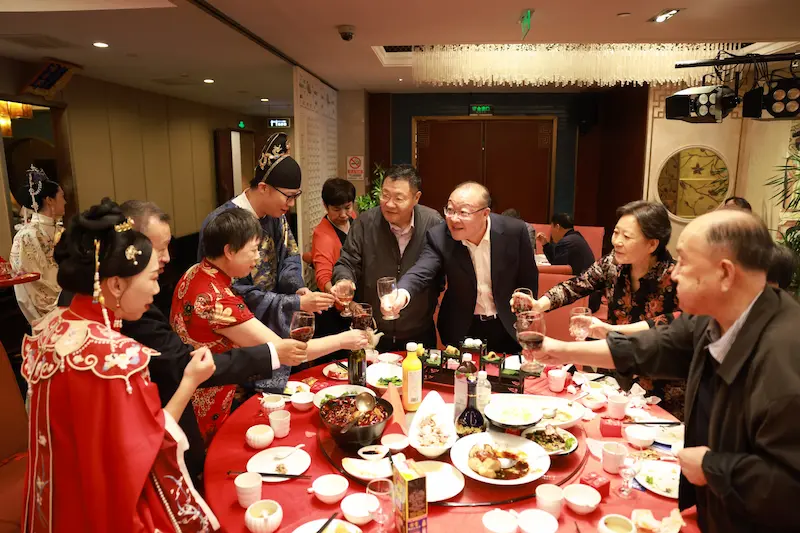
One of the first differences you notice when entering a Chinese restaurant is the way a meal is organised.
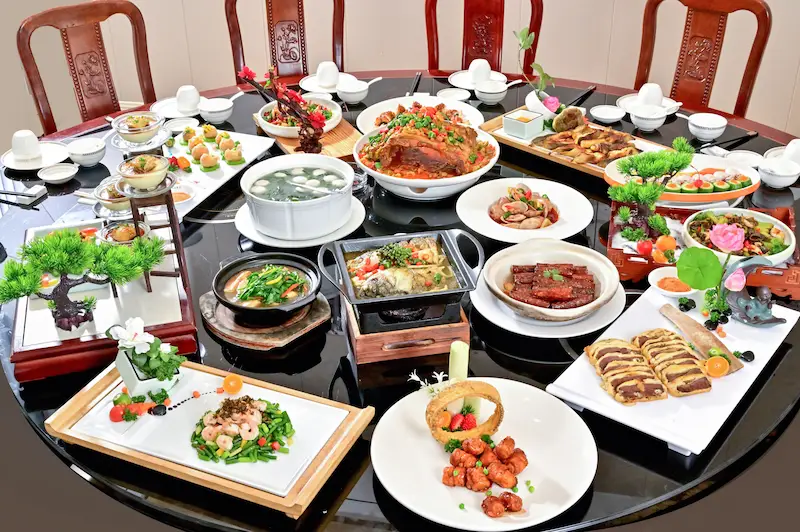
While in many Western countries each diner would normally order an individual dish, sharing food is very common in Chinese dining culture. Dishes are placed in the middle of the table, allowing everyone to help themselves and put together their meal from a variety of different preparations.
Rice, on the other hand, is often served individually in small bowls and eaten alongside the other dishes.
Round Tables and the Central Lazy Susan
In traditional Chinese restaurants, particularly when dining in larger groups, it is common to find large round tables with a rotating platform in the centre.
This system makes it easy to share dishes without diners having to reach across the table to get to those further away. It may seem like a small detail, but it reflects the communal nature of eating in China.
Naturally, not every restaurant uses this arrangement: smaller eateries and contemporary restaurants also have square and rectangular tables.
A special mention should also go to chopsticks, the essential utensil used at every meal in China. As we explain in our article on the subject, they also carry a peaceful invitation to share a meal together. It may take you a little while to get used to them, but that is all part of the experience.
Seating Arrangements and Dining Etiquette
On more formal occasions, such as important family dinners or business banquets, the seating arrangement around the table can also have a particular significance.
Traditionally, the place of honour is often reserved for the oldest person, the most important guest or the person being honoured. In many formal settings, this seat occupies a position of particular prestige, often determined in relation to the entrance or the overall arrangement of the table.
The host may assign seats to guests and, during the meal, invite others to help themselves to the dishes or initiate a toast. Bear in mind that in China, after the initial toast at the beginning of a meal, it is also considered good etiquette to make subsequent toasts either to the entire table or by specifically inviting another guest to share a toast.
These customs are particularly relevant at formal lunches and dinners, while a casual meal among friends is generally much more relaxed.
Whole Fish and the Symbolism of Abundance
Another interesting aspect of Chinese culinary traditions is the way certain foods are associated with symbolic meanings.
Fish, for example, is often served whole, with both head and tail intact, particularly during festive occasions and celebratory meals. The reason is partly linguistic: the Chinese word for fish, 鱼 (yú), is pronounced in the same way as 余 (yú), which means abundance or surplus.
This gives rise to the expression 年年有余 (nián nián yǒu yú), a traditional wish meaning “may you enjoy abundance year after year”. Fish has therefore become a symbol of prosperity and good fortune, particularly during Chinese New Year celebrations.
In some settings, even the direction in which the fish’s head is pointing can have ceremonial significance: according to certain traditions, it is turned towards the guest of honour or the oldest person at the table. These customs vary depending on the region and family traditions, however, and should not be regarded as universal rules.
Discovering China Through Its Food
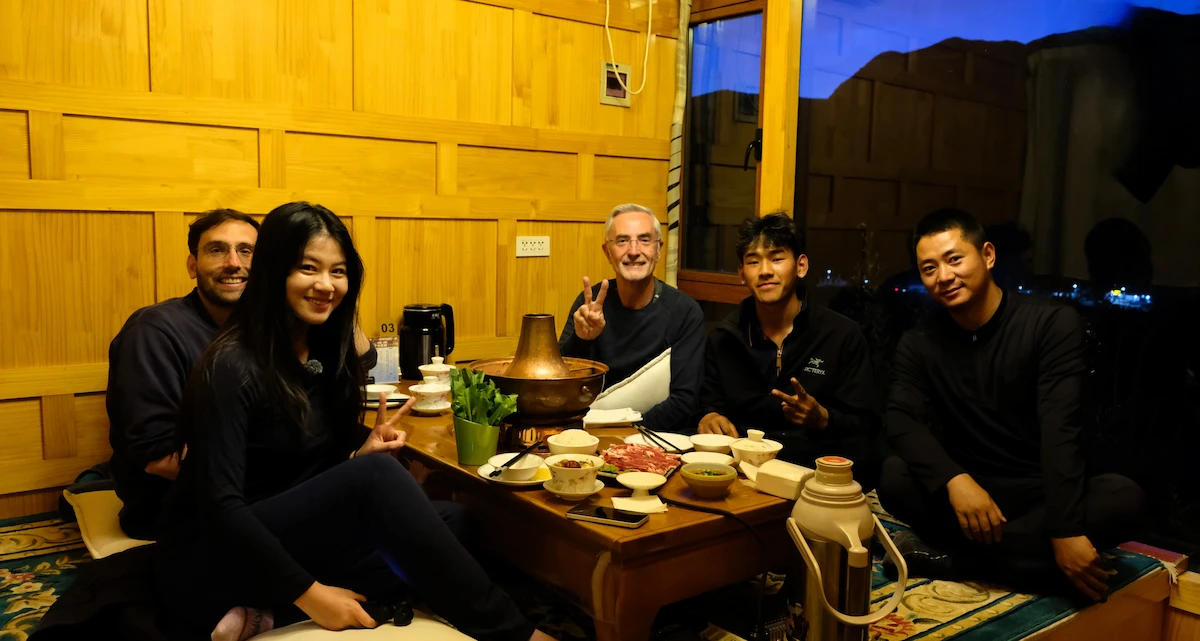
Eating in China is much more than a daily necessity: it is an opportunity to connect with local culture, observe people’s habits and discover an important part of everyday life in the country.
Sharing a meal is often one of the most natural ways to get closer to China. You do not necessarily need to know every dish or speak the language: sometimes all it takes is a little curiosity, an interest in what the other diners are eating and a willingness to try something new.
This is also part of what makes travelling in China so fascinating: behind every city, region and territory lie different customs, flavours and traditions.
At Ink Voyages, we believe that getting to know a country also means taking the time to experience everyday life, rather than limiting yourself to its best-known places and most famous attractions.
And this is precisely the spirit behind our small group journeys in China: exploring the country in depth, while making room for encounters, local experiences and, of course, the discovery of its extraordinary cuisine.
Because, after all, one of the best ways to get to know a place is often to sit down at a table and taste what it has to offer.


Leave a Reply