

10 Tips for Planning Your Trip to China
Table of Contents
The challenges of planning

In this article, we want to share our experience of travelling in China, bringing together a series of tips that can help you build an itinerary truly aligned with your expectations.
Planning an itinerary in China can, in fact, be quite complicated. And, as paradoxical as it may seem, perhaps the hardest part is not deciding what to see, but what not to see. The sheer amount of information available online and on social media can be helpful, but it can also create confusion and sometimes even be misleading.
This is especially true when you consider that much of the content circulating online is promotional or, because it is designed to get likes, tends to make even fairly ordinary places look extraordinary at all costs.
Finally, there are numerous practical difficulties: from payment methods, which follow different rules in China, to apps in general – which form an ecosystem of their own compared with the Western one – and the language barrier in a country where English is not widely spoken, especially once you leave Shanghai. To explore all these aspects in greater detail, you can consult our complete guide here: How to Travel in China.
Exploratory Travel and the 3 ingredients of a balanced itinerary

When it comes to creating an itinerary, we first and foremost base our approach on the concept of Exploratory Travel: China is a true treasure trove, a constellation of worlds that can begin to reveal themselves to the traveller only through a deeper approach.
Our method consists of incorporating China’s iconic landmarks into a journey that crosses the rural landscape and small villages, while also opening up the horizon of adventure through destinations capable of turning your trip into an unforgettable experience.
Below, we will walk you through the options available when planning your trip. We will assume that this is your first trip to China, while also offering ideas for more in-depth explorations.
When creating an itinerary in China, it is worth balancing, or at least including, three fundamental components: exploring cities and villages, exploring nature, and exploring the cultures and communities of China, from Han culture to the cultures of the 55 officially recognized ethnic minority groups.
There is also another layer to keep in mind, serving as the backdrop to the three categories just mentioned: visiting classic/tourist destinations on the one hand, and discovering more remote and lesser-known destinations on the other.
You can think of these as the ingredients for building a good trip, which must then always be set within an optimal logistical framework. It is important not to underestimate China’s enormous size, which makes it difficult to create a route that is both logistically well planned and as comprehensive as possible. On the one hand, the risk is spending too much time on domestic flights and trains; on the other, missing destinations that would be worth visiting.
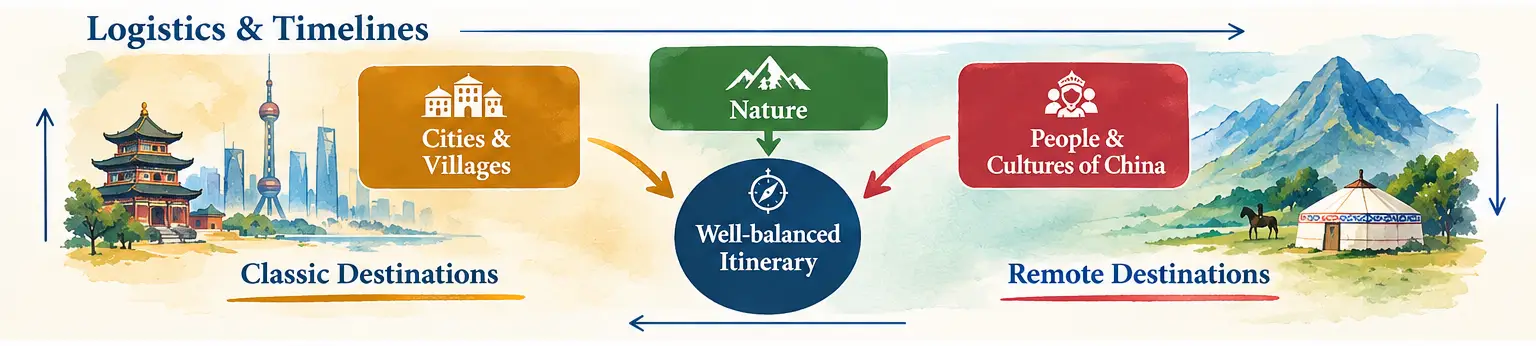
Of course, it is up to you to increase or decrease the quantities according to your tastes. Like all ingredients, these components are also meant to blend together during the journey, but keeping them in mind as separate categories is, in our view, very useful for shaping your trip and avoiding missing important parts of China.
Here are some examples:
| TYPE OF EXPLORATION | Classic Destinations | Remote & Unusual Destinations |
| Cities & Villages | Shanghai, Beijing, Xi’an | Nuodeng, Bingzhongluo |
| Nature | Zhangjiajie, Huangshan, Jiuzhaigou | Yin Mountains, Hunshandake |
| Culture & Communities | Han culture and its main historical and cultural landmarks: Terracotta Army, hutongs, Great Wall, Forbidden City | Non-Han cultures and communities: staying in a Mongolian yurt, a Mongolian throat-singing performance, discovering Dongba culture, the Wa people in Yunnan |
Another decisive factor is time. In general, this means building an itinerary that is well calibrated to the number of days you want to spend in China; more specifically, it means knowing where it is better to slow down, where it is worth making a detour, and where you can spend just one night.
Based on these principles, let’s move on to some practical advice. And if you would like our support, we offer a Journey Design service for travellers who prefer an independent exploration.
10 Practical Tips for Planning Your Itinerary
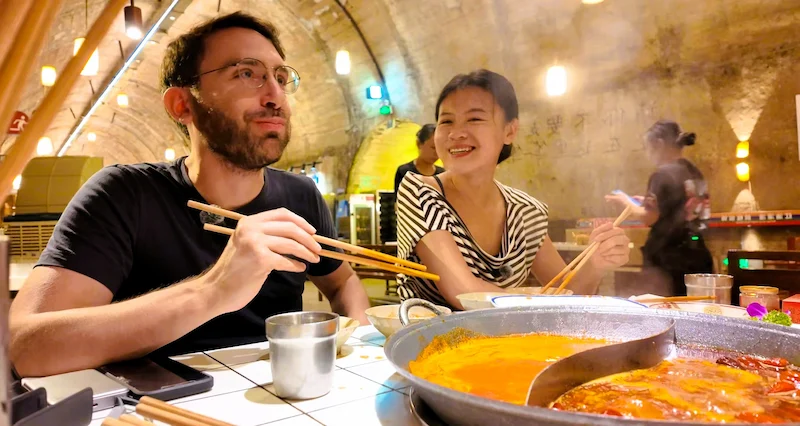
1st Tip: How many days to spend in China
Plan for at least 10 days. Considering the cost of international flights and the energy required for the trip, spending less time risks making the journey an investment that is not worthwhile.
- 10 days is the minimum for getting a first taste of this vast country.
- 14–21 days represent a more satisfying length of time for a deeper exploration.
- 21 days–1 month gives you the opportunity to discover more remote areas, away from the main tourist routes.
2nd Tip: Nature within easy reach
Don’t limit yourself to visiting the main cities. Even on a 10-day trip, you can include natural destinations such as Zhangjiajie, easily reached from Shanghai with a direct flight of about 2.5 hours. Or you can take the beautiful hike along the wild section of the Great Wall, starting from Gubeikou, about an hour and a half by car from Beijing, offering an incredible combination of history and nature. Around Shanghai, hiking through the tea hills of Hangzhou is also easy to arrange. And Chongqing offers numerous hiking opportunities along the trails of Nanshan, from which you can admire China’s famous 8D city skyline. Even a fast-paced itinerary can offer worthwhile detours into nature right around the main cities.
3rd Tip: Include Yunnan
If you have 14–21 days available, consider including Yunnan. It is the perfect gateway to glimpse China’s kaleidoscope: as many as 25 indigenous ethnic minority groups with a particularly deep-rooted historical presence live in Yunnan alone. For an authentic experience, venture out to discover villages seemingly suspended in time, such as Baoshan Stone Village or Nuodeng, along the ancient Tea Horse Road. In the south, you can discover Dai culture in Xishuangbanna and on Mount Jingmai, or the history of the Wa people and their ox skulls at Longmoye. Yunnan is the perfect region for discovering another side of China, beyond the more classic one.
4th Tip: Tibetan culture outside Tibet
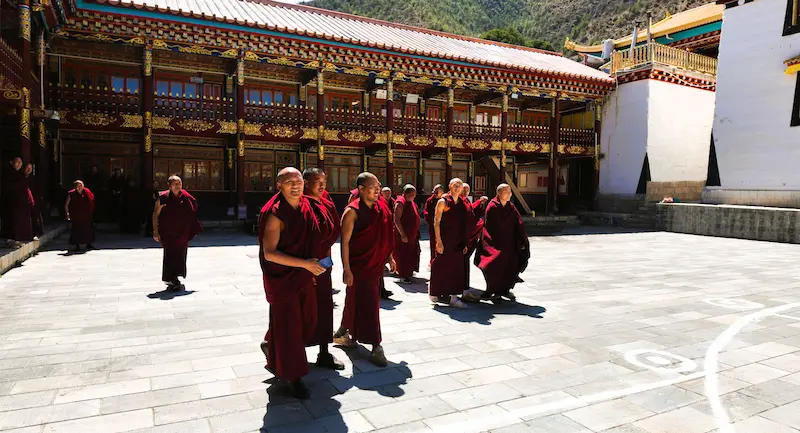
Tibetan culture in China is also found outside the Tibet region, and it is one of its most fascinating components. You will have the chance to discover monasteries with golden roofs and meet monks in scarlet robes without having to travel to extreme altitudes. If this fascinates you, in addition to northern Yunnan, you could also consider western Sichuan or Gannan (in southern Gansu), also known as “Little Tibet”.
5th Tip: When NOT to go to China
One golden rule that we strongly recommend you follow: if you have a choice, do not plan your trip during China’s major national holidays. Always check the calendar to avoid what is known here as “rén shān rén hǎi” (人山人海), literally “mountains of people and seas of people”. It is a perfect expression for describing the huge crowds and congestion caused by mass travel. July and August are also not ideal because of the school holidays. That said, many of China’s main tourist areas have organized systems for managing large visitor flows (although this does not necessarily eliminate the problem of crowds).
6th Tip: When to go to China
China’s vast geography means that ideal destinations can be found in every season. In summer, some southern regions can be affected by rain and temperatures are generally high, but the country remains widely accessible to travellers. In winter, Yunnan, with its mild temperatures, is a perfect Christmas escape, while – for those who do not mind the cold – Harbin hosts the famous Ice and Snow Festival, a fantastic world of monumental illuminated ice sculptures. In autumn, the mountains of Sichuan come alive with fiery colours, and Jiuzhaigou becomes an even more enchanting destination. Beijing’s ginkgo trees are also at their best, transforming the streets into golden galleries. Spring is an ideal season for many regions, such as southern Xinjiang, where you can see the apricot trees in bloom. Read our guide to China’s seasonal destinations here.
7th Tip: The right perspective on “Ancient Towns”
It is worth knowing in advance what to expect when visiting so-called “Ancient Towns”, which are usually not quite as ancient as the name suggests… In China, the term “Ancient Town” almost never means that you will find a historic centre preserved in its original form. Many of these places have been extensively restored or reconstructed. In our view, it would make more sense to call them “Scenic Towns” in order to avoid a mismatch between expectations and reality. This is not a negative judgement on places such as Shangrao or Fenghuang, which remain worthwhile destinations with a distinctive charm. For more on this subject, you can also read our article on “Furong Ancient Town”.
8th Tip: Don’t miss the atmosphere of the Silk Road
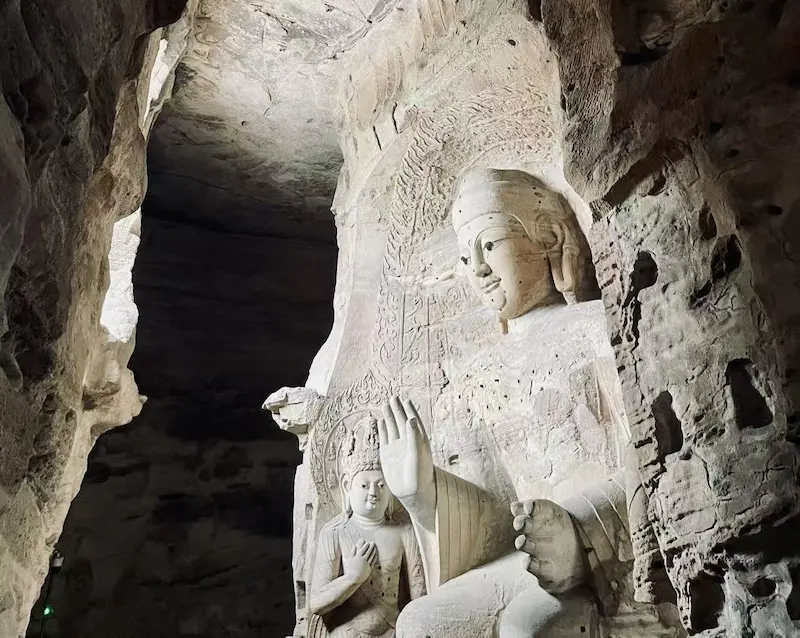
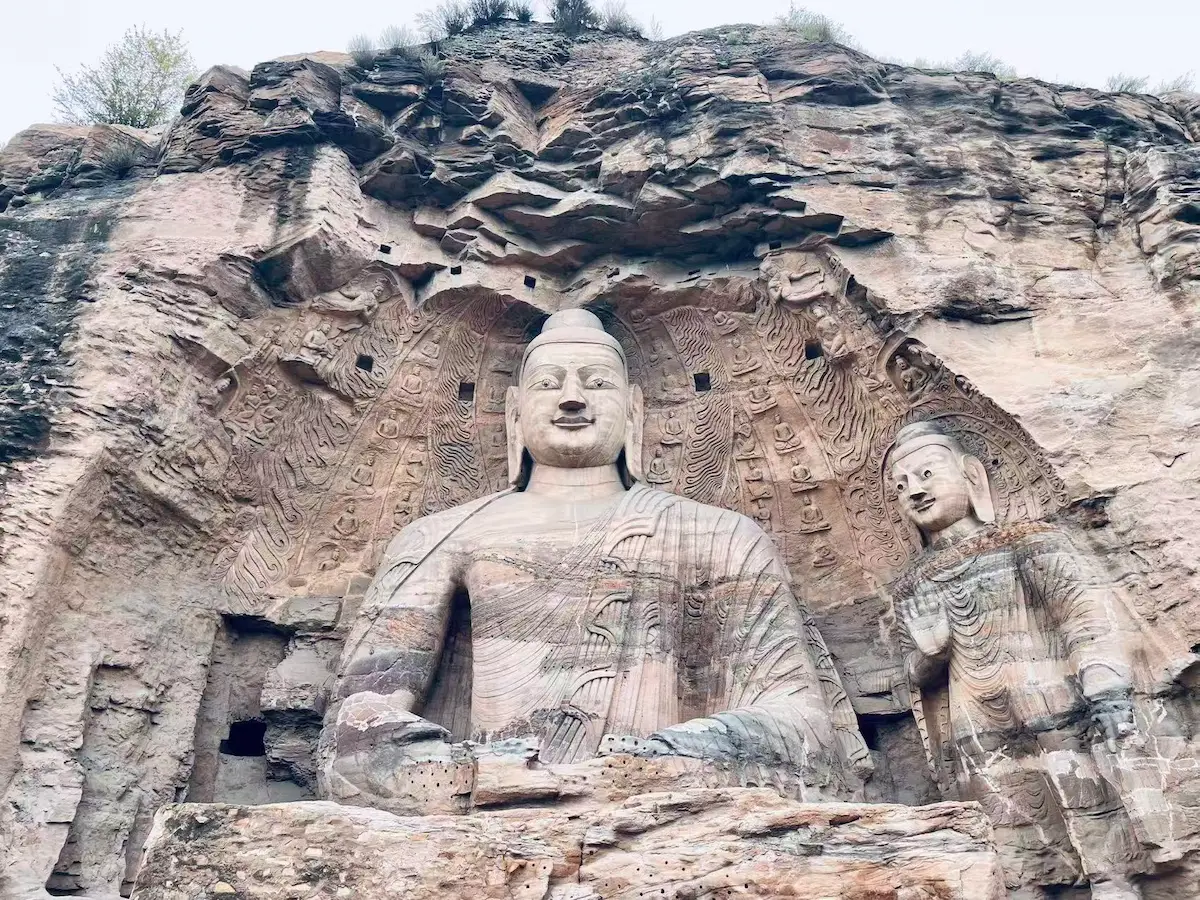
China was for centuries at the heart of the Ancient Silk Road. This kind of cultural immersion is unmissable. Within easy reach are the Yungang Buddhist Grottoes, near Datong (about 2 hours by high-speed train from Beijing), a masterpiece born along the routes of cultural exchange that connected China with Central Asia. Equally spectacular are the grottoes at Dunhuang, in Gansu, among oases and deserts that will immerse you even further in the atmosphere of this ancient trade route. Finally, Xinjiang, on China’s western frontier, is a land of spices, bazaars, vast deserts and timeless stories that make the logistical effort worthwhile.
9th Tip: The 3 must-see cities in China
A recommendation based on our personal tastes: if we had to choose just 3 of China’s best-known cities, we would choose Beijing, Shanghai and Chongqing. Not because Xi’an, Chengdu or Guangzhou are not worth visiting, but this is our personal podium. You can read our article on 2 Classic Itineraries in Beijing and Shanghai, and explore Chongqing through our 4-part complete guide.
10th Tip: Give yourself the luxury of a true exploration
Away from the main tourist routes, China opens up adventurous horizons. Inner Mongolia is a region where the spirit of the nomads still pulses, where you can move from boundless grasslands to vast deserts. If you are looking for authentic experiences, don’t miss the expedition along the frontier of the Yin Mountains or a night in a real yurt in the lands of Hunshandake, in the Xilin Gol League. These are precisely the kinds of special experiences you will want to tell people about first when you return home.
In addition to these ten tips, for further travel inspiration we have made available our catalogue of recommended itineraries (curated across our three collections: Essential China, Grand Voyages, and Ink Signature) and our catalogue of regional explorations, where you will find further ideas to enrich your discovery of China.
You can finally also read our article on what is authentic in China to help you make more informed travel choices.
From all of us at Ink Voyages, we wish you a wonderful journey!



Leave a Reply